GPT‑6 Cyber, integration security and AI evaluation in the lab
Issue date:
This issue covers two cybersecurity developments and research into AI analysis of laboratory data. The GPT‑6 Cyber announcement was published on November 5 and carried over from the previous issue.
This issue may include important events published earlier.
OpenAI introduces GPT‑6 Cyber for security research
Previously published event ·
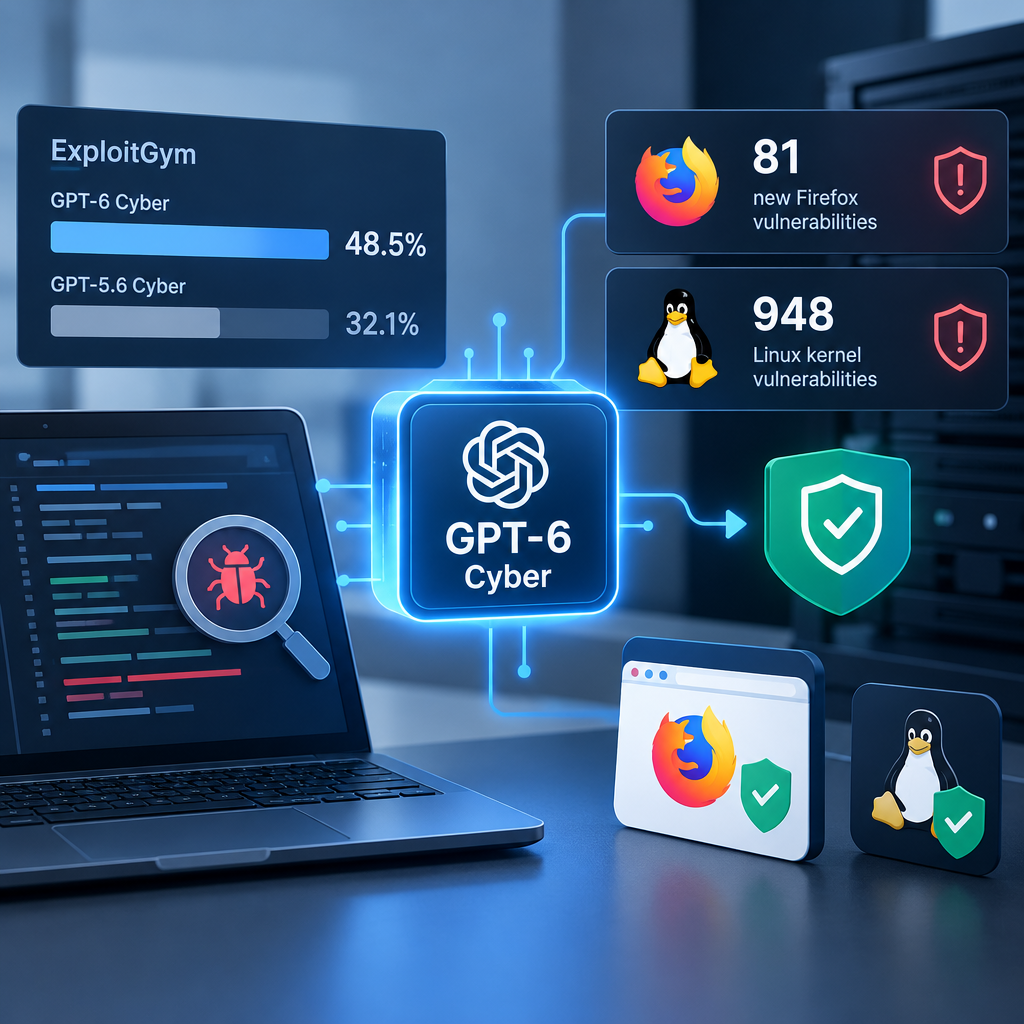
OpenAI introduced a model for finding and validating vulnerabilities and developing fixes. Initial access through the API and Codex is limited to a select group of approved Daybreak Red customers.
Key facts
OpenAI reports that the model scored 48.5% on ExploitGym, versus 32.1% for GPT‑5.6 Cyber. The test measures the ability to exploit a specified vulnerability.
OpenAI says researchers used the model to identify 81 previously unknown high-severity Firefox vulnerabilities and develop working exploits for 948 Linux kernel vulnerabilities. Mozilla released fixes for many of the Firefox issues.
OpenAI reports that, on ExploitGym Honeypot, the model avoided exploiting out-of-scope services in 99.93% of tests without a deployment safety prompt and 100% with one.
An objective look at what matters
A specialized model could help security teams examine large codebases and prepare fixes, but test results do not guarantee safe behavior on every task.
Business processes
Code review and vulnerability remediation — Teams could get proposed checks and fixes sooner for further review.
Automation opportunities
Vulnerability research and patch preparation: AI could perform some checks and propose fixes under expert supervision. Conditions: Access is limited to approved Daybreak Red customers.; High-risk work requires sandboxing, action review and human oversight.; API requests are restricted to approved IP addresses by default.
Impact on manual work
Some research and patch preparation could require fewer manual steps, but time savings have not been measured.
Limitations and risks
The model can assist with exploit development, making authorized testing boundaries and misuse safeguards important.
API customers using Zero Data Retention generally must use Private Safety Processing: encrypted records are retained in customer storage for 30 days for automated checks.
OpenAI and Hacktron will test security across service integrations
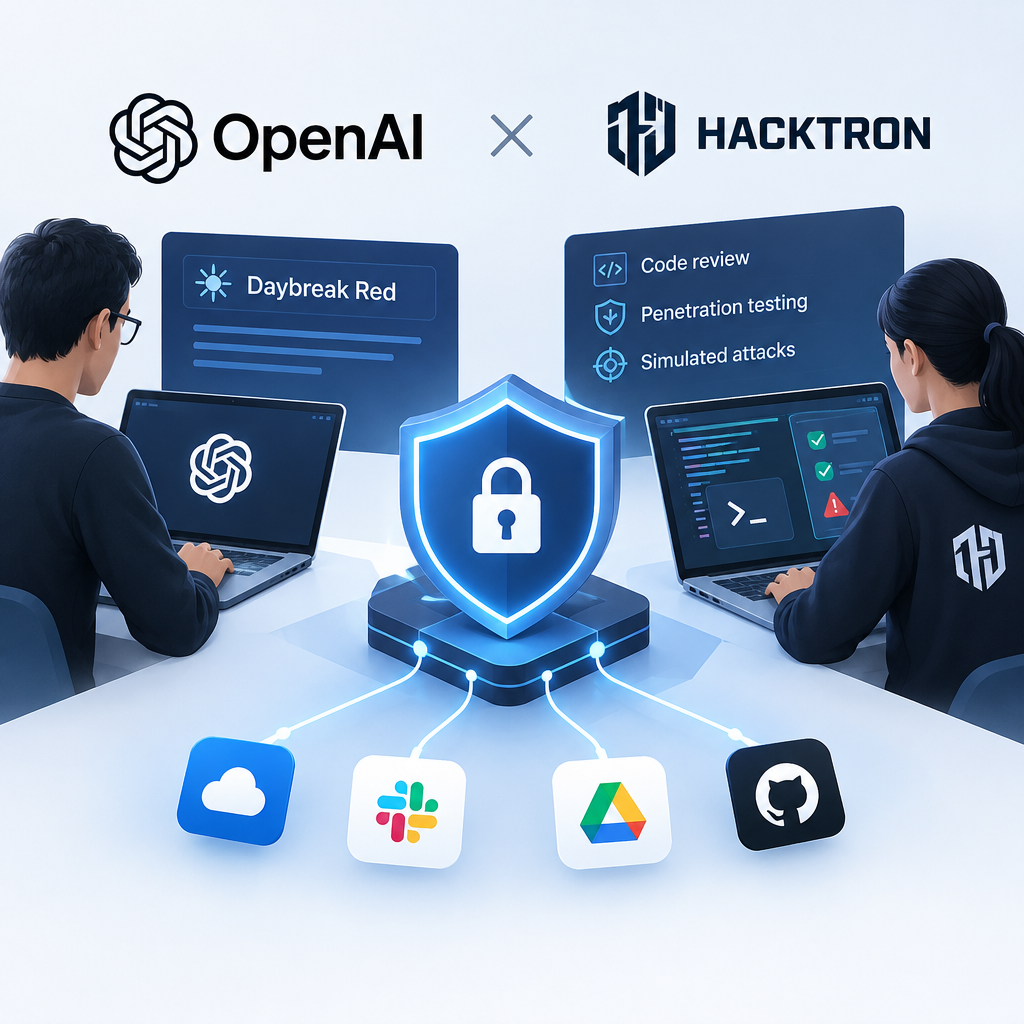
OpenAI announced a partnership with Hacktron to find vulnerabilities in OpenAI’s systems. OpenAI engineers and Hacktron researchers will jointly select priority areas for testing, focusing on connections with third-party services.
Key facts
As part of the partnership, OpenAI is expanding Hacktron’s access to its frontier models through Daybreak Red.
Hacktron builds AI agents for code review, penetration testing and simulated attacks.
An objective look at what matters
Testing connections between services matters for organizations whose agents and applications interact with external systems: weaknesses can arise at those boundaries.
Business processes
Integration security testing — Teams could prioritize tests of interactions with third-party services.
Automation opportunities
Reviewing code and connections between services: AI agents could help experts find weaknesses during authorized tests. Conditions: The announcement concerns a partnership to test OpenAI’s systems, not a ready-made solution for other companies.; Testing requires agreed boundaries and expert oversight.
Impact on manual work
The partners have not reported how much manual work the arrangement may reduce.
Limitations and risks
The results and effectiveness of the joint testing have not yet been published.
OpenAI and Ligo introduce an AI benchmark for lab data
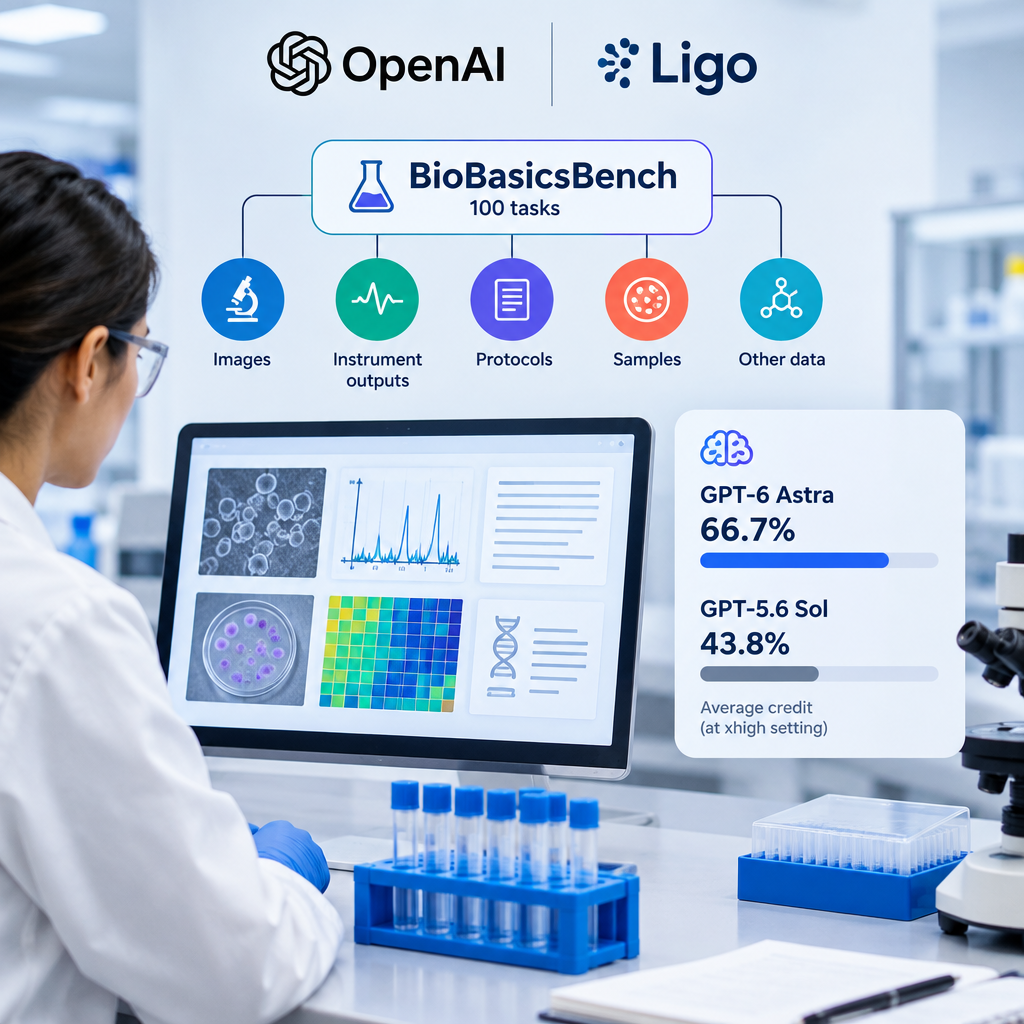
OpenAI and biotech company Ligo introduced BioBasicsBench, a set of 100 tasks designed to evaluate how AI agents analyze data from real biological experiments.
Key facts
The tasks cover five areas of laboratory work and use raw data, including images, instrument outputs and protocols. Answers are graded against expert-written criteria.
OpenAI reports that, at the xhigh setting, which allows more reasoning per task, GPT‑6 Astra earned an average of 66.7% of available credit, compared with 43.8% for GPT‑5.6 Sol.
OpenAI provides examples of Astra’s errors, including selecting the wrong colonies and overcounting them by approximately 12% on one task.
An objective look at what matters
The benchmark helps assess not just answers, but whether a model can spot experimental errors and recognize when evidence is insufficient.
Business processes
Laboratory experiment analysis — Labs could use similar tasks to evaluate AI assistants before deployment.
Automation opportunities
Initial analysis of images and instrument results: AI could help prepare a preliminary analysis for a scientist to review. Conditions: An expert must check conclusions and experimental controls.; The reported results come from a benchmark, not a demonstrated laboratory deployment.
Impact on manual work
Preliminary analysis could reduce manual work, but the study does not measure time savings.
Limitations and risks
A high benchmark score does not mean a model can reliably make independent laboratory decisions.
Misreading images or experimental controls can lead to incorrect conclusions.