OpenAI adds agents and plugins to ChatGPT for Healthcare
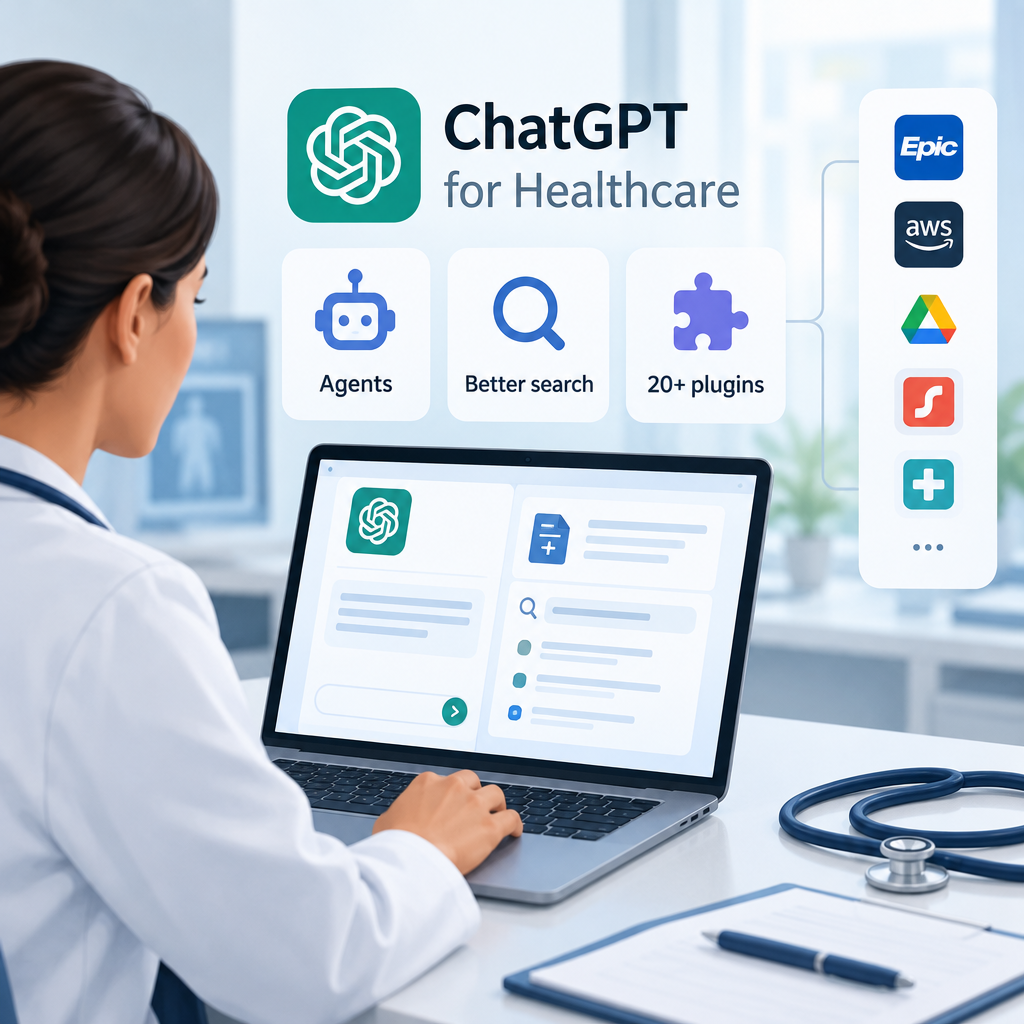
OpenAI introduced agents that operate healthcare software through its interface, improved the search for medical evidence and added more than 20 plugins to ChatGPT for Healthcare.
Key facts
Computer-use agents in ChatGPT Work and Codex and improved search are available to ChatGPT for Healthcare customers, subject to workspace settings; administrators enable the new plugins. Individual clinicians have access to agents, search and select plugins. Free ChatGPT for Clinicians accounts are for eligible, verified U.S. clinicians.
OpenAI says physicians rated the updated experience more highly on all eight criteria, including factual correctness and safety, in a blind evaluation involving more than 1,300 reviews of responses.
OpenAI reports that a CVS Health agent cleared a months-long backlog of documents awaiting dispatch over a weekend in a production workflow. CVS Health uses validation checks and human oversight.
An objective look at what matters
Agents could connect steps across systems where staff currently move information by hand.
Business processes
Referrals and prior authorization — Prepare documents and gather information from different systems for specialist review.
Automation opportunities
Preparing an MRI request: An agent could review a chart and draft an MRI order and patient reply. Conditions: Access to approved applications and clinician review are needed.; HIPAA-compliant work with protected health information requires eligible services covered by a BAA with OpenAI, the required security and retention settings, and protections for connected systems.
Impact on manual work
OpenAI describes a production workflow at CVS Health but does not provide a general measure of labor savings across customers.
Limitations and risks
Clinical conclusions and agent actions need review; errors and data exposure can harm patients.
OpenAI releases classifier to detect child sexual abuse material
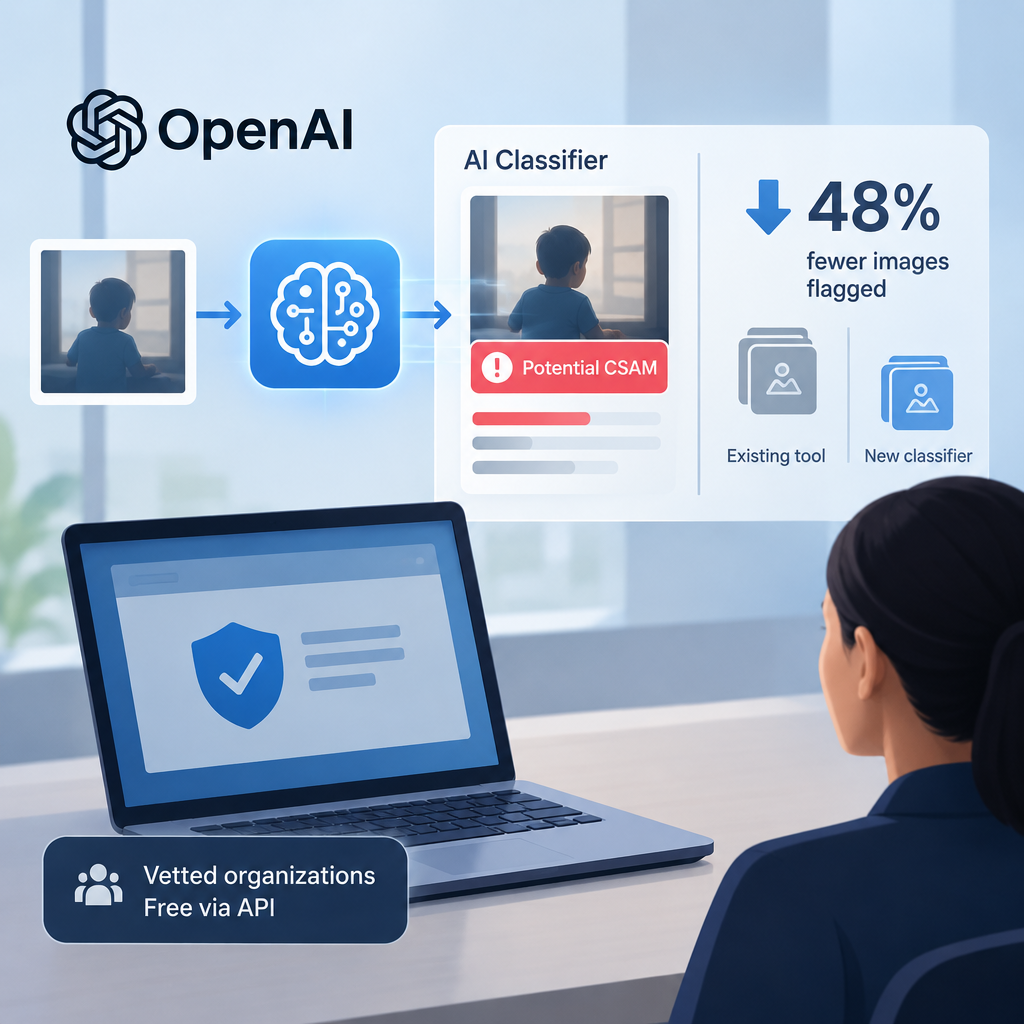
OpenAI released an image classifier to detect potential child sexual abuse material, including AI-generated images. Its scores help reviewers prioritize images for inspection.
Key facts
Vetted organizations can obtain access at no cost through the API, an interface for connecting to the service.
In OpenAI's evaluation of user-uploaded images, the company estimated that the classifier would flag 48% fewer images while finding roughly the same number of abusive images as its existing tool.
OpenAI reports that, in partner fal's test, reviewers confirmed 72% of high-confidence flags as previously unidentified child sexual abuse material.
An objective look at what matters
The tool could help safety teams prioritize cases and reduce unnecessary exposure to material.
Business processes
Reviewing user-uploaded images — Sort the review queue using classifier scores.
Automation opportunities
Initial image screening: Send classifier scores to a queue for specialist review. Conditions: Access is subject to organizational vetting; decisions require specialist involvement.
Impact on manual work
Tests suggest review work could fall, but the effect depends on an organization's data and process.
Limitations and risks
False positives and missed material are possible. A model score does not replace human review or established reporting procedures.
Gemini Notebook creates interactive sites from sources
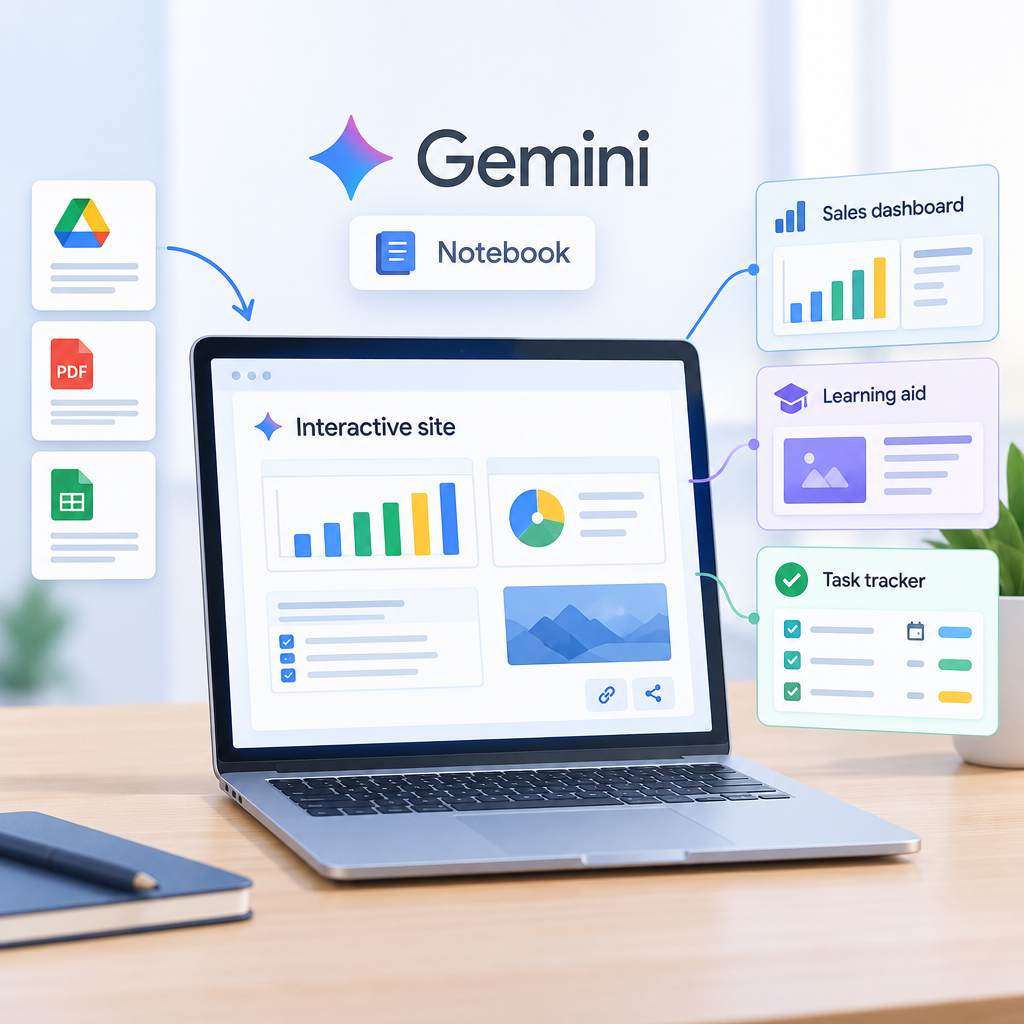
Google began rolling out a Gemini Notebook feature that creates interactive sites from a user's sources on request. Finished sites can be opened in a new tab or shared.
Key facts
Google gives sales dashboards, learning aids and task trackers with deadlines as examples.
The feature is rolling out globally on the web for users aged 18 and over, including Google Workspace subscribers. It is coming to the mobile app later.
An objective look at what matters
Teams could turn collected material into interactive views more quickly without building a site themselves.
Business processes
Data analysis and project management — Create an interactive dashboard or tracker from available sources.
Automation opportunities
Creating a sales dashboard: Generate a site from a description and source material, then share it with colleagues. Conditions: The web feature is still rolling out; users must be at least 18.
Impact on manual work
Generation could reduce manual site-building work, but Google provides no measured time savings.
Limitations and risks
Check the data and how the generated site works before using or sharing it.