Google DeepMind releases molecular analysis tools for Antigravity
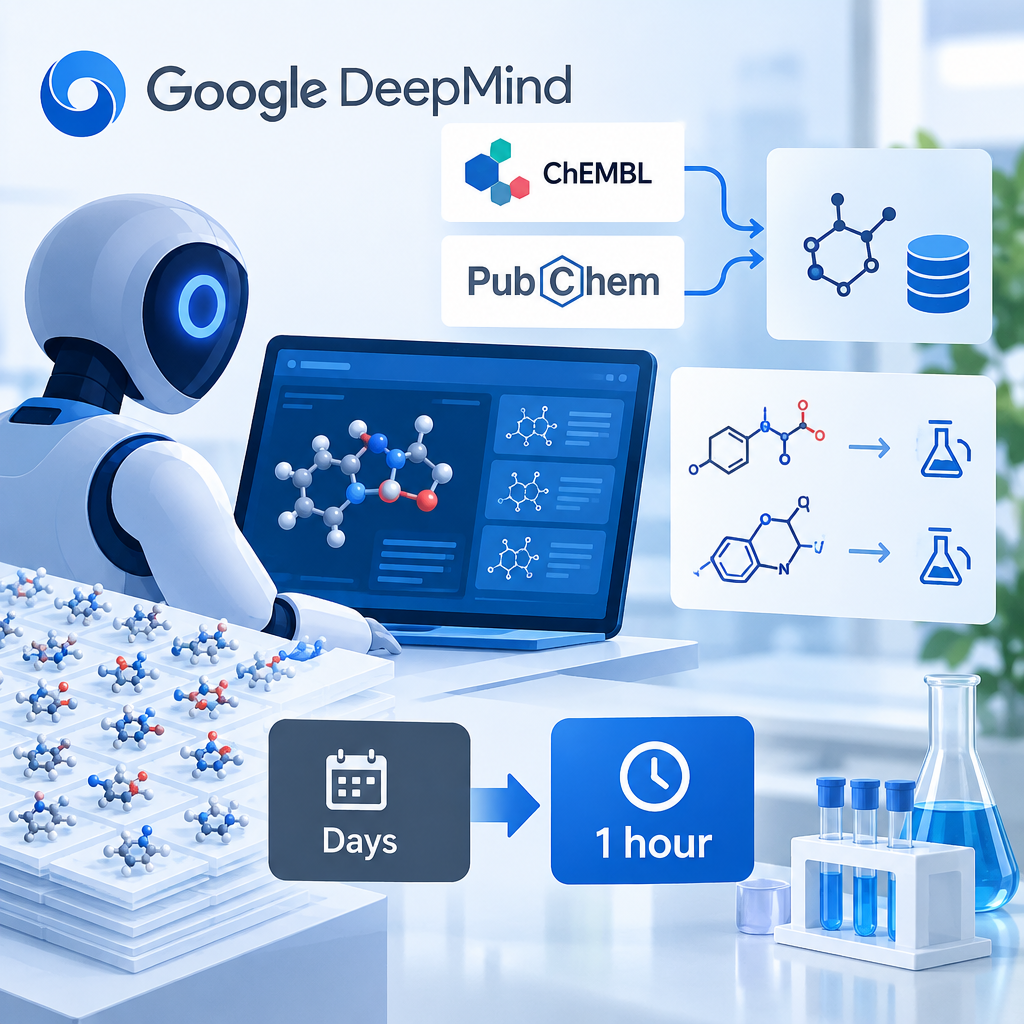
Cheminformatics Skills are available in Google Antigravity. The toolkit supports work with chemical compound data. In Google’s example, an agent examined compounds, built predictive models and proposed new molecules and synthesis routes.
Key facts
Google DeepMind says that, in an example involving lung cancer drugs, the agent examined thousands of compounds and proposed new molecules and synthesis routes in an hour; a comparable cycle previously took several days.
The toolkit includes RDKit-based tools for chemical calculations and connectors to resources from ChEMBL and PubChem.
Use requires the Antigravity app and Science plugin; enterprise users can sign in with Google Cloud credentials. Google has also opened applications for six months of free access to Antigravity’s highest usage tier for 10,000 scientists, subject to eligibility, capacity and selection.
An objective look at what matters
The tools could reduce preparation work between gathering data and forming a chemical hypothesis.
Business processes
Drug candidate research — A single workflow could connect data gathering, compound analysis and synthesis planning.
Automation opportunities
Preparing and analysing molecular data: An agent could collect data from publications, compare compounds and prepare candidates for a chemist to review. Conditions: Antigravity and the Science plugin are required.; Proposed molecules must be synthesised and validated experimentally.
Impact on manual work
An agent could take on some data gathering and processing, but researchers still need to check the results.
Limitations and risks
Sparse data, differences between laboratory assays and limited measurement ranges reduce predictive precision.
Computational proposals are hypotheses, not finished drugs.
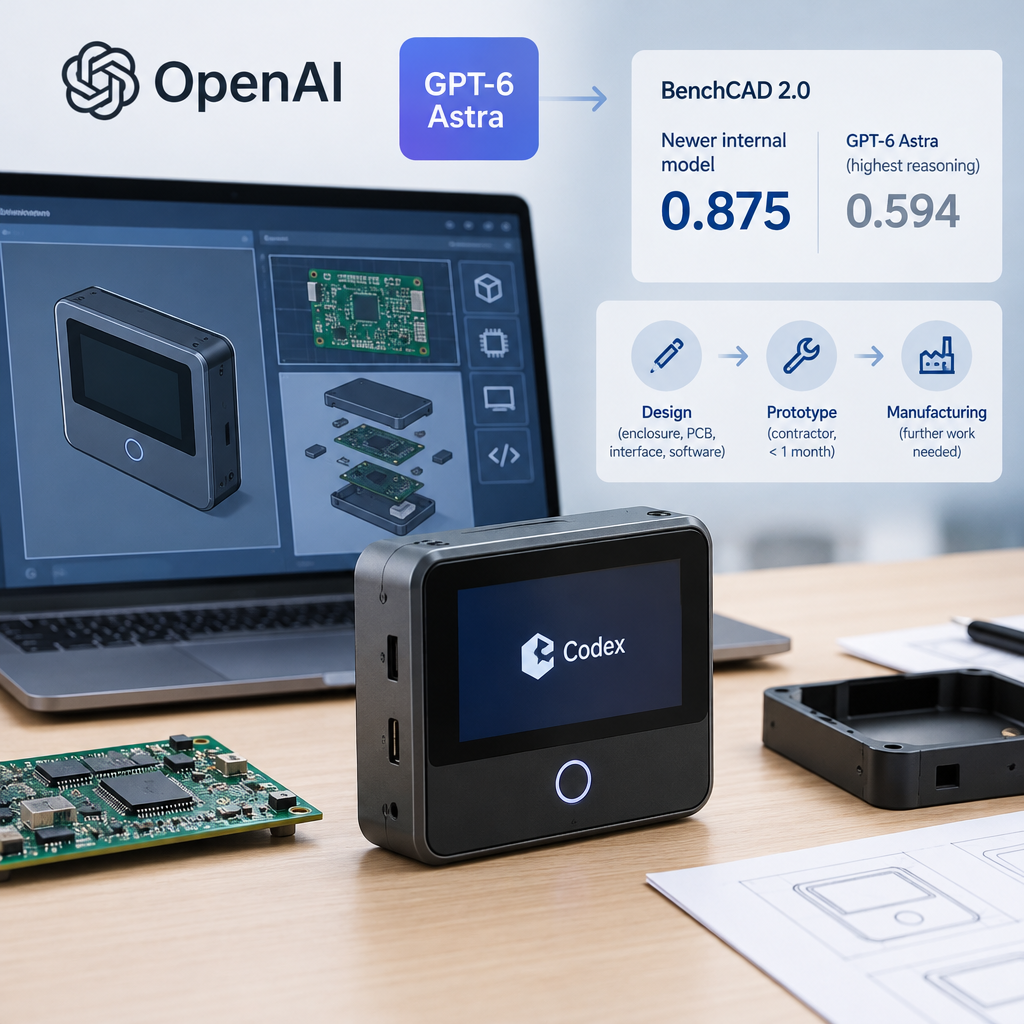
OpenAI tested GPT-6 Astra on the design of a device for interacting with Codex. The model designed the enclosure, printed circuit board, interface and software components. A contractor built a small batch of prototypes, but preparing the device for manufacturing required further work.
Key facts
OpenAI says two team members designed the device with Astra in under a week as a side project. A contractor built the prototypes in under a month.
OpenAI reports that a newer internal model averaged 0.875 on BenchCAD 2.0, versus 0.594 for GPT-6 Astra at its highest reasoning setting. The test covers only part of the engineering lifecycle.
OpenAI is also testing engineering workflows with Chip Ganassi Racing and researching vehicle design with Mazda.
An objective look at what matters
The example shows how AI could connect mechanical design, electronics and software. Moving from a design to manufacturing remains a separate challenge.
Business processes
Product development and prototyping — AI could help prepare designs, drawings and software components for engineers to review.
Automation opportunities
Preparing an engineering design: Parts of component, circuit board and interface design could be automated. Conditions: Review by engineers and the manufacturer is needed.; The scenario is described as a test, not a production-ready process.
Impact on manual work
AI could reduce some manual design preparation, but the source does not quantify labour saved and reports several rounds of review and revision.
Limitations and risks
Astra did not consistently account for manufacturing constraints, tolerances or assembly details.
The developer reported the test results and timelines; they do not guarantee similar outcomes in other projects.
Google launches Guided Learning in Classroom worldwide
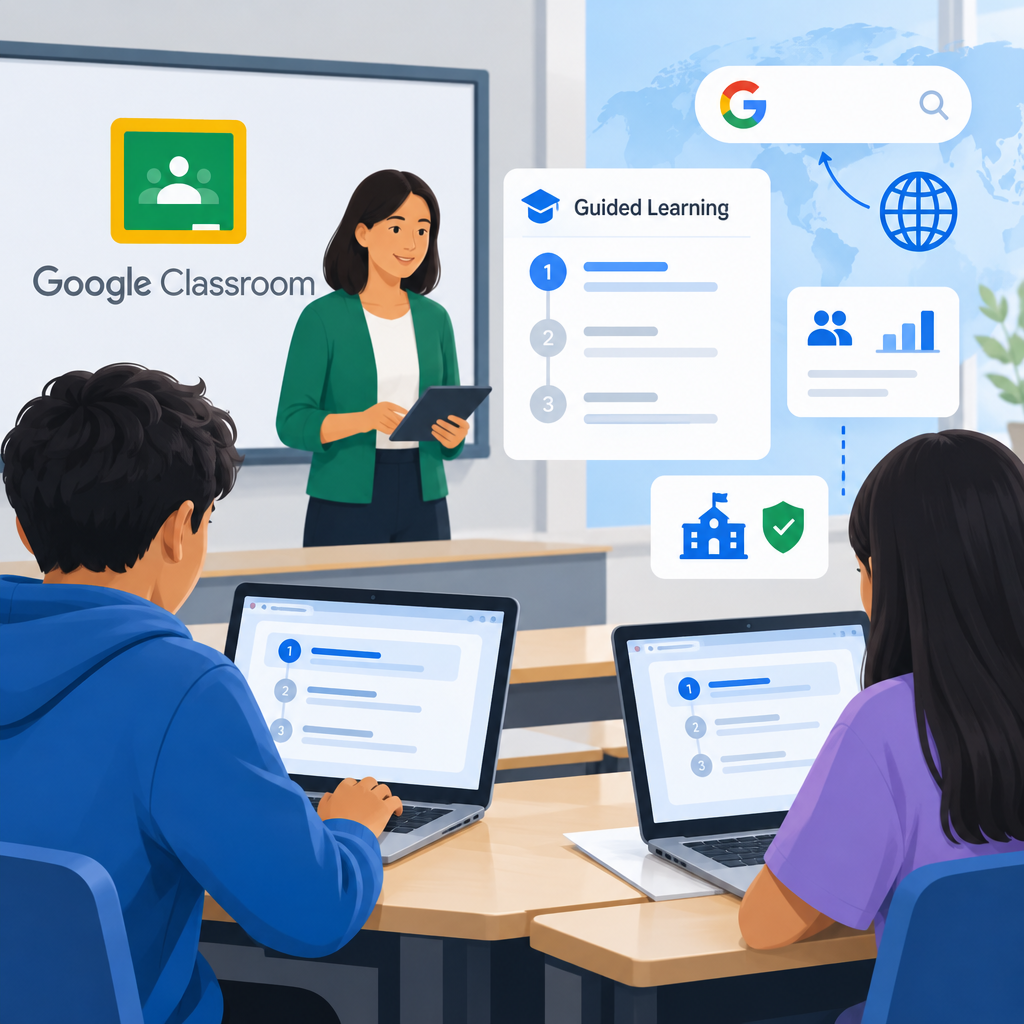
Guided Learning is now available globally in Google Classroom. It helps students work through teacher-assigned activities step by step and gives teachers insight into where the class may need help. Google is also preparing a Search pilot and changes to access controls for school accounts.
Key facts
A Guided Learning activity in Classroom draws on class material and provides teachers with real-time insights.
A Guided Learning pilot in Search for student accounts will start in select US schools later in November. Google plans to collect educator feedback before expanding it.
Google plans to turn off access for K–12 student accounts to Gemini, Gemini Notebook, Gemini in Classroom and Google Search until a school administrator explicitly enables it. The company will share details and rollout timing with schools later.
An objective look at what matters
Teachers could gain another way to support individual students and identify difficulties across a class.
Business processes
Assignments and student support — Step-by-step prompts could supplement teacher instruction, while progress insights could help identify students who need support.
Automation opportunities
Supporting an assigned activity: The system could provide prompts to students and gather insights for teachers. Conditions: A teacher assigns the activity in Classroom.; Schools should account for the forthcoming access-control changes.
Impact on manual work
Prompts and progress insights could reduce some teacher workload, but time savings have not been demonstrated.
Limitations and risks
The Search pilot is initially limited to select US schools; it is not a global launch.
Teachers need to assess learning outcomes and the quality of prompts in their own classrooms.