Pando for Git, LifeVal evaluations and OpenAI’s new bug bounty rewards
Issue date:
This issue covers infrastructure for parallel development, an evaluation of AI on everyday tasks, and new terms for OpenAI’s vulnerability rewards program.
This issue may include important events published earlier.
OpenAI describes Pando, a Git system for parallel Codex work
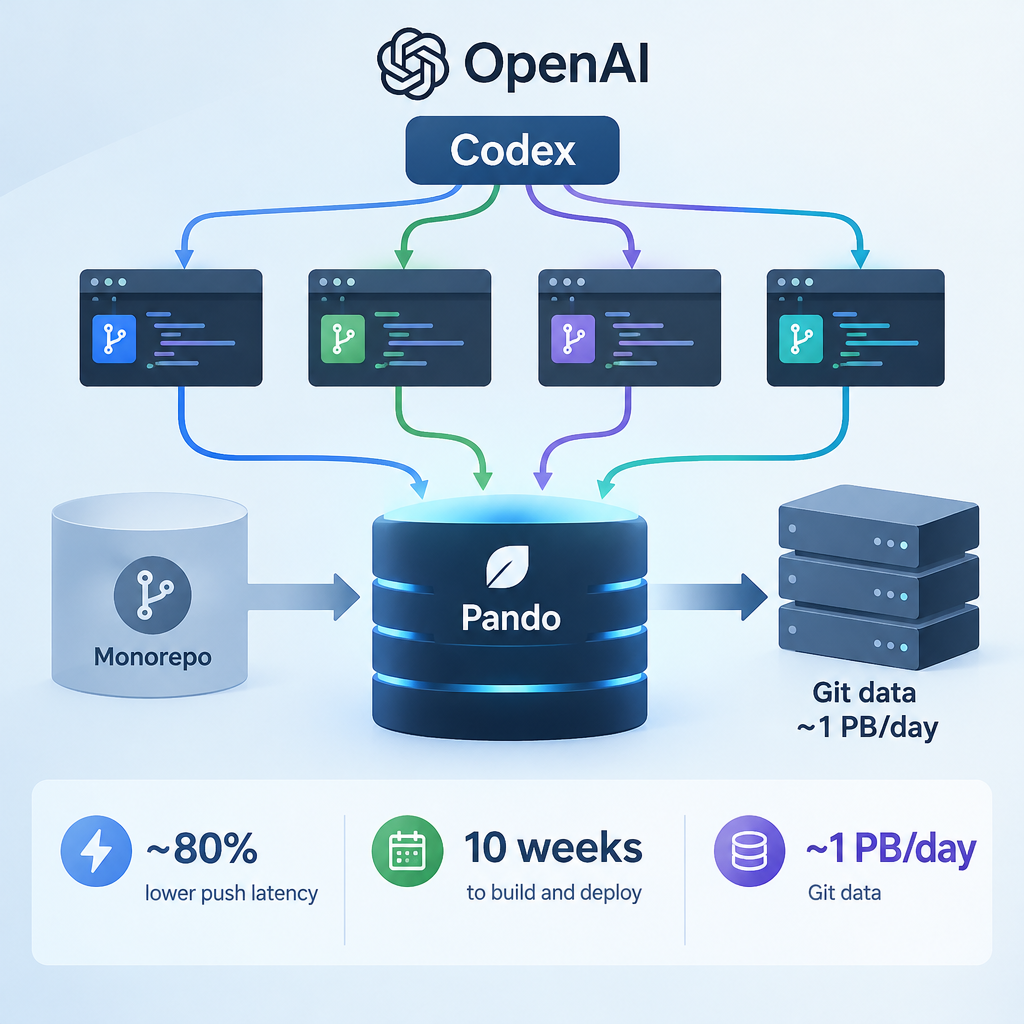
OpenAI described the architecture of Pando, a backend for Git repositories. It supports development in the company’s monorepo and allows different branches to be updated independently.
Key facts
OpenAI says the move to Pando cut median push latency by nearly 80% and improved merge reliability.
OpenAI says it built and deployed Pando in 10 weeks with Codex; the system delivers nearly a petabyte of Git data per day.
An objective look at what matters
With many tasks running in parallel, the bottleneck may be the infrastructure developers and agents use to exchange changes, rather than code generation itself.
Business processes
Software development and integration — Independent branch updates could reduce waiting when changes are pushed in parallel.
Automation opportunities
Parallel agent work on code: Git-compatible infrastructure could support more simultaneous tasks without changing familiar workflows. Conditions: Pando operates inside OpenAI; the company is only exploring ways to share the technology with users.; Other teams would need to check compatibility and have infrastructure capable of handling their workload.
Impact on manual work
Less waiting could speed up developers’ work, but the result has not been shown to transfer to other teams.
Limitations and risks
The performance figures were measured by OpenAI itself.
Reads of different branches may reflect different points in time; Pando does not provide a single point-in-time snapshot of every branch.
OpenAI introduced LifeVal, an evaluation of how models handle everyday tasks. To select the tasks, the company used time-use studies and a survey of 3,995 people.
Key facts
The tasks cover caregiving, health, education, household administration, personal finance, shopping and government services.
OpenAI says its latest models score highly on many LifeVal tasks.
An objective look at what matters
Evaluating performance on everyday tasks complements knowledge tests and helps define scenarios that matter to assistant users.
Business processes
Personal assistant evaluation and design — Teams could use LifeVal’s categories as a starting point for their own tests of practical scenarios.
Automation opportunities
Preparing plans and shortlisting options for everyday needs: An assistant could help gather options and prepare a plan for a person to review. Conditions: LifeVal is a research evaluation, not an announced product.; Practical use depends on available tools and user review of the results.
Impact on manual work
Assistants could reduce time spent searching and planning, but the publication does not demonstrate time savings in real-world workflows.
Limitations and risks
The results are reported by OpenAI and do not guarantee quality in new situations.
Health and financial decisions require particular care and human review.
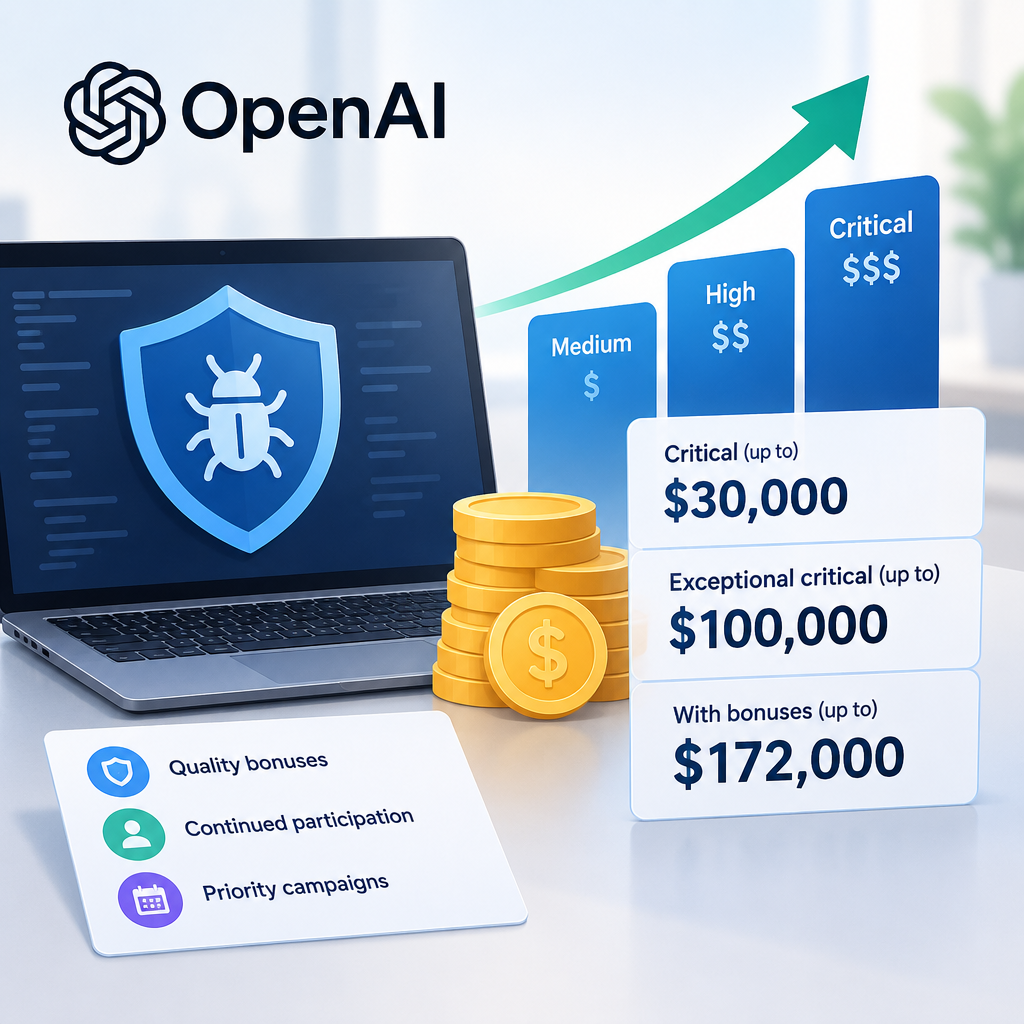
OpenAI updated its security bug bounty program, raising reward ranges and adding bonuses for report quality, continued participation and priority campaigns.
Key facts
OpenAI says the midpoint of reward ranges for medium, high and critical findings has risen more than fourfold on average.
A critical vulnerability in a core product can earn up to $30,000; an exceptional critical finding can earn up to $100,000, or up to $172,000 with bonuses.
OpenAI says the new ranges apply to reports that have not yet received an award. For awards made in the 30 days before the announcement, it will pay the difference if the amount calculated under the new terms is higher; that calculation includes the base award and loyalty bonus.
An objective look at what matters
Higher rewards could encourage more independent scrutiny of OpenAI products used by teams.
Business processes
AI service security management — External reports could help the provider find and fix vulnerabilities.
Automation opportunities
Finding and responsibly disclosing vulnerabilities: The update changes researcher incentives but does not announce new automation for the process. Conditions: The reward depends on the finding and applicable program terms.
Impact on manual work
The announcement does not demonstrate a reduction in manual work; the program rewards research and high-quality reports.
Limitations and risks
Maximum rewards are not guaranteed for every finding.
The new incentives alone do not demonstrate a reduction in vulnerabilities.