OpenAI plans to honor a shared website AI training signal
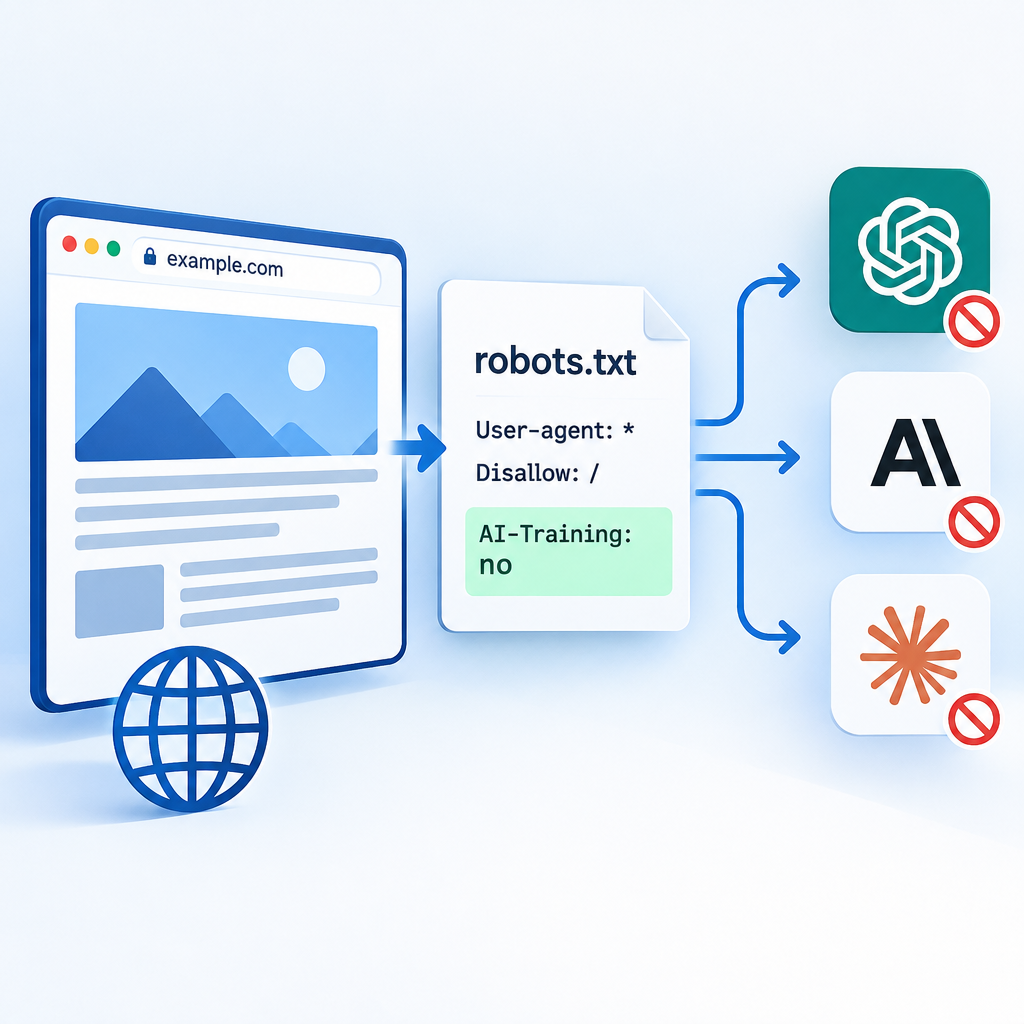
OpenAI plans to start honoring a shared signal in robots.txt in the coming months. The file communicates a website’s rules for crawlers; the signal lets sites express preferences about using their content to train generative AI.
Key facts
The shared signal lets a site communicate one preference to multiple participating AI providers. Provider participation is voluntary.
OpenAI says it will share implementation details when it rolls out support; its existing crawler controls will remain in force.
An objective look at what matters
Publishers may find it easier to maintain one preference for several providers instead of separate rules for each.
Business processes
Managing website preferences for AI training — A shared signal could simplify rule maintenance for participating providers.
Automation opportunities
Setting AI training preferences in robots.txt: One signal could reduce the need for separate provider-specific rules. Conditions: OpenAI has yet to implement the signal; other providers must choose to honor it.; OpenAI’s existing crawler controls will continue to apply.
Impact on manual work
A single signal could reduce manual rule maintenance, depending on support from other providers.
Limitations and risks
OpenAI has not specified an exact implementation date or details; it aims to implement the signal in the coming months.
The shared signal does not replace existing OpenAI crawler controls.
OpenAI tightens ChatGPT restrictions and plans safety report
OpenAI announced additional restrictions on detailed answers about past mass attacks for all users and on practical information about weapons and security systems for teens. The company plans to begin rolling out the described safeguards in the coming weeks.
Key facts
When recent chats show warning signs of possible violence, ChatGPT will be more cautious with information that could be misused. OpenAI is also working to apply those limits to users predicted to be under 18, even without signs of violence.
OpenAI is working on automatically ending conversations that show signs of fixation on violence; after several such cases, it may temporarily pause the account.
OpenAI plans to publish its first Community Safety Report in early 2027, covering the second half of 2026, with updates every six months thereafter.
OpenAI says it made more than 200 referrals to law enforcement in the third quarter of 2026.
An objective look at what matters
Organizations using ChatGPT for research or user support should account for the new response limits and potential interventions.
Business processes
AI service safety management — Organizations may need to review support scenarios and expectations for answers to sensitive questions.
Automation opportunities
Responding to signs of fixation on violence: ChatGPT could automatically end some conversations; repeated cases may lead to a temporary account pause. Conditions: The mechanism is still in development; reliably recognizing warning signs and deciding when to intervene remain challenges for OpenAI.
Impact on manual work
The source does not show how much manual work the new measures will replace.
Limitations and risks
The restrictions may also affect legitimate requests; age prediction and risk detection require care.
Adults incorrectly placed in the teen experience can verify their age through OpenAI’s partner Persona.
Google receives AI model response from prototype satellite
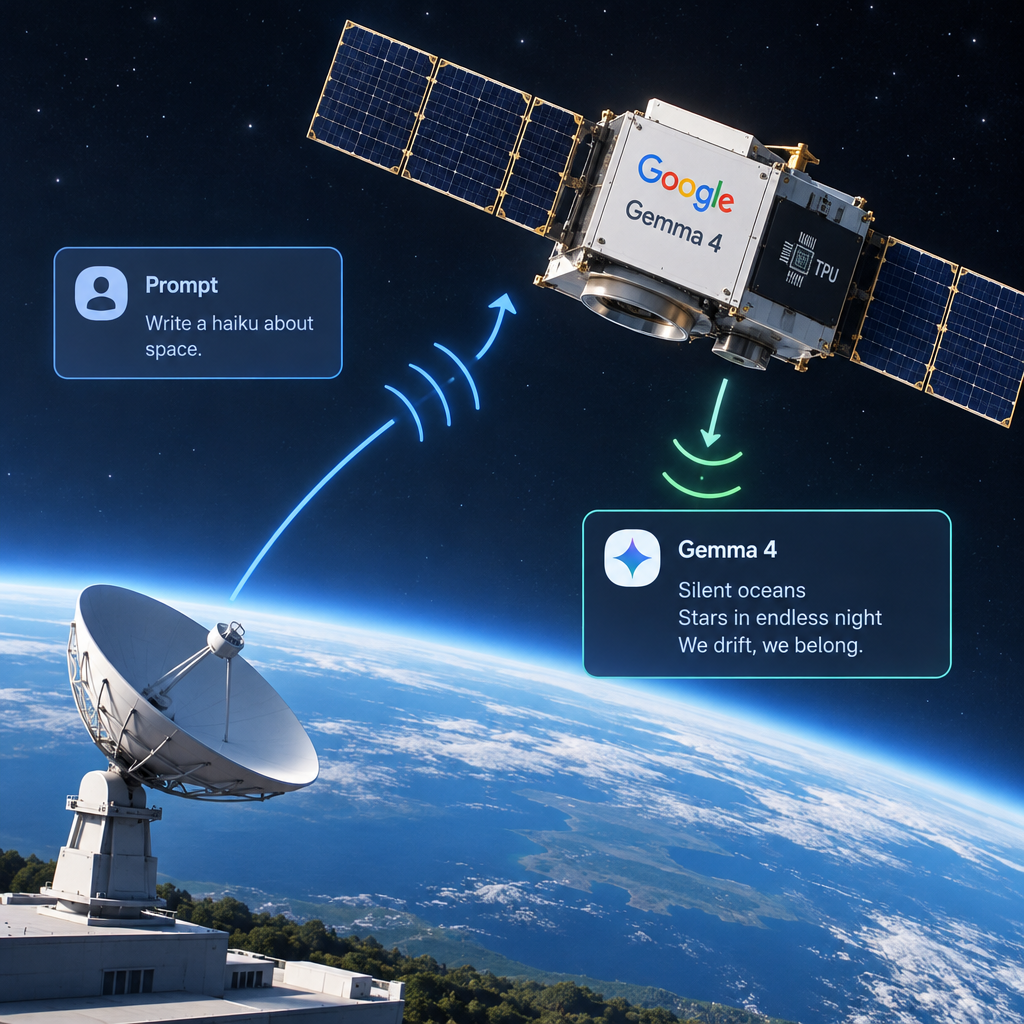
Google says its Gemma 4 model responded to a prompt from Earth aboard the Project Suncatcher prototype satellite. The model ran in orbit on a TPU, a specialized processor for AI workloads.
Key facts
The satellite launched on October 1. During a ground-station pass, it received a prompt for a haiku about space and sent the poem back.
Google calls it the first AI response from a data-center-class TPU in orbit.
Google next plans to test TPU performance under thermal stress and radiation exposure; its next target is two interconnected satellites in 2027.
An objective look at what matters
The experiment points to a research direction for AI computing in space, but it does not yet establish that such infrastructure is suitable for business workloads.
Business processes
Computing infrastructure planning — Businesses can follow the results as research rather than treat the prototype as a ready service.
Automation opportunities
Running AI workloads in orbit: In time, the research could open up new options for locating computing resources. Conditions: Reliability under thermal stress and radiation exposure still needs testing.; Google’s next target is two interconnected satellites in 2027.
Impact on manual work
The source does not describe using the prototype to reduce manual work.
Limitations and risks
An early model response does not establish reliable infrastructure operation.
Thermal stress and radiation tests are still ahead.