Microsoft opens access to Copilot harness for building agents
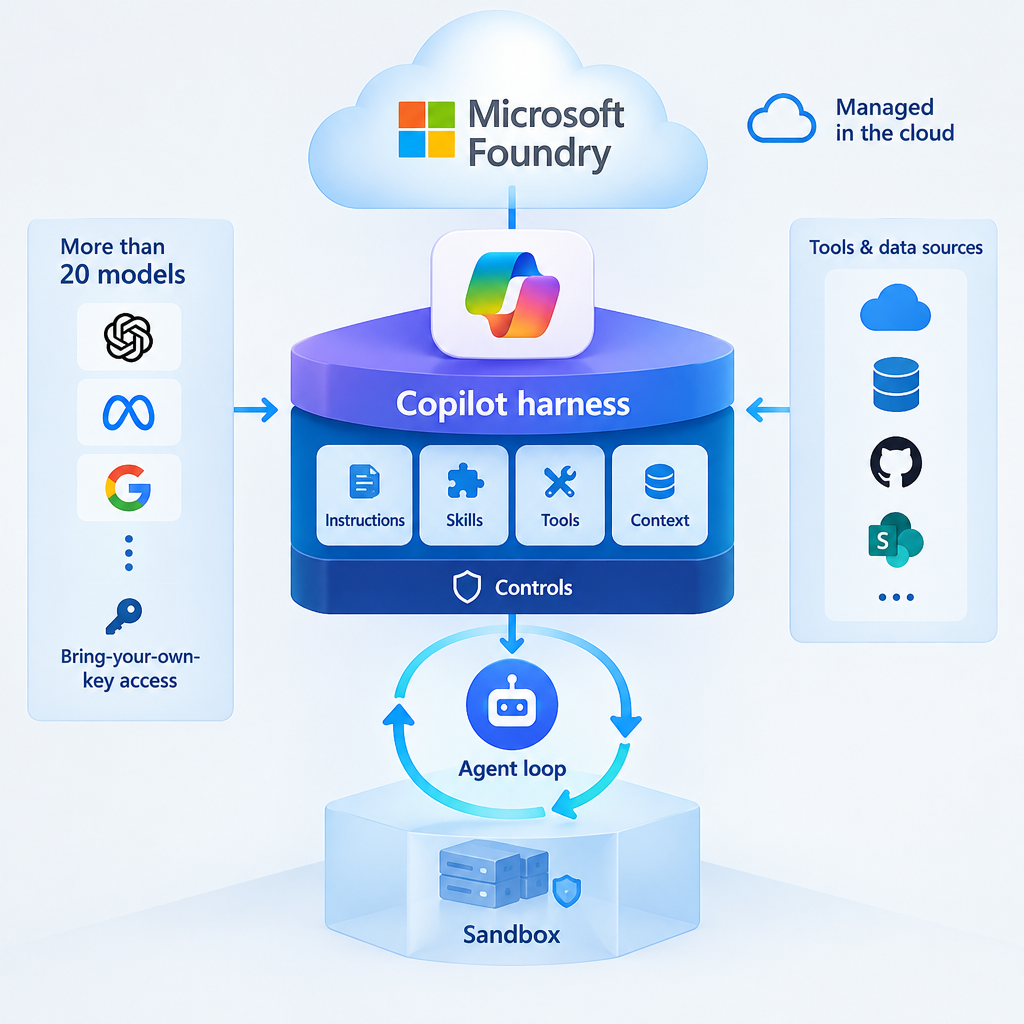
Microsoft has made its Copilot harness available through Microsoft Foundry. The harness is the layer that connects a model to instructions, tools, context and controls. The SDK is available to download, and Foundry can also manage the harness in the cloud.
Key facts
According to Microsoft, the harness supports more than 20 models and bring-your-own-key access. The company also describes support for MCP, a protocol for connecting tools and data sources, and agent skills.
In the managed setup, Microsoft runs the agent loop and sandbox; developers provide instructions, skills, tools and their choice of model.
An objective look at what matters
Teams can build agents using different models without creating the entire surrounding infrastructure themselves.
Business processes
AI agent development and maintenance — A common harness could make it easier to connect models and tools for long-running tasks.
Automation opportunities
Multi-step tasks using tools: An agent could carry out some steps in a managed environment. Conditions: Teams must supply instructions, tools and a model, and test the agent on their own task.
Impact on manual work
A ready-made harness could reduce work on building and maintaining agent infrastructure, but time savings have not been demonstrated.
Limitations and risks
Results and costs depend on the models, tools and task; teams should test them before deployment.
Agents need appropriate access permissions and oversight of their actions.
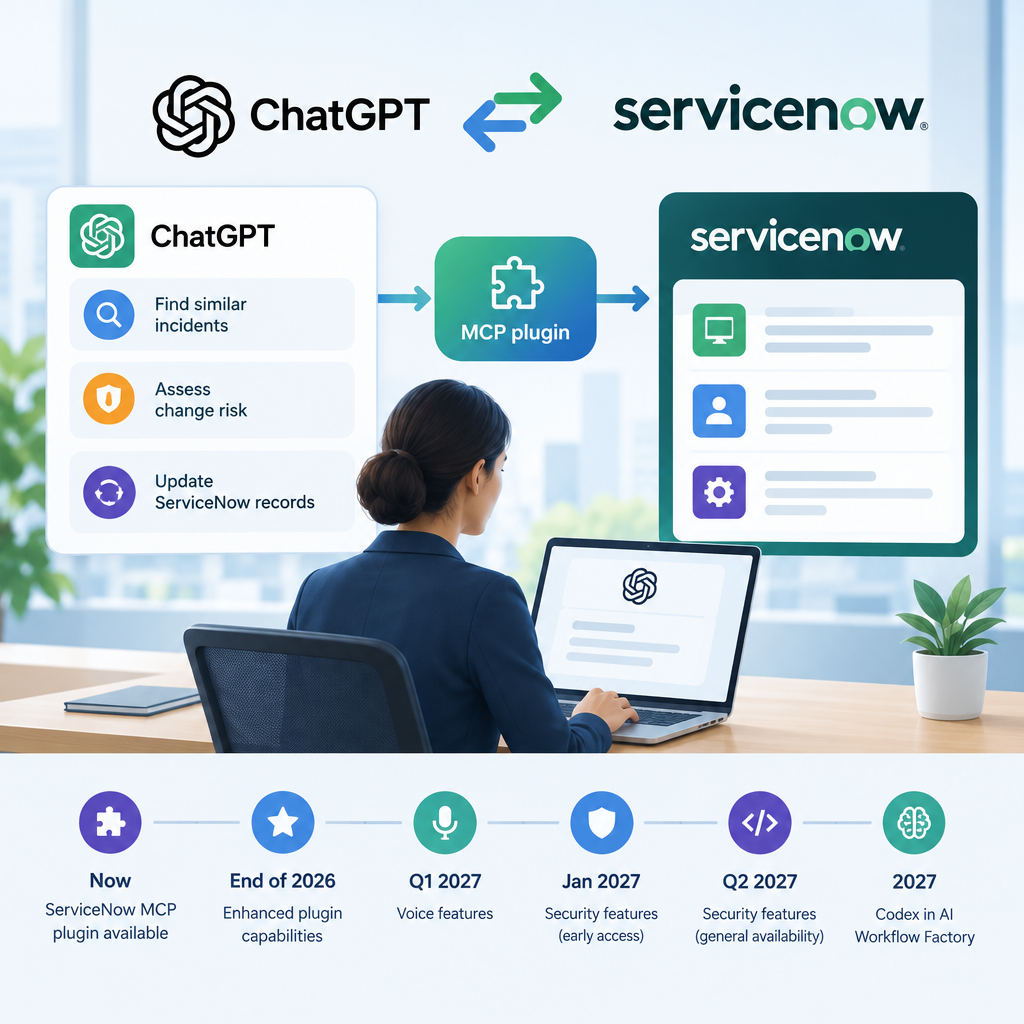
The companies announced an expanded partnership. The integration is intended to connect ServiceNow workflows to ChatGPT and OpenAI models to ServiceNow products. The ServiceNow MCP plugin is already available in the OpenAI marketplace.
Key facts
OpenAI describes planned actions in ChatGPT, including finding similar incidents, assessing change risk and updating ServiceNow records. Customers connect their own instance and choose available capabilities; Action Fabric applies existing rules and permissions.
Enhanced plugin capabilities are expected by the end of 2026 and voice features in the first quarter of 2027. Security features are expected in early access in January 2027, with general availability planned for the second quarter. Codex in AI Workflow Factory is expected in 2027.
An objective look at what matters
Handling request context and actions in one conversation could reduce switching between tools.
Business processes
IT incidents and change management — Staff could find related cases and update records from ChatGPT once the relevant features become available.
Application development and cybersecurity — Planned integrations could support development and vulnerability investigations.
Automation opportunities
Incident investigation and record updates: Some searches and actions could be performed within a conversation. Conditions: Connect the organization’s own ServiceNow instance.; Configure available capabilities, rules and permissions.
Impact on manual work
The integration could reduce manual searching and switching between systems, but the outcome has not yet been demonstrated.
Limitations and risks
The plugin’s availability does not mean all described features have been released.
Actions depend on the organization’s settings and permissions; record changes need oversight.
Google introduces Gemini 4 Carbon for development and cyber defense
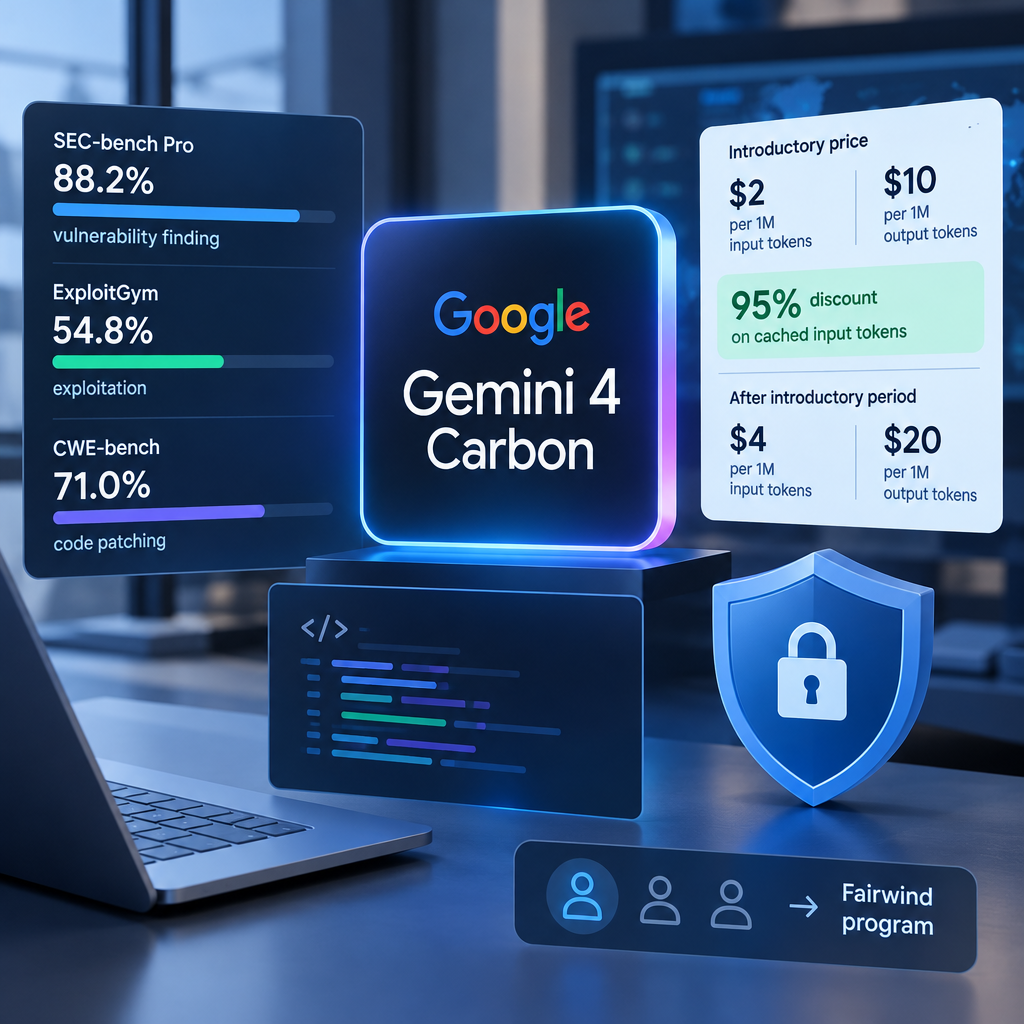
Google introduced Gemini 4 Carbon. The company will begin offering the model to a limited group of cyber defenders during the week of the announcement, followed by other trusted partners in its Fairwind program. No date was given for broad access.
Key facts
Google reports that Carbon scored 88.2% on SEC-bench Pro for finding vulnerabilities, 54.8% on ExploitGym for exploitation and 71.0% on CWE-bench for code patching. These tests were conducted without safety guardrails.
The announced introductory price is $2 per million input tokens and $10 per million output tokens, with a 95% discount on cached input tokens. After the introductory period, prices will be $4 and $20 respectively.
An objective look at what matters
The model could help development and security teams with multi-step tasks, but the reported benchmarks are no substitute for testing in a working environment.
Business processes
Vulnerability detection and remediation — The model could help analyze code and suggest fixes.
Automation opportunities
Vulnerability analysis and patch preparation: Some analysis and coding could be delegated to the model when access is available. Conditions: Access is initially limited to selected groups.; Specialists need to review results and patches.
Impact on manual work
The model could reduce some manual coding work, but practical time savings for customers have not been demonstrated.
Limitations and risks
The benchmark results were reported by Google and obtained without guardrails; real-world results may differ.
Access for developers, businesses and consumers is planned, but no exact date has been given.