GPT-6.1 Terra, Oracle apps in ChatGPT, and Genie 4 simulations
Issue date:
This issue covers a model for computer-based tasks, plans to connect ChatGPT with Oracle business applications, and an experimental model for interactive worlds.
This issue may include important events published earlier.
OpenAI releases GPT-6.1 Terra for computer-based tasks
Previously published event ·
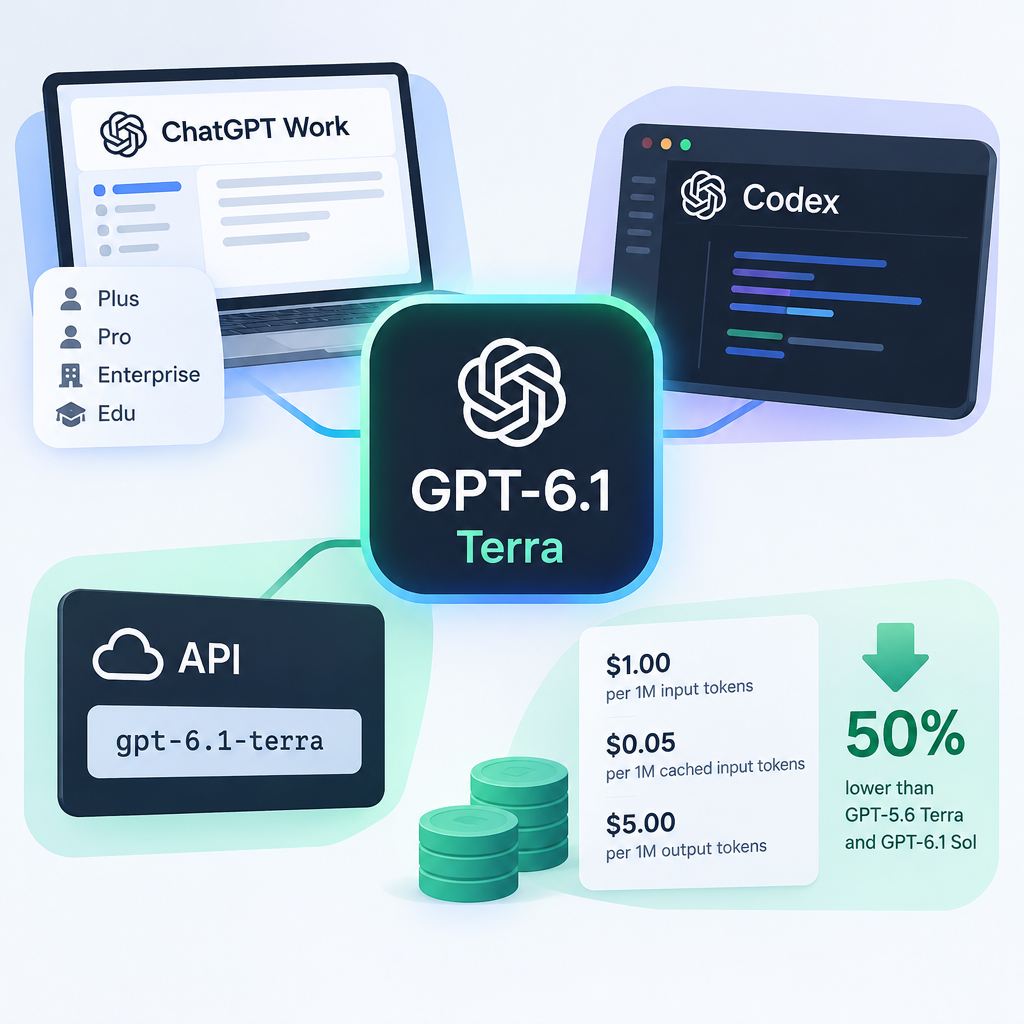
OpenAI introduced GPT-6.1 Terra for working with images, computer applications, and text. It is available in ChatGPT Work and Codex to Plus, Pro, Enterprise, and Edu users, and through the API for application integration.
Key facts
Standard API pricing is $1 per million input tokens, $0.05 per million cached input tokens, and $5 per million output tokens. Tokens are units used to process text and other data.
OpenAI says standard API prices are 50% lower than for GPT-5.6 Terra and GPT-6.1 Sol.
In OpenAI’s Terminal-Bench 4.0 test, the model solved 50.3% of tasks at maximum reasoning effort; GPT-5.6 Terra’s published score was 21.5%.
An objective look at what matters
Lower pricing could make high-volume document processing and actions in applications more accessible, but teams should test performance on their own tasks.
Business processes
Invoice processing — The model could extract invoice details and help transfer them into accounting software.
Automation opportunities
Reading incoming invoices and entering their details: Some steps could be automated through the API and computer applications. Conditions: Integration and checks on extracted data are needed before records are saved.
Impact on manual work
Manual entry could decrease, but the publication does not establish time savings in a specific deployment.
Limitations and risks
Model errors and actions in applications require oversight; the benchmark results come from the vendor.
OpenAI recommends GPT-6.1 Sol and GPT-6 Astra for the most complex coding tasks.
Oracle is developing an integration between its apps and ChatGPT
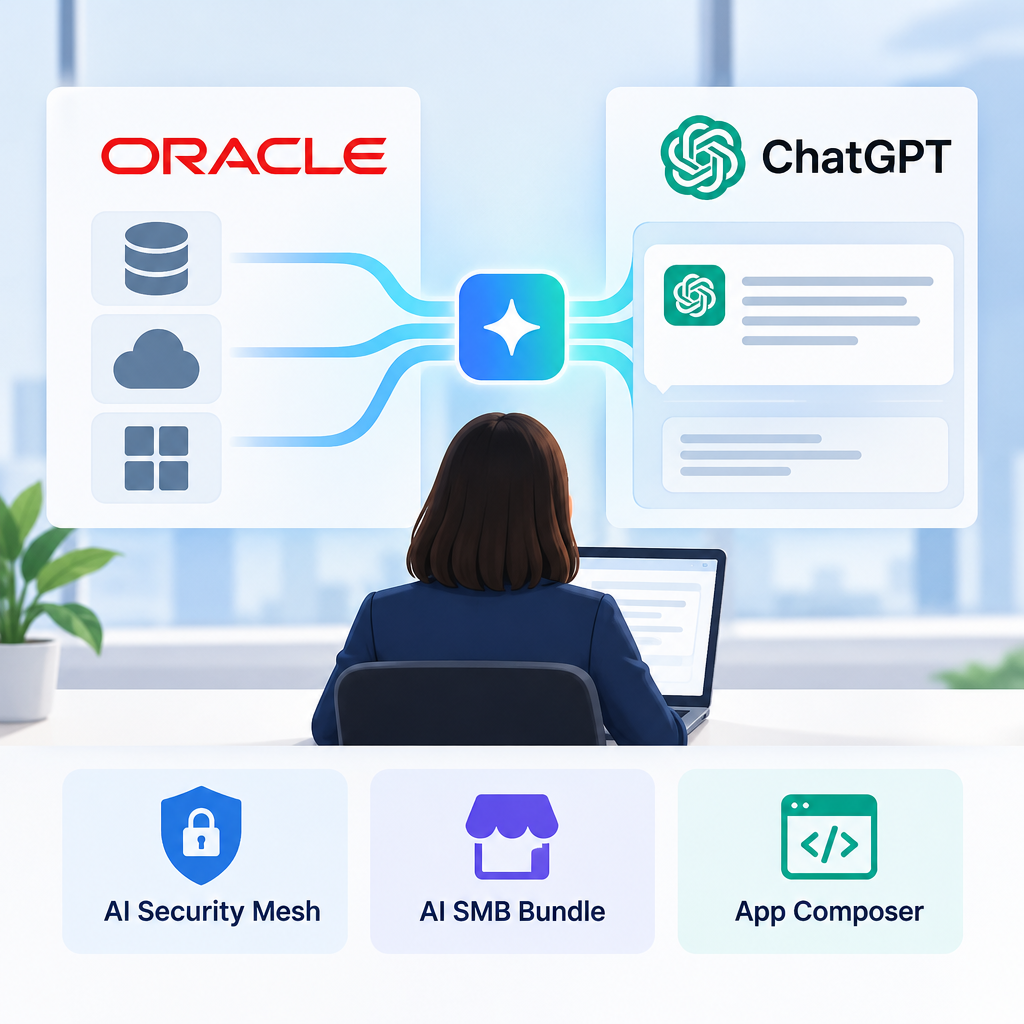
OpenAI and Oracle announced an expanded partnership. Oracle is developing AI Workspace to bring its applications and data into ChatGPT and has announced new offerings using OpenAI tools.
Key facts
AI Workspace is intended to help users find information and complete approved workflows within their organization’s permissions and approval processes.
The announced offerings include AI Security Mesh for finding and fixing vulnerabilities, AI SMB Bundle for small businesses, and App Composer for building applications.
Oracle reports that its recruiting team now takes 15–20 minutes to prepare market research with ChatGPT Work; compiling it previously took two to four days.
Oracle customers in the U.S. can buy access to the OpenAI API, Codex, and ChatGPT Work through Oracle Marketplace using existing procurement processes and eligible Oracle Universal Credits.
An objective look at what matters
Connecting several enterprise systems to one interface could make it easier to find context for finance and procurement decisions.
Business processes
Month-end close and procurement analysis — Employees could bring together finance, procurement, and planning data if the integration works as intended.
Automation opportunities
Finding data and completing approved actions in Oracle: AI Workspace could combine several steps in one interface. Conditions: The product is in development; organizational permissions and approvals are required.
Impact on manual work
Less switching between systems could reduce manual work. Oracle’s reported time savings concern market research, not the new integration.
Limitations and risks
The publication does not specify timing or terms for broad AI Workspace access.
Access to business data and actions must follow organizational permissions and approval procedures.
Google DeepMind opens Genie 4 to a limited group of testers
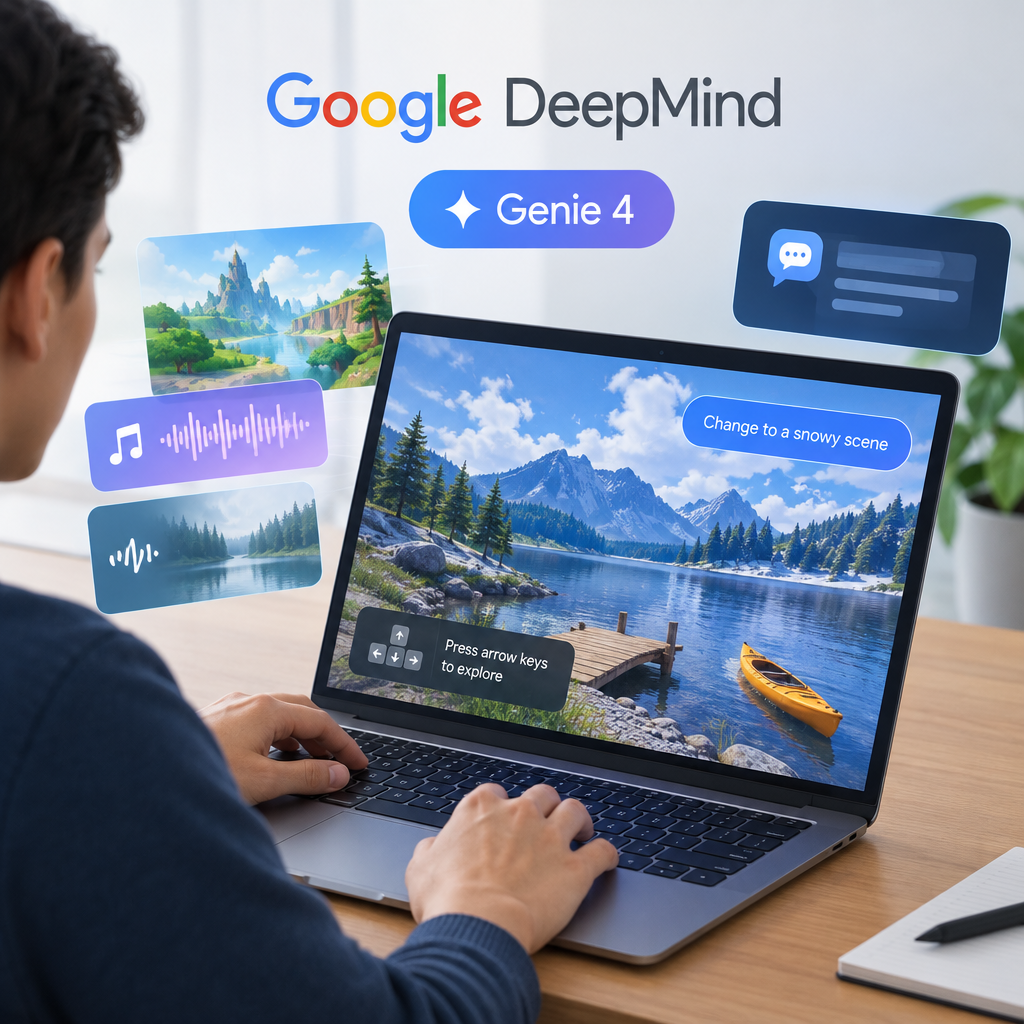
Genie 4 is an experimental model that generates interactive scenes and audio in real time. Testers can navigate with a keyboard and change scenes using text prompts.
Key facts
The model generates music, ambient sounds, and interactive dialogue; Gemini 3.8 Flash can guide multistep scenarios.
The research preview is available to trusted testers. Google plans to bring it next to Google AI Ultra subscribers in Project Genie and early-access partners in the Gemini API and Google AI Studio.
Google DeepMind says Genie 4 video and audio will include SynthID, an imperceptible digital watermark for identifying AI-generated material.
An objective look at what matters
Interactive scenes could help teams test ideas and scenarios before building a full environment or conducting real-world trials.
Business processes
Scene preparation and agent testing — Teams could explore variations in scenes and conditions through simulation.
Automation opportunities
Creating draft scenes and scenarios: Generating and changing scenes from text prompts could reduce some manual preparation. Conditions: Access is currently limited, and outputs must be checked for fitness for the task.
Impact on manual work
Testers are exploring the model for draft visualization, but the publication does not establish labor savings.
Limitations and risks
Visual details and objects can drift during longer sessions or after complex changes.
Accuracy of physics, audio, text, and spatial details, as well as long-term consistency, remain research challenges.