GPT-6.1 Terra for work agents, Fanatics recommendations, and the ONA agriculture network
Issue date:
This issue covers a new model for operating software interfaces, a deployed merchandise-recommendation service, and plans to expand a shared digital network for farmers.
This issue may include important events published earlier.
OpenAI releases GPT-6.1 Terra for ChatGPT Work, Codex, and the API
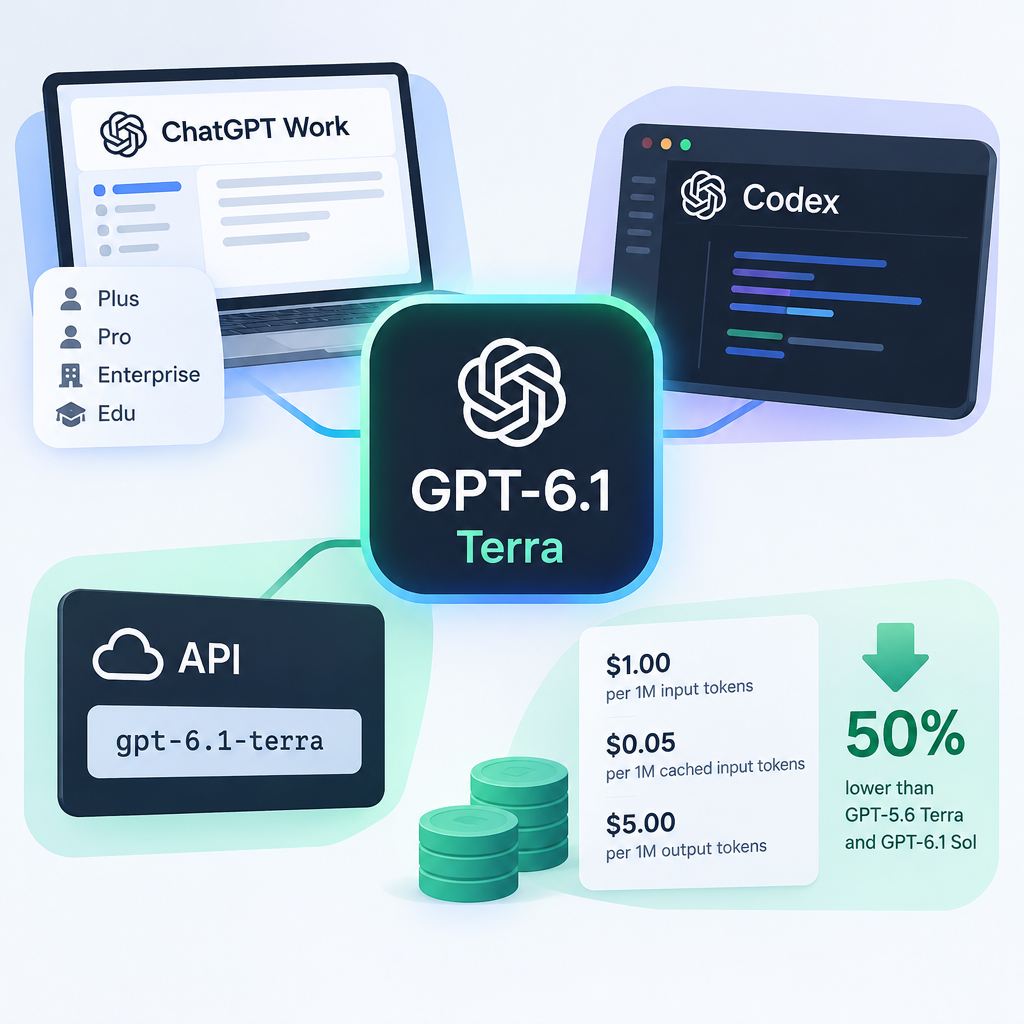
OpenAI introduced GPT-6.1 Terra. The model is available to Plus, Pro, Enterprise, and Edu users in ChatGPT Work and Codex, and to developers through the API as gpt-6.1-terra. Standard API pricing is $1 per million input tokens, $0.05 per million cached input tokens, and $5 per million output tokens. OpenAI says standard API prices are 50% lower than for GPT-5.6 Terra and GPT-6.1 Sol.
Key facts
GPT-6.1 Terra is available in ChatGPT Work, Codex, and the API, where it uses the gpt-6.1-terra identifier.
According to OpenAI, standard API prices for the model are 50% lower than for GPT-5.6 Terra and GPT-6.1 Sol.
OpenAI reports that on its internal error-inducing prompt benchmark, Terra's error rate at low reasoning effort was 16.7%, compared with 53.6% for GPT-5.6 Terra.
An objective look at what matters
The lower price could make high-volume document processing and interface work economically viable. However, the quality, speed, and resistance-to-malicious-instructions results were published by the vendor. They should be tested against an organization's own workflows, data, and access controls.
Business processes
Processing incoming invoices and entering details into accounting software — The model may extract data and take interface steps when outputs are reviewed.
Preparing proposals and working with technical drawings — It may support analysis of visual material and drafting.
Automation opportunities
Extracting invoice data and then populating an accounting system: An agent could read a document, transfer fields into a system, and route exceptions to a staff member. Conditions: Testing on real documents and field validation before posting transactions are required.; Agent permissions should be limited and actions logged.; Token costs and data-handling rules must be considered.
Multi-step actions in work web and desktop applications: The model could execute specified interface actions under explicit rules. Conditions: For complex tasks, OpenAI recommends GPT-6.1 Sol or GPT-6 Astra.; Protection against malicious instructions embedded in data and human review of critical actions are required.
Impact on manual work
The vendor gives invoice reading and data entry as an automation example. It does not establish reduced manual work at particular companies.
Limitations and risks
Benchmark comparisons, error and speed figures come from OpenAI, not from an independent evaluation.
OpenAI says the model meets its Critical threshold for cybersecurity capabilities under its Preparedness Framework.
Interface actions still carry risks of errors, incorrect data, and malicious instructions embedded in data.
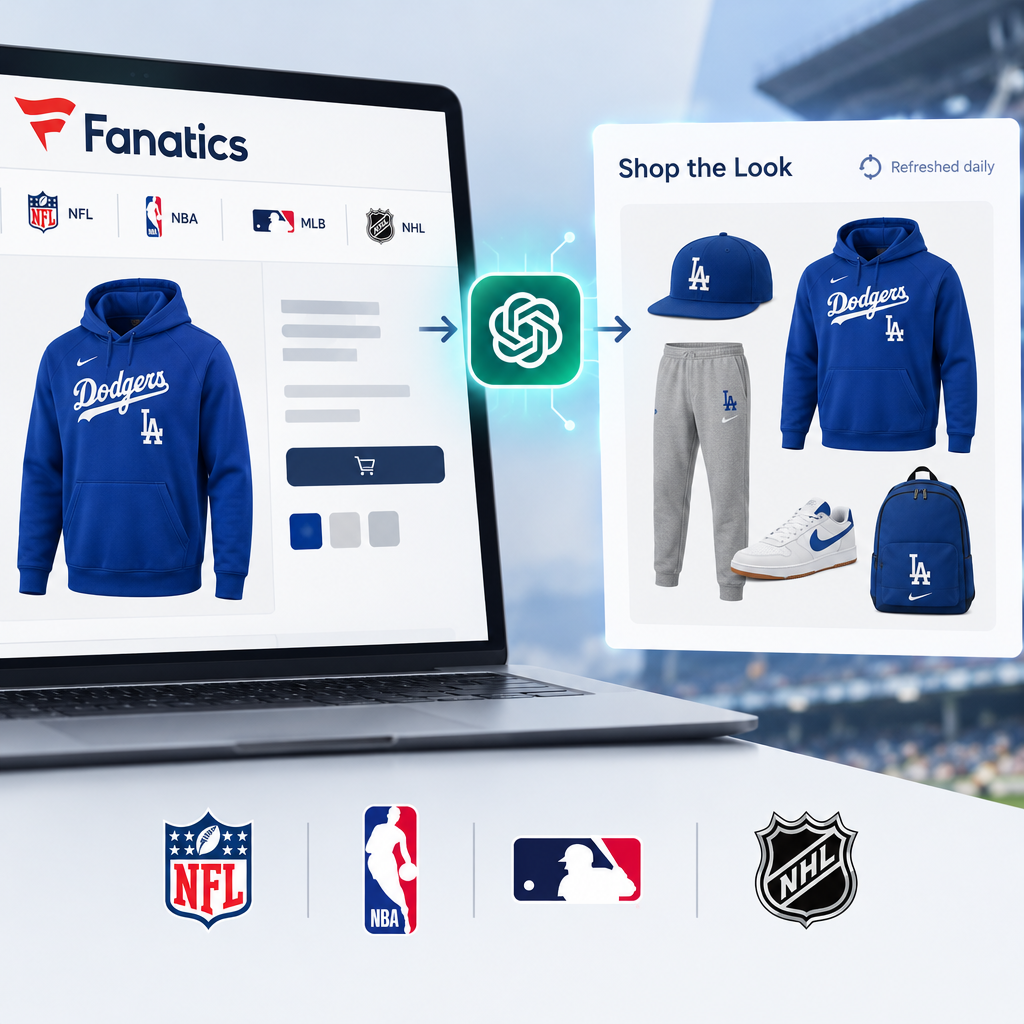
Fanatics launched an OpenAI-powered version of Shop the Look. The service shows coordinated in-stock merchandise on product pages based on the team and intended style. It is live across many Fanatics network sites, including Fanatics.com and the NFL, NBA, MLB, and NHL online stores. OpenAI, a project participant, reports that a test across roughly 30,000 MLB products produced 10% higher engagement than the previous experience.
Key facts
Recommendations use enriched product data and team and inventory information, while Fanatics merchandising rules limit selections to compatible and relevant products.
The looks are refreshed daily as catalogs change.
According to OpenAI, which worked with Fanatics, the new experience generated 10% higher engagement than the prior experience in testing across roughly 30,000 MLB products.
An objective look at what matters
This is a recommendation example where the model does not operate alone: inventory data and merchandising rules constrain it. That setup may reduce the risk of suggesting incompatible products. The engagement result was published by a project participant, so it is not independent evidence of higher sales or conversion.
Business processes
Recommending related merchandise on product pages — Shoppers may find a coordinated set of in-stock items more quickly.
Maintaining recommendations as catalogs change — Daily refreshes may reduce manual upkeep of selections.
Automation opportunities
Creating and refreshing coordinated related-product sets: A system could generate selections from catalog data, inventory, and merchandising rules. Conditions: High-quality catalog data, inventory data, and compatibility rules are needed.; Recommendations, exceptions, and outcomes should be reviewed after launch.; The engagement metric does not demonstrate higher sales or profit.
Impact on manual work
The tools helped enrich catalog data, find compatible merchandise, and generate looks. The publication does not measure a reduction in manual work after deployment.
Limitations and risks
The MLB-product result is reported by a project participant without independent verification.
Recommendation quality depends on catalog data, current inventory, and merchandising rules.
The service is live across many network sites, but the publication does not specify coverage of all products or markets.
Google.org provides $2.5 million to expand the ONA network for farmers
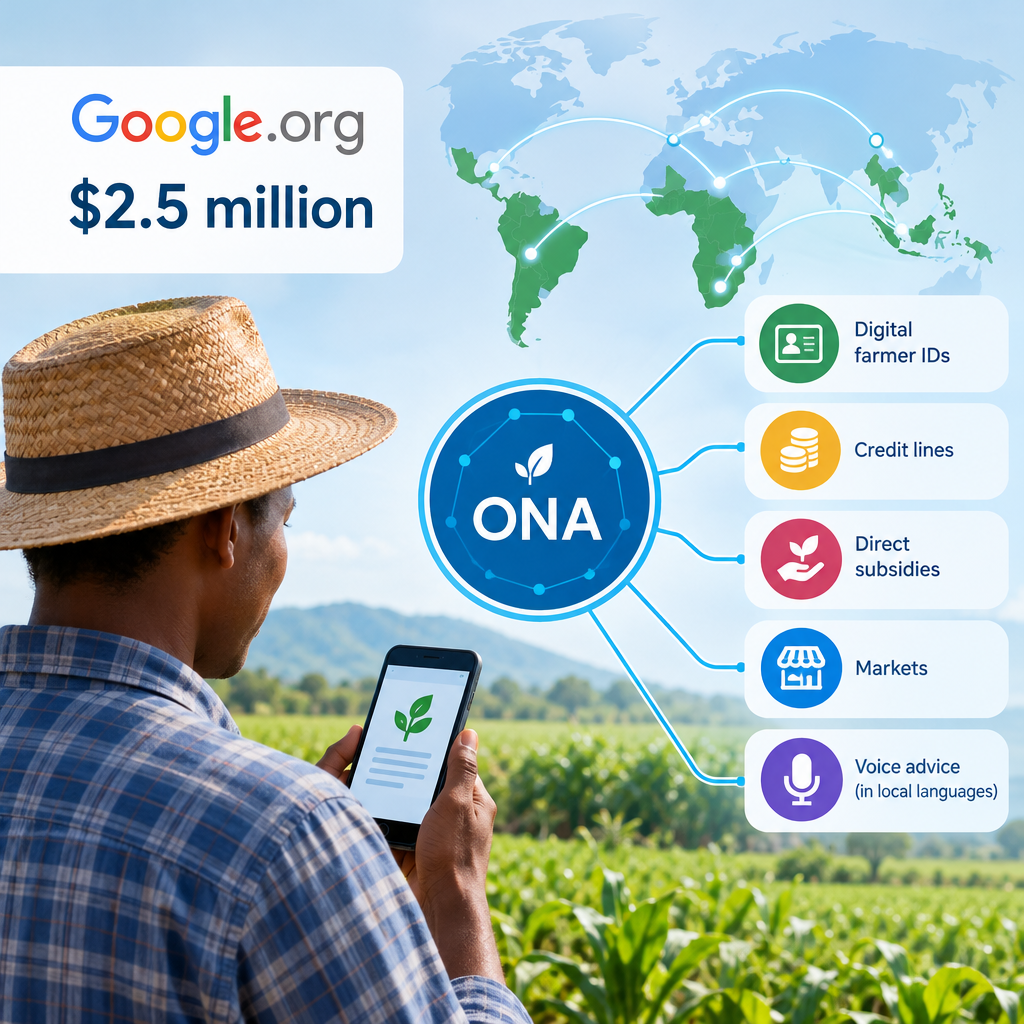
Google.org is providing $2.5 million in support to the International Finance Corporation (IFC) and the World Bank Group through the AgriConnect initiative. Following a pilot in India, the World Bank Group plans to expand an AI-enabled Open Network for Agriculture (ONA) across countries in Latin America, Southeast Asia, and Sub-Saharan Africa. ONA is intended as shared digital infrastructure connecting public- and private-sector service providers.
Key facts
Google.org support totals $2.5 million under the World Bank Group's AgriConnect initiative.
The planned ONA network is intended to provide a single platform for farmers to access digital farmer IDs, credit lines, direct subsidies, markets, and voice advice in local languages.
The World Bank Group and its partners aim to help 1 million farmers access essential services by the end of 2027.
An objective look at what matters
The project targets a shared foundation for services from multiple providers rather than a standalone application. That could reduce fragmentation in farmer services. But the expansion is still planned, so actual reach, advice quality, and income effects are unknown.
Business processes
Farmer access to financial, public, and market services — A shared network may combine service discovery and data exchange among providers.
Advice on farming, weather, pricing, and finances — Voice advice in local languages may make information easier to obtain.
Automation opportunities
Routing farmer requests to digital services and reference information: A shared platform could direct a user to appropriate services and provide voice advice. Conditions: Network expansion into new regions is still planned.; Connected service providers, reliable data, and local-language support are necessary.; Data protection and review of advice affecting farm decisions should be built in.
Impact on manual work
The publication describes planned infrastructure and services, but provides no evidence of changed manual work for farmers or organizations.
Limitations and risks
A successful pilot is mentioned only for India; no expansion results for other regions are presented.
Helping 1 million farmers by the end of 2027 is a stated goal, not an achieved outcome.
Network availability and usefulness will depend on service-provider integration, data quality, and local implementation.