OpenAI in Google Cloud, Cloudflare vulnerability analysis, and AI use in Southeast Asia
Issue date:
This issue covers plans to make OpenAI models available through Google Cloud, Cloudflare’s early-access vulnerability service, and regional evidence on AI use in Southeast Asia.
This issue may include important events published earlier.
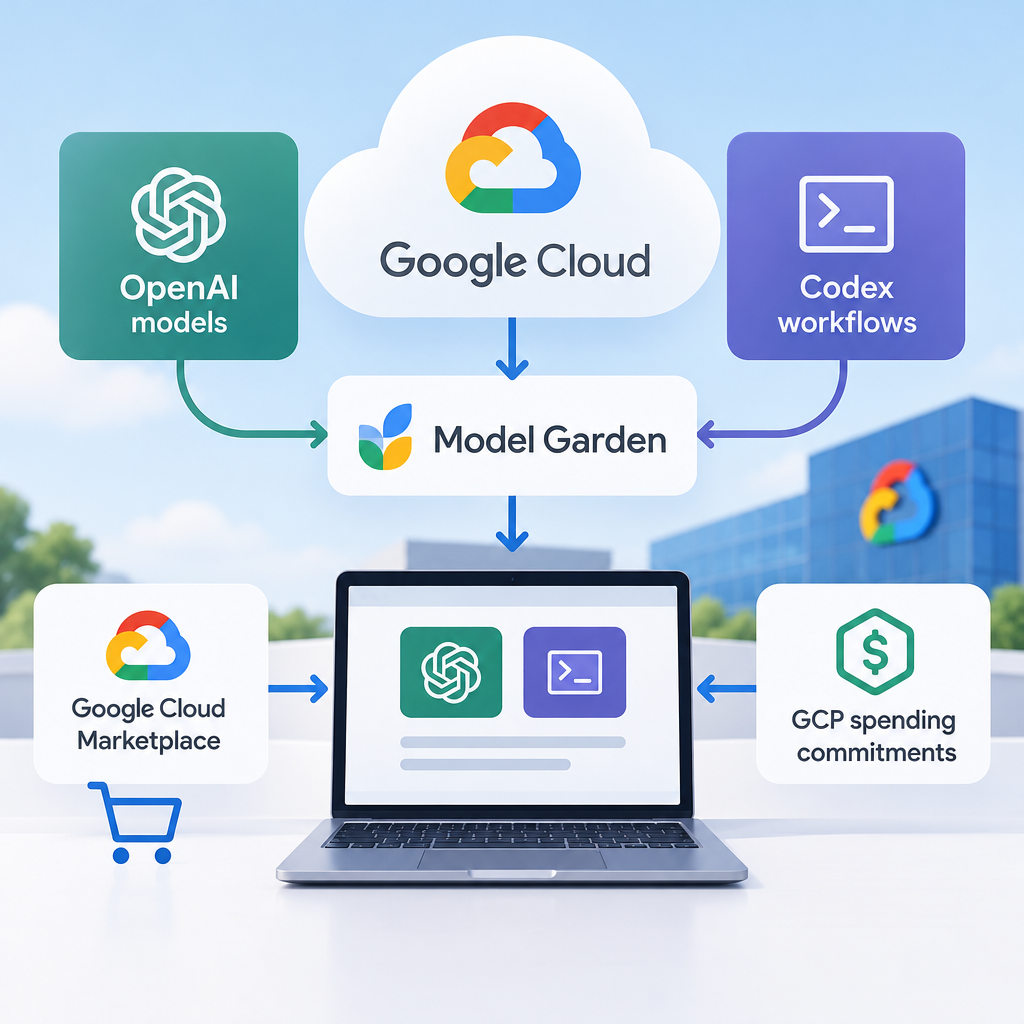
OpenAI models and Codex workflows are coming to Google Cloud Model Garden
OpenAI and Google Cloud announced plans to offer OpenAI models and Codex agentic workflows through Model Garden. Google Cloud customers will be able to buy the models through Google Cloud Marketplace and draw down GCP spending commitments for those purchases. General availability is planned in the coming weeks.
Key facts
The integration is intended to give Google Cloud customers native access to OpenAI models and Codex workflows in Model Garden.
Model purchases will be transacted through Google Cloud Marketplace, and GCP spending commitments can be used for them.
OpenAI says general availability is planned in the coming weeks.
An objective look at what matters
For enterprises, this could shorten the path from model evaluation to procurement and deployment in an existing cloud environment. OpenAI says the integration will pair its models with Google Cloud access controls and centralized data governance. Before a broad rollout, teams need to verify available models, regions, pricing, and data-handling terms.
Business processes
AI procurement and vendor management — Organizations may gain a route to buy models through their existing Google Cloud procurement processes.
Software development — Once the integration launches, teams may evaluate Codex and OpenAI models in Google Cloud for development work and agentic workflows.
Automation opportunities
Model evaluation and deployment for internal assistants and agentic workflows: Teams may be able to select and procure models through Model Garden, then connect them to enterprise workflows using cloud access-management controls. Conditions: General availability has not yet begun.; Regional availability, pricing, and data-handling terms need to be checked.; Teams should define access rights, permitted data, and controls for agent actions.
Impact on manual work
The integration may reduce manual effort in model procurement and connection, but the publication does not demonstrate a measured impact.
Limitations and risks
General availability is only planned for the coming weeks.
The publication does not provide a complete list of models, regions, or prices.
Access controls and data governance do not remove the need for an organization’s own security and compliance assessment.
Cloudflare uses Daybreak for vulnerability analysis
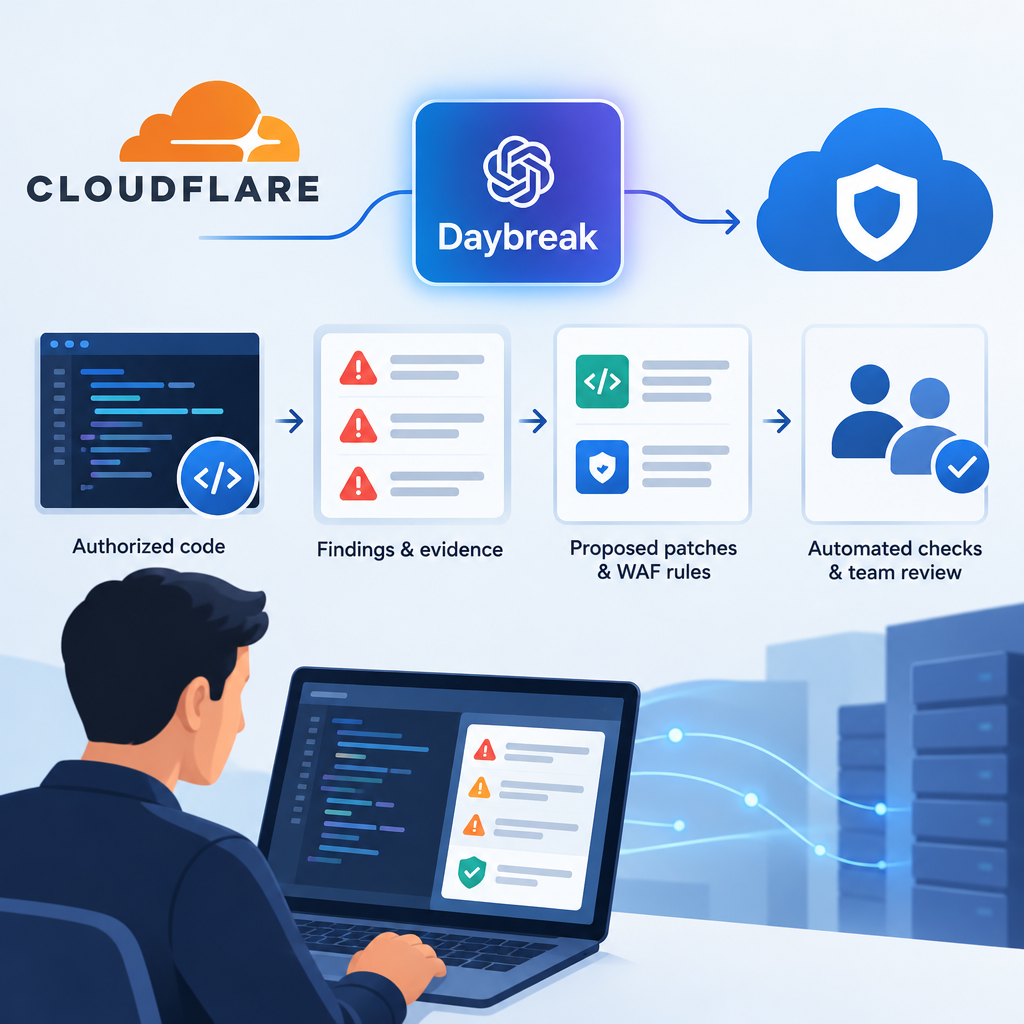
Cloudflare is using OpenAI models through Daybreak in its early-access Vulnerability Discovery and Remediation service, offered through Cloudflare Managed Defense. The service investigates code with customer authorization, combines findings with traffic and security signals, and prepares proposed defenses and fixes for customer review.
Key facts
The service investigates customer-authorized source code, identifies potential vulnerabilities, and checks the evidence supporting each finding.
Cloudflare prepares proposed code patches and, where appropriate, web application firewall rules; proposals undergo automated checks and Cloudflare team review before they are shared with customers.
According to OpenAI’s publication, the service is in early access and customers decide which changes to implement.
An objective look at what matters
The approach connects code analysis with production context: whether the affected application route is active, receives suspicious traffic, or already has protections. That may help security teams prioritize investigations. A proposed patch or rule still cannot be assumed safe without review; the customer makes the implementation decision.
Business processes
Vulnerability management — Teams may receive more context to prioritize findings and assess a potential vulnerability.
Exposure reduction and web application protection — Teams may prepare candidate temporary protections and fixes faster for expert review.
Automation opportunities
Initial vulnerability assessment and preparation of protective actions: AI can investigate code and supporting evidence, while the service prepares draft patches and web application firewall rules for expert and customer review. Conditions: The service is in early access through Cloudflare Managed Defense.; Only customer-authorized code is investigated.; Proposals are checked, but customers decide which changes to implement.
Impact on manual work
Automation may reduce manual first-pass investigation and preparation of defense options. The publication provides no independent measure of time savings for customers.
Limitations and risks
The service is in early access.
Potential vulnerabilities, patches, and rules require specialist review.
Customers need to retain control over changes and assess their impact on running applications.
Google, Temasek, and Bain & Company publish the e-Conomy SEA 2026 report
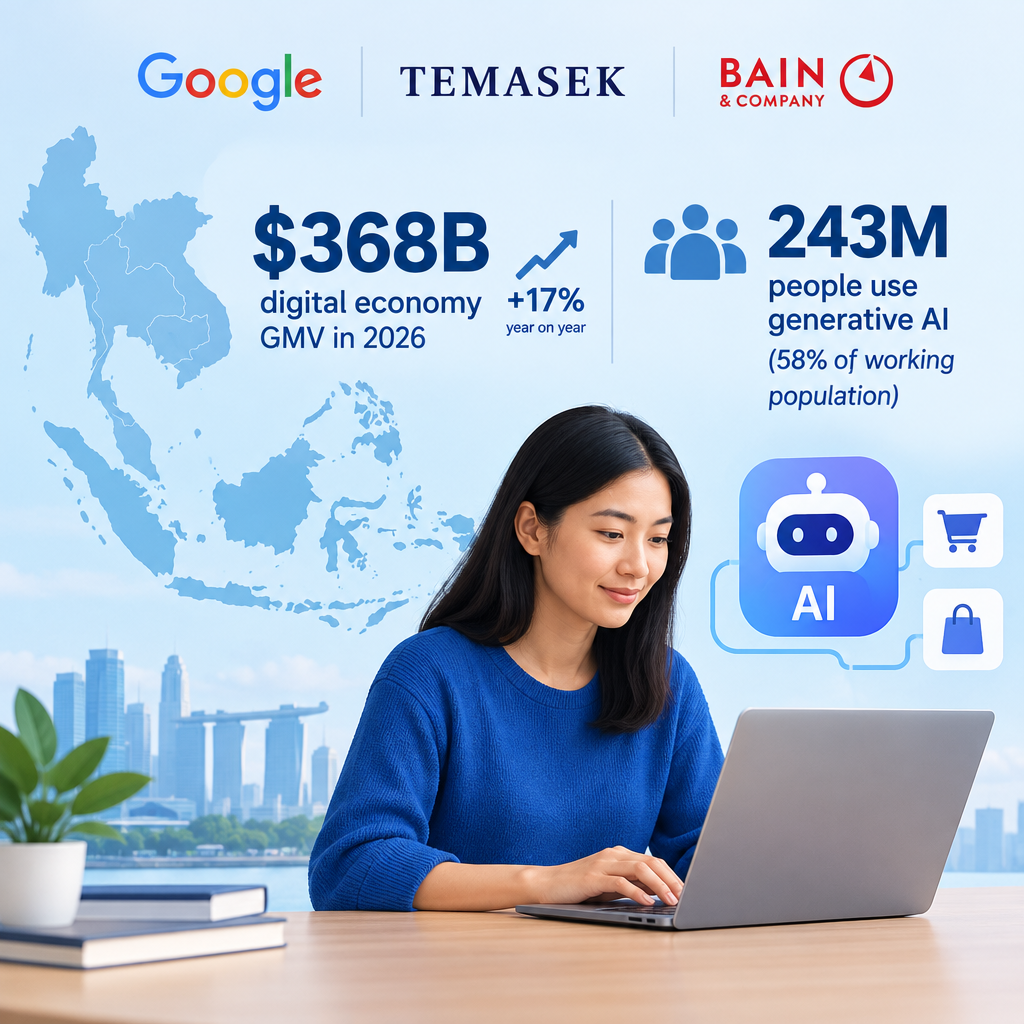
Google, Temasek, and Bain & Company released e-Conomy SEA 2026. The authors estimate gross merchandise value in Southeast Asia’s digital economy at $368 billion in 2026. The report also presents findings on generative AI use and consumers’ willingness to delegate purchases to AI agents.
Key facts
The report’s authors estimate the region’s digital economy at $368 billion in gross merchandise value in 2026, up 17% year on year.
According to the report, 243 million people, or 58% of the region’s working population, actively use generative AI.
The authors report that 75% of users are willing to let AI agents compare prices and complete transactions; stated willingness is not a measure of actual usage.
An objective look at what matters
The report may help organizations assess demand and operating conditions for AI services across ten countries in the region. In designing agent-assisted shopping, stated willingness is only one input: respondents also expect privacy safeguards, clear information about what AI can and cannot do, and the ability to reverse a completed transaction. Growth and AI-use projections remain estimates by the report’s authors.
Business processes
Market-entry planning and product strategy — Regional data may help identify segments and use cases for further local demand research.
Design of customer-facing AI services — Expectations for privacy, transparency, and transaction reversal can inform agent-assisted workflow design.
Automation opportunities
Agent-assisted comparison and purchase-completion workflows: Organizations may test assistants that compare offers and carry out multi-step actions while preserving user control and the ability to reverse completed transactions. Conditions: Reported user willingness does not demonstrate real-world adoption.; Privacy safeguards and clear disclosure of agent capabilities and limits are needed.; The workflow should provide user control and transaction reversal.
Impact on manual work
The report presents market estimates and user intentions, rather than measuring reduced manual work in specific organizations.
Limitations and risks
Metrics and projections are those of the report’s authors.
Willingness to delegate transactions to agents is not the same as actual use.
The analysis excludes Timor-Leste because of limited data availability and quality.