Microsoft’s local AI, Gemini for small businesses, and drug-development agents
Issue date:
This issue covers Microsoft’s plans for locally run AI, new Gemini features for small businesses, and the acquisition of a drug-development coordination platform. In each case, it matters which capabilities are planned rather than available, how data is accessed, and where people retain decision-making responsibility.
This issue may include important events published earlier.
Microsoft outlines local AI capabilities for Sovereign Cloud
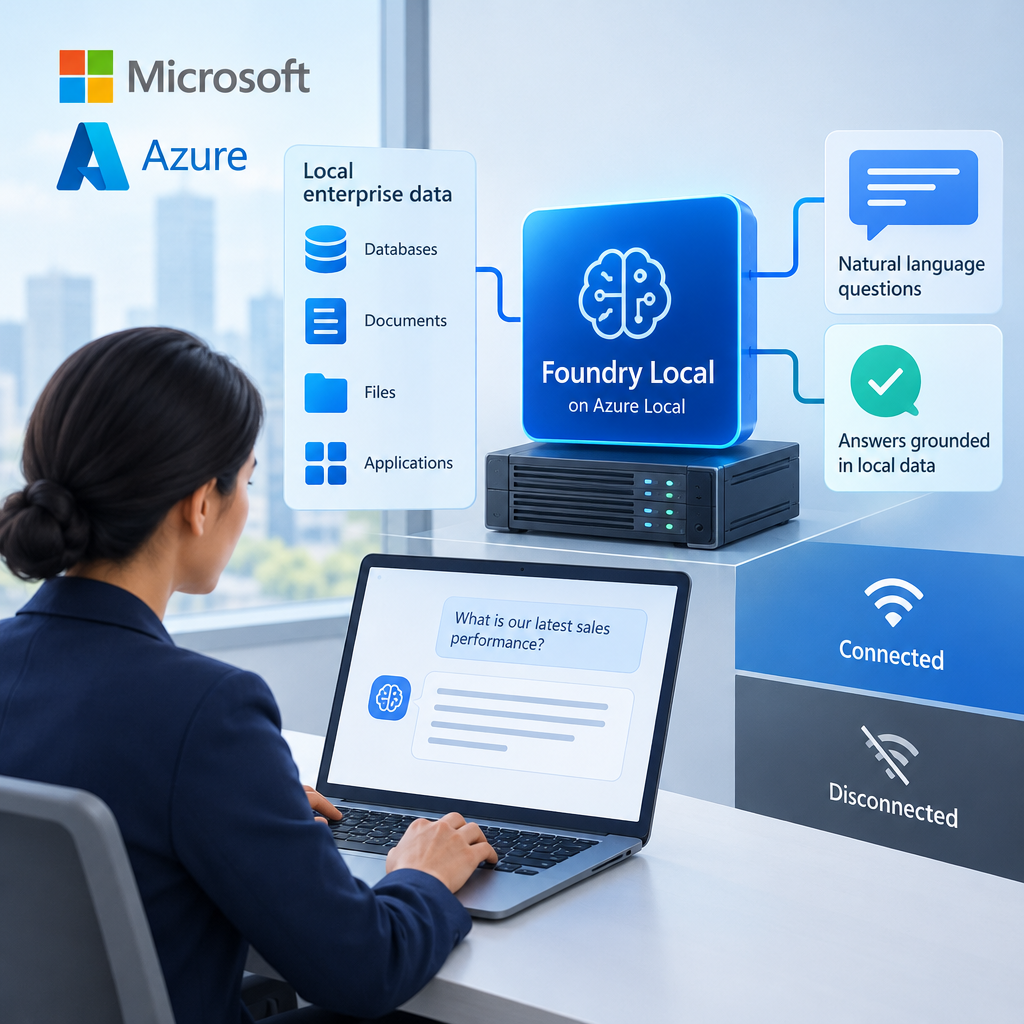
Microsoft announced an expansion of Sovereign Cloud for customer-operated environments. It plans to make Foundry Local generally available on Azure Local at Ignite for connected and disconnected operations. Microsoft also describes local model inference and agentic retrieval: users would be able to ask questions about local enterprise data in natural language and receive answers grounded in that data. A separate capability to transition workloads from connected to disconnected operation is only entering public preview.
Key facts
Microsoft says Foundry Local on Azure Local will become generally available at Ignite for connected and disconnected operations; this is a plan, not confirmation that the release has occurred.
According to Microsoft, local model inference and agentic retrieval will enable questions and answers grounded in local enterprise data.
Microsoft says the transition of workloads from connected to disconnected operation is entering public preview.
An objective look at what matters
Organizations with data-location and continuity requirements gain another architectural option. But local infrastructure alone does not establish that data never leaves a chosen boundary: configuration, connections, and access permissions matter. Answer quality and the actions an agent may take also require separate testing.
Business processes
Searching internal documents — Staff could ask questions about local sources instead of searching several systems manually. The organization would first need to identify approved sources and verify where data is processed.
Maintaining operations during connectivity loss — Disconnected operation may help some local workloads continue running. Switching between modes is only entering public preview and does not guarantee continuity for a particular process.
Automation opportunities
Searching enterprise data and drafting answers: With suitable configuration, an employee request could go to local retrieval grounded in approved data, with a person checking the response. Conditions: Microsoft has announced general availability of Foundry Local on Azure Local for Ignite; the release is not confirmed to have occurred.; Access controls, source validation, and controls on agent actions are needed.; Answer accuracy and disconnected operation should be tested against the organization’s own scenarios.
Impact on manual work
Searching for information and preparing first-draft answers might involve less manual document review. Microsoft provides no measured labor-savings figures for this scenario.
Limitations and risks
Availability varies: Foundry Local general availability is planned, while the transition to disconnected operation is entering public preview.
Local deployment does not replace access control, answer review, or agent governance.
Infrastructure requirements, connections, and continuity must be checked for each system.
Google begins rolling out Gemini tools for small businesses
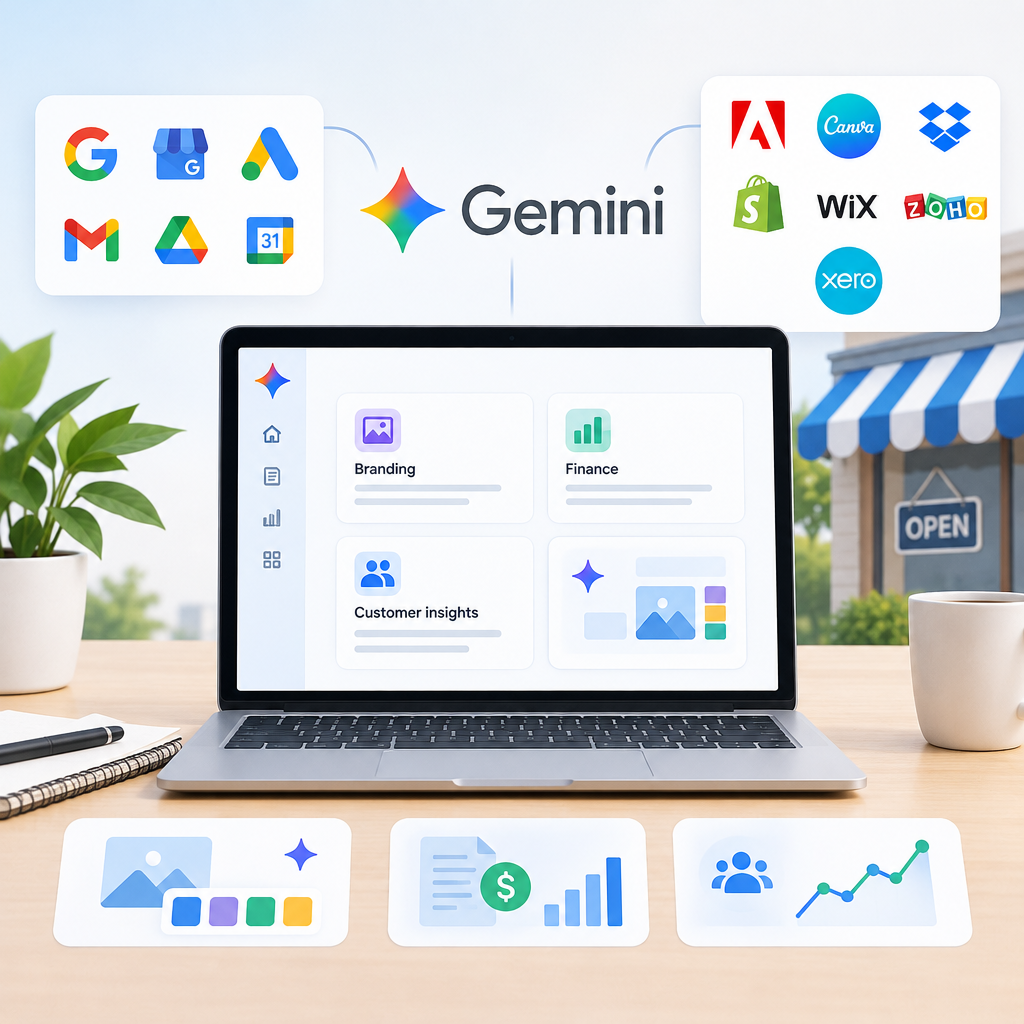
Google introduced a Gemini page for small-business tasks, connections to Google services and third-party apps, controls for the visual style of images, and analysis of financial materials. It says the page, marketing and finance features, and new connections are beginning to roll out globally in the coming days to Gemini app users. The announcement does not mean every feature is already available in every account.
Key facts
The new Gemini page brings together tasks related to branding, finance, and customer insights.
Google says users can connect Google Business Profile, Google Ads, Google Workspace, and third-party apps including Adobe, Canva, Dropbox, Shopify, Wix, Zoho, and Xero.
According to Google, Gemini can retain a visual style supplied through a website or brand materials and turn financial records into charts and interactive models.
Google announced that these features are beginning to roll out globally in the coming days for Gemini app users.
An objective look at what matters
A small team may find it easier to prepare visual assets and review financial data in one app. The practical benefit depends on the availability of relevant connections, the quality of source records, and human review. Connecting an external app also calls for a decision about what data it may access.
Business processes
Preparing visual marketing assets — A defined brand style may make it easier to produce image variations for posts and campaigns; finished assets still need approval before publication.
Initial review of financial records — Spreadsheets, receipts, and purchase records can be used to make charts and models, but any conclusions need checking against the underlying documents.
Automation opportunities
Preparing marketing images and an initial financial review: A team could use a retained visual style and approved connections for draft work while keeping approval of assets and financial conclusions with a person. Conditions: Rollout is only beginning; availability must be checked in the specific account.; App permissions and data sharing should be reviewed before connections are enabled.; Financial charts and conclusions need reconciliation with source records.
Impact on manual work
The tools might reduce manual work on draft visuals and charts. Google includes one business owner’s account of saving two to three hours a day; it is not a validated estimate of the new features’ effect on all users.
Limitations and risks
Rollout of the page, features, and new connections is not complete.
External-app permissions and the data shared with those apps need review.
Images, charts, and financial interpretations may contain errors.
OpenAI acquires Orchestra Bio to develop biopharma agents
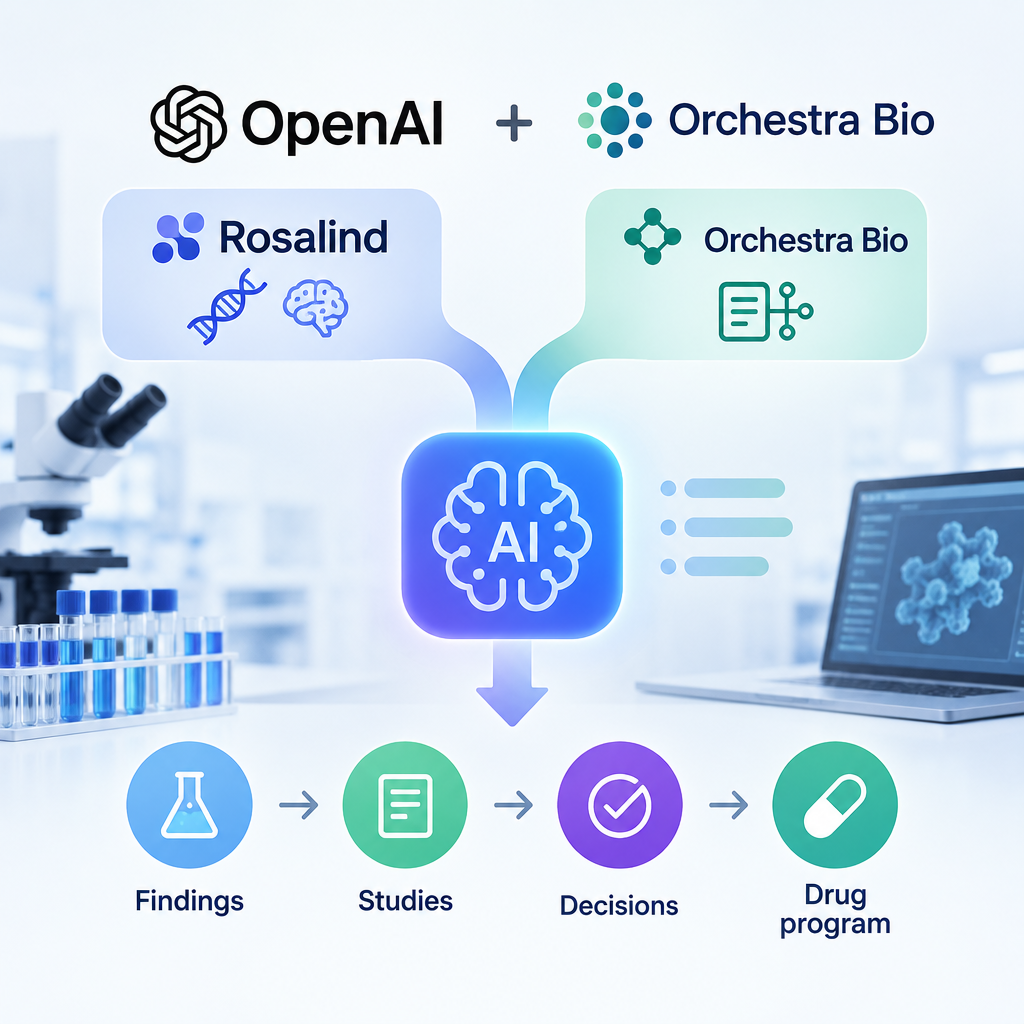
OpenAI announced that it has acquired Orchestra Bio, a platform for coordinating drug development. It plans to combine Orchestra’s team and technology with Rosalind, its models and tools for life-sciences research. OpenAI’s goal is to build agents that connect scientific findings with studies, decisions, and the next steps in a drug program. The outcome of that integration has not been established.
Key facts
OpenAI says it has acquired Orchestra Bio and plans to combine its team and technology with Rosalind.
OpenAI aims to build agents that connect scientific findings to studies and subsequent drug-development work.
OpenAI describes agents in Orchestra’s existing platform as helping track studies and assess which activities and timelines are affected when a program encounters a problem.
An objective look at what matters
Drug development involves connected studies, schedules, and decisions across teams. Bringing information about a change in one stage together could help specialists assess the consequences for others. That is a potential use case, not a demonstrated result of combining Orchestra and Rosalind; scientific and regulated decisions still need expert review.
Business processes
Coordinating drug-development programs — Tracking status and dependencies might help reveal when a delay in one activity affects other stages.
Preparing responses to disruptions — Collecting information on affected work and timelines could help program leaders compare options, without replacing their judgment.
Automation opportunities
Monitoring studies and related risks: An agent could gather status updates and dependencies while scientists and program leaders remain responsible for evaluating and approving actions. Conditions: OpenAI describes joint Orchestra–Rosalind agents as a goal; their readiness is unconfirmed.; Verifiable data, defined roles, and records of agent actions are needed.; Regulated decisions require expert oversight and compliant handling of data.
Impact on manual work
Collecting statuses and links between activities might reduce manual coordination. OpenAI provides no measured results from the integration.
Limitations and risks
The acquisition has occurred, but integration results and the readiness of joint agents are unconfirmed.
Incomplete or incorrect links between studies could distort assessments of a delay.
Data handling, action audits, and specialist decisions require separate rules and oversight.