Google Universal Cart, biomolecular structures in Antigravity, and Anthropic’s fund
Issue date:
This issue covers Google’s cart for shopping across Search and Gemini, Google DeepMind’s tool for examining biomolecular structures, and Anthropic’s public-benefit fund. The two Google announcements were published on October 15; Anthropic’s followed on October 18. The cart is rolling out in the United States, the candidate found using Antigravity is undergoing lab validation, and the fund’s initial share transfer needs stockholder approval.
This issue may include important events published earlier.
Google begins U.S. rollout of Universal Cart in Search and Gemini
Previously published event ·
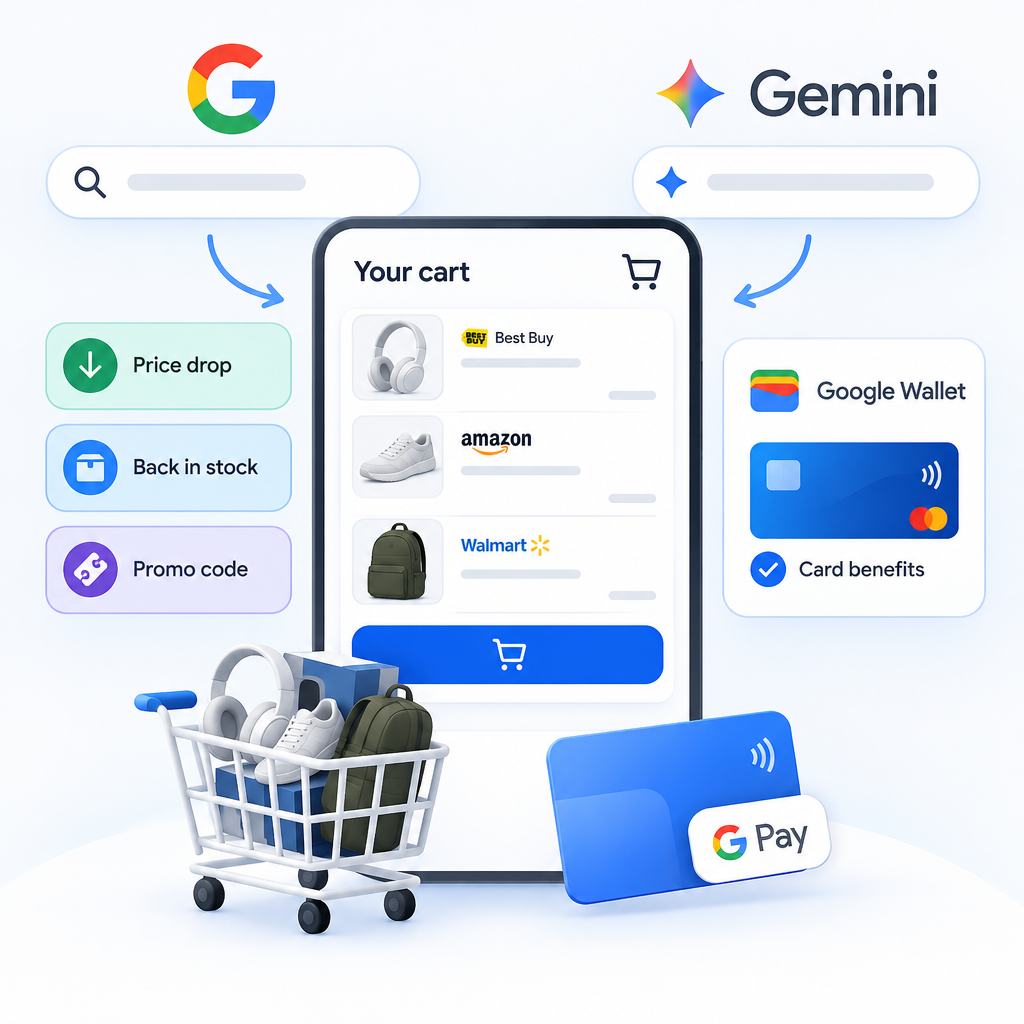
Google has begun rolling out Universal Cart in the United States across Search and the Gemini app. It saves products from different retailers across Google services so shoppers can return to their selections later. According to Google, the cart tracks price and stock changes, shows relevant promo codes, and helps shoppers take account of card benefits in Google Wallet. With some stores, shoppers can pay through Google Pay from the cart; alternatively, they can move items to the retailer’s cart and finish there. In either case, the merchant remains the seller of record and handles order confirmations and customer support.
Key facts
On October 15, Google announced the start of the U.S. rollout of Universal Cart across Search and the Gemini app.
Google says the cart brings together saved products from different retailers and can notify shoppers of price drops or items returning to stock.
Google describes checkout through Google Pay with some merchants or transfer to their carts; the merchant remains the seller of record and provides support.
An objective look at what matters
Choosing a product can involve switching among search results, store pages, and notes about prices. A shared list could preserve that context and make it easier to resume a deferred purchase. Retailers should distinguish discovery from order fulfillment: appearing in Google’s cart does not mean Google takes over the sale or customer service. Practical value will depend on rollout coverage, available offers, and which checkout paths a particular merchant supports. The publication gives no data on changes in conversion rates.
Business processes
Product discovery and comparison — A shopper can keep products from several stores on one list and return to it in Search or Gemini rather than find the store pages again.
Monitoring deferred purchases — Price and stock notifications could help a shopper decide when to buy, provided product information is current and notifications are available.
Online checkout — With participating merchants, shoppers can pay through Google Pay in the cart or complete the purchase on the store’s site; the merchant handles confirmation and support.
Automation opportunities
Tracking prices and stock: Once a product is saved, the cart can monitor its price and availability and send notifications instead of requiring repeated manual checks of store pages. Conditions: The rollout has begun in the United States; access is not guaranteed for every shopper.; Tracking depends on product data available to Google’s services.
Finding offers and choosing a payment method: The cart can surface a relevant promo code and help compare card benefits available through Google Wallet. Conditions: Applicable offers and card-benefit information must be available.; In-cart payment depends on the merchant and supported checkout path.
Impact on manual work
A shared list and notifications may reduce the shopper’s manual checks of tabs, prices, and stock. Google describes the functions but provides no measured time savings or reduction in merchants’ work.
Limitations and risks
The rollout has begun in the United States, not in every country at once.
In-cart payment is not supported by every retailer; some purchases must be completed on the retailer’s site.
Notifications and suggestions depend on available product, price, stock, and offer data.
The merchant, rather than Google, handles order confirmation and customer support.
Google DeepMind introduces a biomolecular structure viewer in Antigravity
Previously published event ·
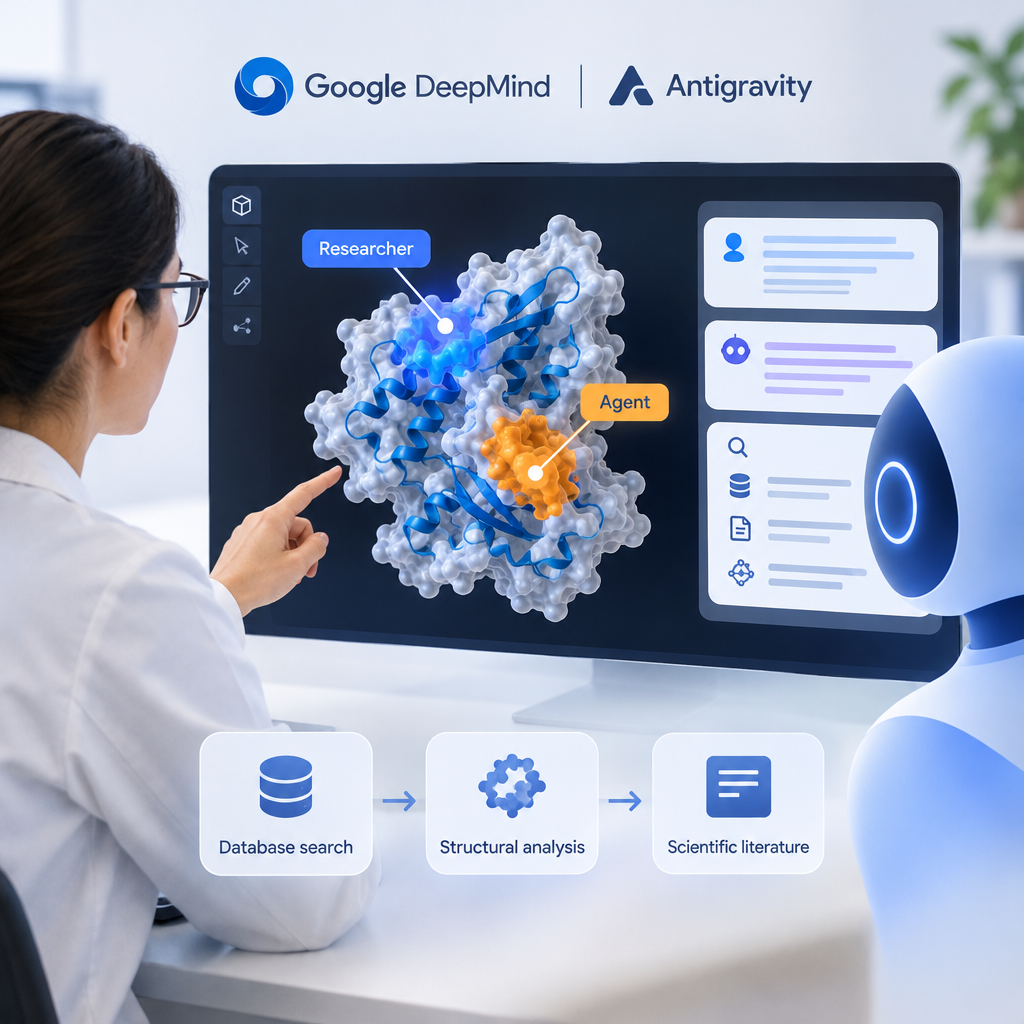
Google DeepMind introduced Biomolecular Structure Viewer, a tool for examining three-dimensional structures within Antigravity. The researcher and AI agent work from a shared visual view: the agent can highlight a region, while the researcher’s actions, including marking amino-acid residues and attaching notes to a model, become context for the agent’s next response. In a technical walkthrough, Antigravity helped search for an antimicrobial-peptide candidate by combining database queries, structural analysis, and scientific literature. The candidate is still undergoing laboratory validation.
Key facts
Biomolecular Structure Viewer is embedded in Antigravity and gives the researcher and agent a shared three-dimensional view of a structure.
In Google DeepMind’s walkthrough, the researcher directed the search while the agent gathered database evidence, analyzed structures, and synthesized literature.
Google DeepMind says the candidate has predicted activity against pathogens associated with respiratory tract infections but is still undergoing wet-lab validation.
An objective look at what matters
Searching for promising molecules means comparing protein sequences, predicted functions, three-dimensional structures, and published research. That information often sits in separate tools. A shared visual workspace could help preserve context: a scientist points to a specific structural region, and the agent uses that selection when examining a hypothesis. This is a way to prepare candidates for assessment, not proof of therapeutic activity. The researcher still sets the search objective, judges the evidence, and decides which experiments to run.
Business processes
Early biological candidate discovery — A research session can bring together evidence about protein sequences, predicted functions, structures, and publications to help prioritize hypotheses.
Protein structural analysis — A researcher can mark a region of a three-dimensional model and discuss it with the agent without manually restating the entire visual context.
Experiment planning — Computational screening may help choose which candidates to test next, but cannot replace laboratory experiments.
Automation opportunities
Gathering evidence for a research hypothesis: Given a scientist’s objective, the agent can search databases, analyze structures, and summarize literature within one session. Conditions: The scientist must set the objective and selection criteria, then evaluate the evidence.; The publication presents a walkthrough but does not establish broad availability.
Passing visual context to an agent: Highlighted regions and notes can provide context for the agent’s next question without manually transferring a description between programs. Conditions: Structural data or the researcher’s own predictions are needed.; The agent’s explanations remain hypotheses requiring independent assessment.
Impact on manual work
A single workspace may reduce manual movement among databases, structure viewers, and literature. Google DeepMind’s account of bringing fragmented work into one session describes a walkthrough; the publication does not measure the effect in routine laboratory practice.
Limitations and risks
The identified candidate is still undergoing laboratory validation; its effectiveness has not been established.
Predicted protein functions and structures cannot substitute for experimental evidence.
The publication does not say whether Biomolecular Structure Viewer is broadly available to researchers.
A specialist remains responsible for the search strategy, evidence review, and decisions about further experiments.
Anthropic announces the Anthropic Public Benefit Fund
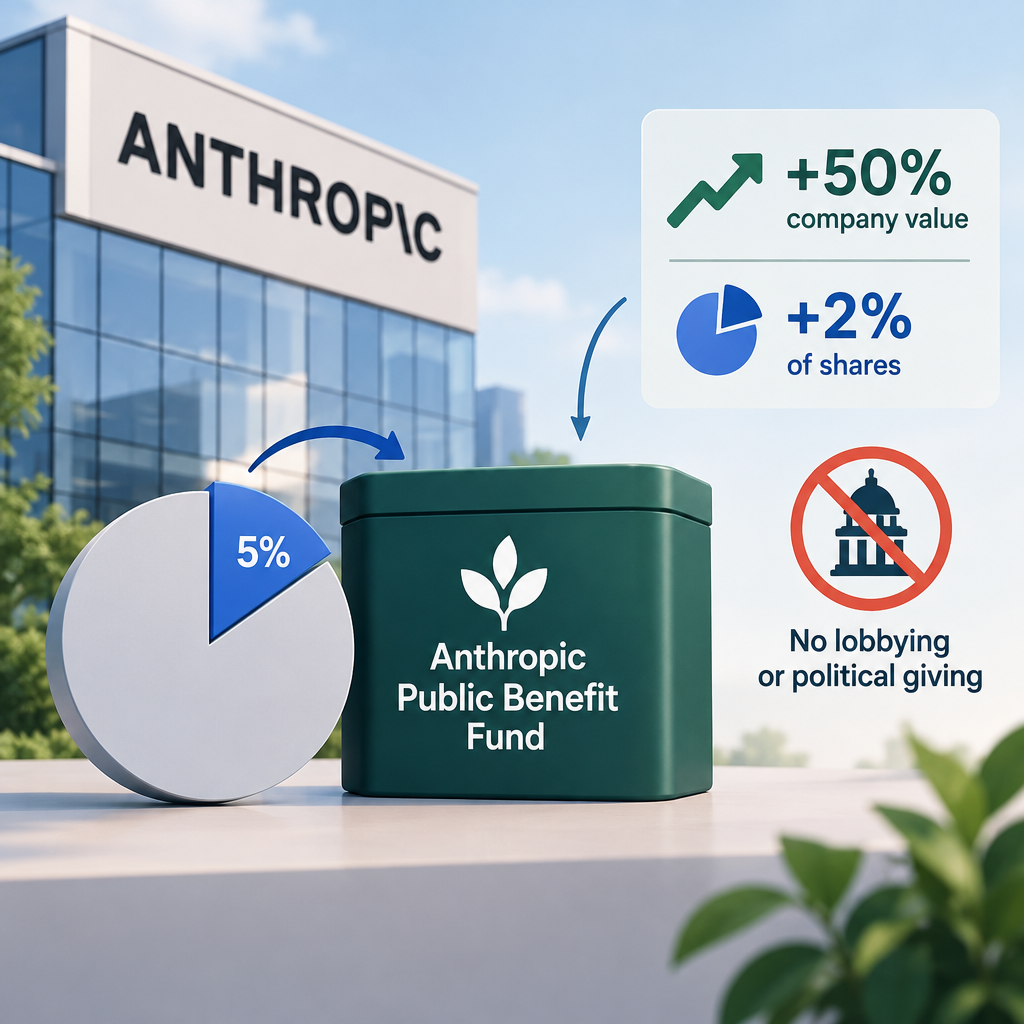
Anthropic announced the Anthropic Public Benefit Fund as a wholly owned limited liability company. Subject to stockholder approval, it intends to commit 5% of its shares to the fund. At its discretion, the board could add another 2% of shares for every 50% increase in company value above a set baseline. Anthropic says equity held by the entity will not be used for lobbying or political giving in the United States or abroad. It plans to provide further details about the fund’s governance and valuation milestones later.
Key facts
Anthropic announced a plan to commit 5% of its shares to the fund subject to stockholder approval; a completed transfer has not been established.
According to Anthropic, the board may at its discretion add 2% of shares for every 50% increase in company value above the established baseline.
Anthropic describes large donations to nonprofits and direct distributions to specific populations as possible uses of the fund; no specific programs have been announced.
An objective look at what matters
This concerns the potential allocation of an AI company’s equity, not a new tool for businesses. Its practical significance will depend not just on the proposed stake but also on approval of the transfer, the fund’s governance, and how spending decisions are made. Anthropic says the wholly owned company structure gives it flexibility to support different forms of giving; the structure alone does not establish who will receive funds or when. For now, the proposed mechanism, conditional share commitment, and possible future programs should be kept distinct.
Business processes
Corporate governance and capital allocation — If stockholders approve, a separate entity would hold the proposed stake; any increase would depend on growth in company value and a board decision.
Planning public-benefit programs — The fund could consider different forms of support, but recipients, amounts, timing, and selection rules have not been announced.
Automation opportunities
Business-process automation: The announcement provides no software tool or described workflow for automating manual work. Conditions: The fund is a corporate initiative, not an automation service.; Its future programs and spending arrangements have not been disclosed.
Impact on manual work
The announcement addresses an equity stake and potential funding for public-benefit work. It describes no tool for reducing manual labor.
Limitations and risks
The initial 5% share commitment requires stockholder approval.
Additional 2% stakes are not automatic: they depend on increases in company value and board discretion.
Anthropic has not yet provided further governance details or valuation milestones, and has announced no specific fund programs.
The announcement establishes neither outcomes for future programs nor a direct effect on other companies’ operations.