Google’s shopping cart, antimicrobial peptide search, and external AI risk review
Issue date:
This issue covers a cart for shopping across Google services, a tool for collaborative analysis of biomolecular structures, and a new arrangement for external AI risk assessment. Each has a boundary: the cart’s rollout has begun in the U.S., the research candidate still needs laboratory validation, and the external evaluators’ access to Anthropic information has exclusions.
This issue may include important events published earlier.
Google begins U.S. rollout of Universal Cart in Search and Gemini
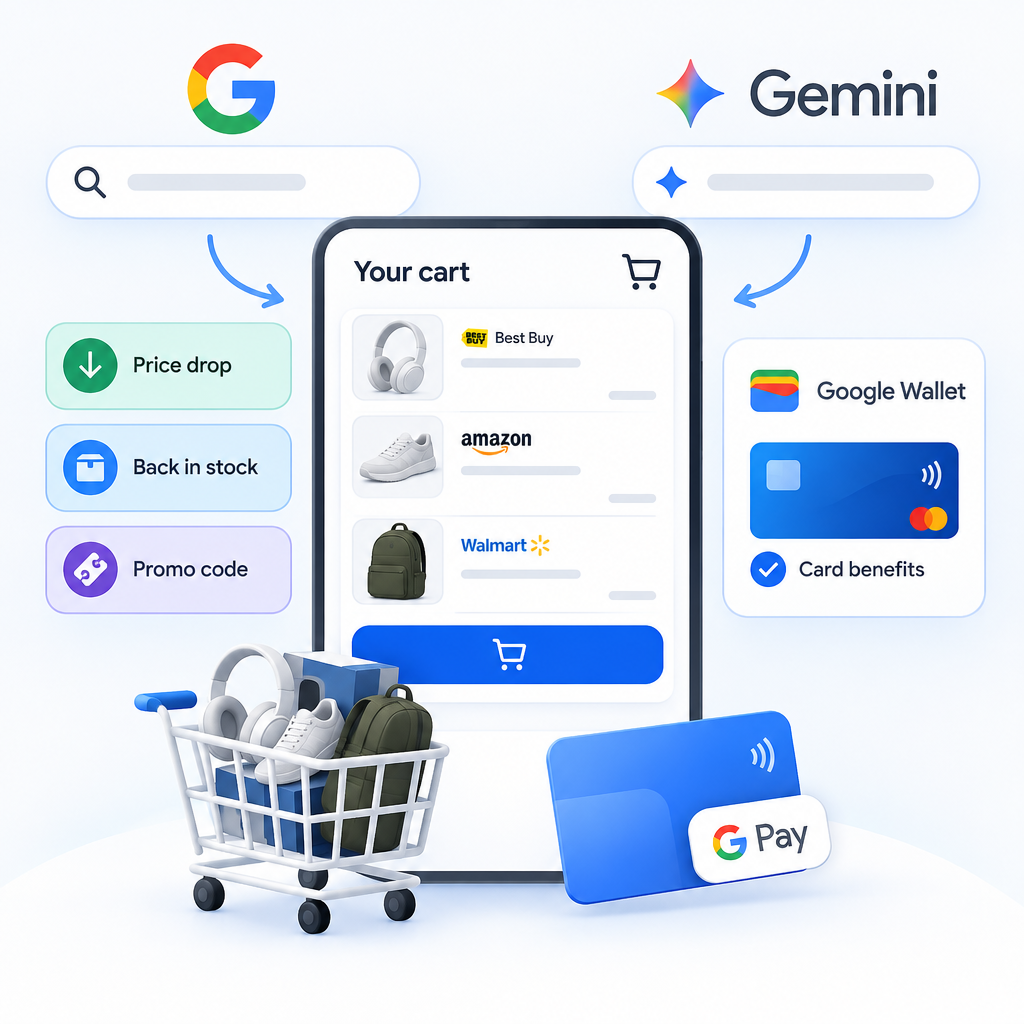
Google has begun rolling out Universal Cart in the U.S. across Search and the Gemini app. Shoppers can save products from multiple retailers, receive alerts about price drops or items returning to stock, and see relevant promo codes. The cart can also help them choose a payment method using card benefits in Google Wallet. At supported merchants, shoppers can check out through the cart with Google Pay or move items to the retailer’s cart and finish the order on its site.
Key facts
Google says Universal Cart is rolling out in the U.S. across Search and the Gemini app; it retains products from different retailers as shoppers move between those services.
According to Google, the cart can alert shoppers to price drops and restocked items, display relevant promo codes, and take account of card benefits in Google Wallet.
Google says the retailer remains the seller of record and provides order confirmations and customer support, including when checkout takes place through Google’s cart.
An objective look at what matters
Shoppers may no longer need separate browser tabs to keep track of selected products or have to find them again when moving between Search and Gemini. Alerts could replace repeated manual checks on individual items. But a shared cart does not make Google the retailer: checkout depends on merchant support, while responsibility for the sale and customer service stays with the merchant.
Business processes
Product discovery and shopping-list management — Products saved from different retailers remain in one cart, which may reduce the need for separate lists, saved links, and screenshots.
Monitoring offers and checking out — Alerts can draw attention to price drops and restocks. At a supported store, shoppers can choose between Google Pay checkout and moving items to the merchant’s cart.
Automation opportunities
Monitoring saved products: The cart may alert a shopper to a price drop or restock instead of requiring regular manual checks. This assists monitoring; it does not decide to purchase an item. Conditions: The rollout has begun in the U.S.; access for any particular user is not guaranteed.; The item must be represented in the product information used by Google’s services.
Preparing to pay: The cart can show a relevant promo code and help a shopper choose a card based on benefits in Google Wallet. The shopper still chooses the payment method and completes the purchase. Conditions: The card-benefit feature relies on Google Wallet.; Simplified checkout depends on merchant support.
Impact on manual work
Saved products and alerts may reduce manual list-keeping and price checks. Google does not provide a measurement of shoppers’ actual time savings.
Limitations and risks
The rollout has begun in the U.S.; the announcement does not establish availability elsewhere or for every U.S. user.
Not all merchants support Google Pay checkout in the cart; some orders must be completed on the retailer’s site.
A promo code or benefit for a particular card is not guaranteed. Shoppers still need to decide what to buy and check purchase terms.
Google DeepMind introduces biomolecular structure viewing in Antigravity
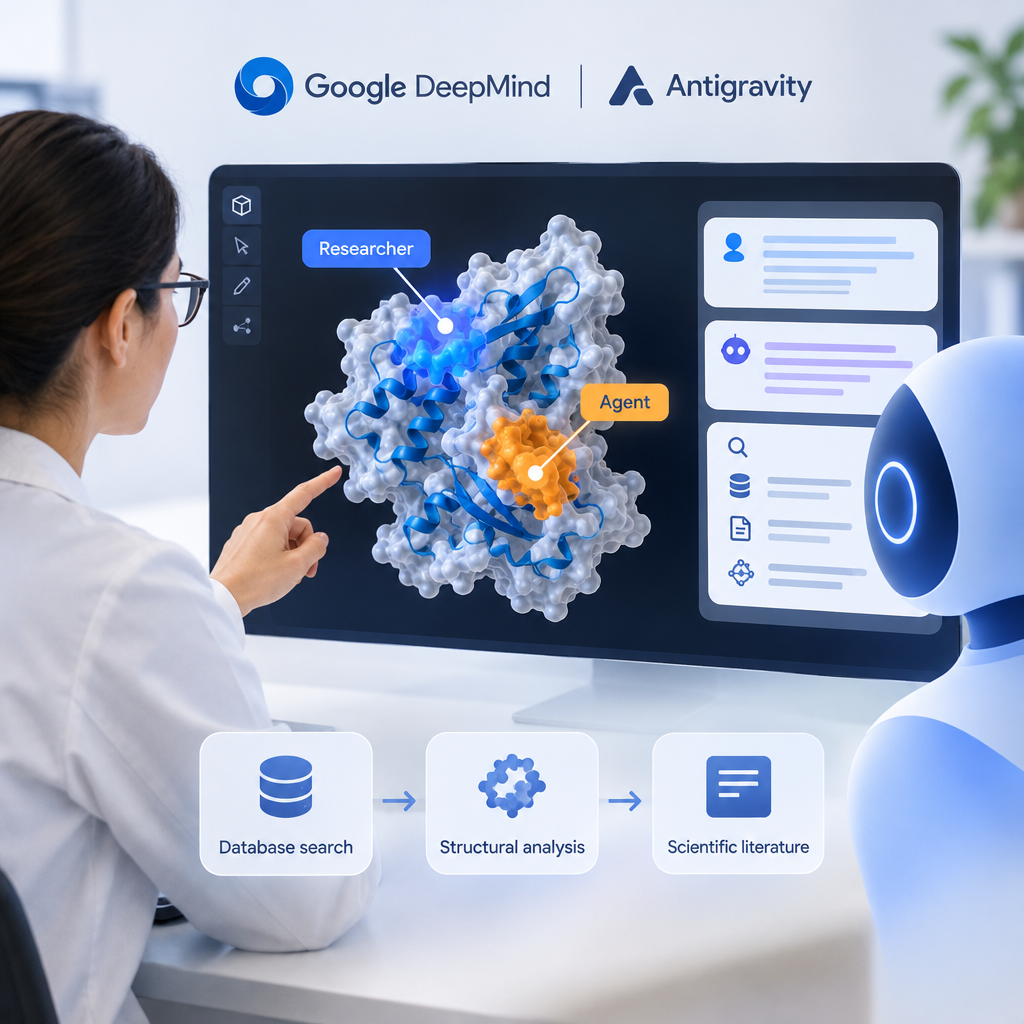
Google DeepMind introduced Biomolecular Structure Viewer, a 3D tool embedded in Antigravity. A researcher and an agent can work with the same view of a structure: the agent can highlight regions, while the researcher’s annotations become available to the agent for follow-up discussion. In its published example, the tools were used to search for an antimicrobial peptide candidate. The candidate’s predicted activity is still undergoing laboratory validation.
Key facts
Biomolecular Structure Viewer is embedded in Antigravity. Google DeepMind describes a shared 3D view in which a researcher and an agent can exchange annotations about regions of a structure.
In the demonstrated workflow, the agent helps connect database searches, structural analysis, and scientific literature; the researcher sets the goal and directs the next steps.
Google DeepMind says the antimicrobial peptide candidate found in the demonstration is undergoing laboratory validation; its predicted activity has not been experimentally confirmed.
An objective look at what matters
Early-stage molecular research involves comparing protein sequences, predicted functions, 3D structures, and published findings. A shared workspace could make it easier to move between those materials and discuss a specific structural region with an agent. Easier searching, however, says nothing conclusive about the value of the resulting molecule: the hypothesis about its activity requires laboratory experiments.
Business processes
Finding and initially prioritizing biomolecular candidates — In Google DeepMind’s example, the agent gathers information from databases and literature while the researcher refines the search criteria and assesses proposed candidates.
Structural analysis and hypothesis formation — A researcher can mark a region in a 3D model and ask the agent about its possible role. The exchange can help frame the next test, but it does not establish the protein’s function.
Automation opportunities
Preliminary search for research candidates: The agent may help find and compare sequences, predicted functions, and structures before a scientist reviews the candidates. This is initial screening, not confirmation of therapeutic activity. Conditions: The researcher sets the search objective and reviews the agent’s conclusions.; Promising candidates need laboratory validation.
Collaborative inspection of a 3D structure: The agent can take account of a region marked by the researcher in its next response, while the researcher can inspect the agent’s visual explanations. This may reduce switching between separate analysis tools. Conditions: A 3D structure from a database or the researcher’s own prediction is needed.; A structural model and annotations do not establish biological activity.
Impact on manual work
Google DeepMind describes a workspace that may reduce manual switching between databases, scripts, and visualization tools. Its publication offers no independent measurement of time saved.
Limitations and risks
The candidate in the demonstration is still undergoing laboratory validation; activity against infection-related pathogens has not been proved.
Predictions of protein function and structure must be distinguished from experimental results.
The publication does not establish that Antigravity and the new viewer are generally available to all researchers.
Anthropic gives METR expanded access for AI risk assessment
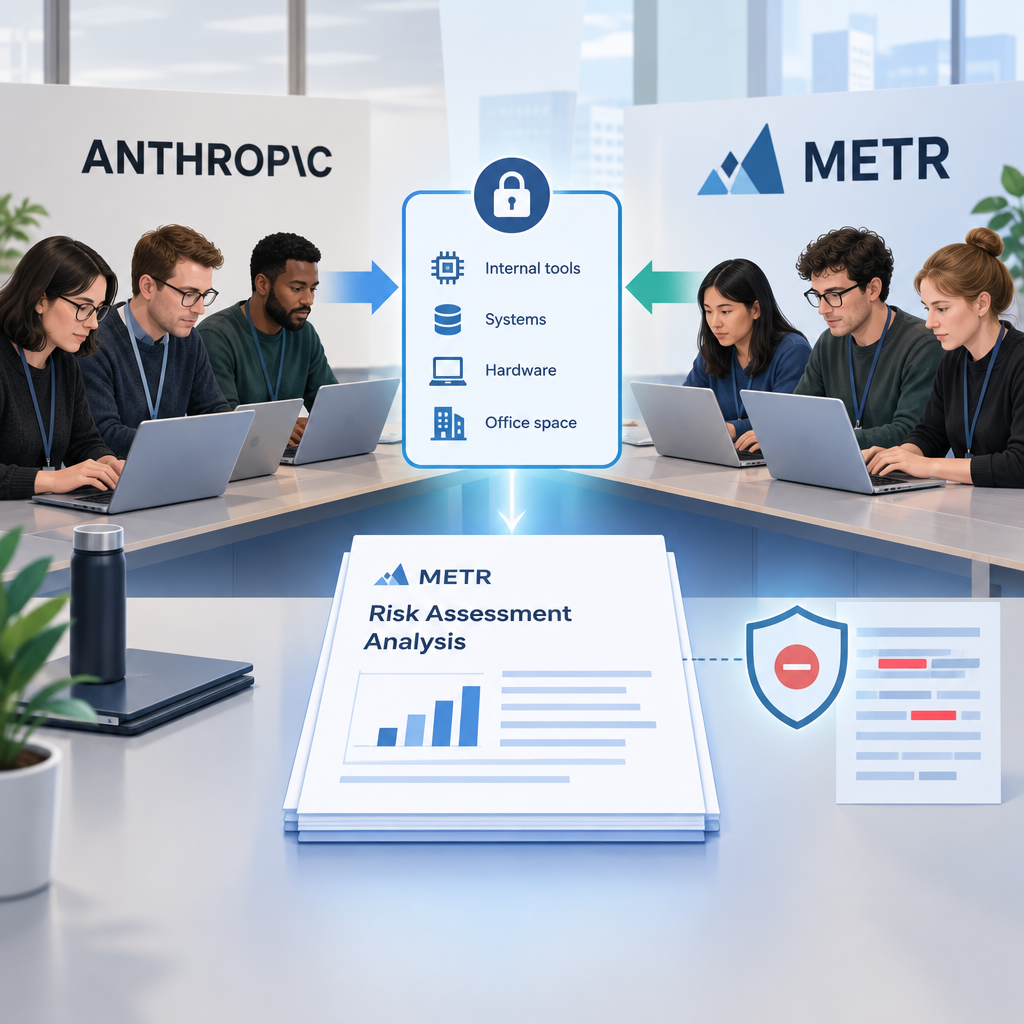
Anthropic says it has onboarded six employees of the nonprofit METR with access to internal tools and systems roughly comparable to that of its own risk-assessment teams. They have also received company hardware and office space. METR may publish analyses of risk levels, incidents, and company practices. Anthropic cannot veto publication, though it can require the removal of information in narrow, predefined categories.
Key facts
According to Anthropic, six METR employees have access to internal tools and systems roughly comparable to that of Anthropic’s risk-assessment teams.
Anthropic says it cannot veto METR’s analysis, but may require redaction of information in predefined categories. METR can publicly state whether it considers a redaction justified without disclosing the redacted information.
Anthropic lists customer data, attorney-client privileged information, and model architecture information among the exclusions from access.
An objective look at what matters
Testing a finished model alone may not be enough to assess risks: how it was developed, how safeguards work, and how the company operates can also matter. Expanded access lets a small external team examine those questions closer to the source. How independent and informative the assessment proves to be will become clearer when findings are published and the rules for withholding confidential information are put into practice.
Business processes
External AI risk assessment — Evaluators can examine internal materials and practices before publishing their own analysis. Providing access does not mean that risks have already been assessed or resolved.
Managing confidential access — A small team works under enforceable agreements, with exclusions and publication rights specified in advance. This allows a review without making all internal information public.
Impact on manual work
The announcement describes access and publication arrangements, not automated assessment or a measured reduction in evaluators’ manual work.
Limitations and risks
METR’s findings had not been published at the time of the announcement; expanded access does not itself establish that Anthropic’s models are safe.
Access does not cover all internal information, and Anthropic retains the right to require narrowly defined redactions before publication.
Anthropic’s other evaluator partnerships mentioned in the announcement are at earlier stages, with more limited access and publication rights.