Microsoft Maia 200/300, Flo sync plans and new Fitbit features
Issue date:
This issue covers Microsoft’s accelerators for AI serving and two Google Health announcements: data sharing with Flo Health and features for wearables. User consent, access requirements and the limits of general-wellness tools are central to the health updates.
This issue may include important events published earlier.
Microsoft reports Maia 200 in production and plans Maia 300 deployments
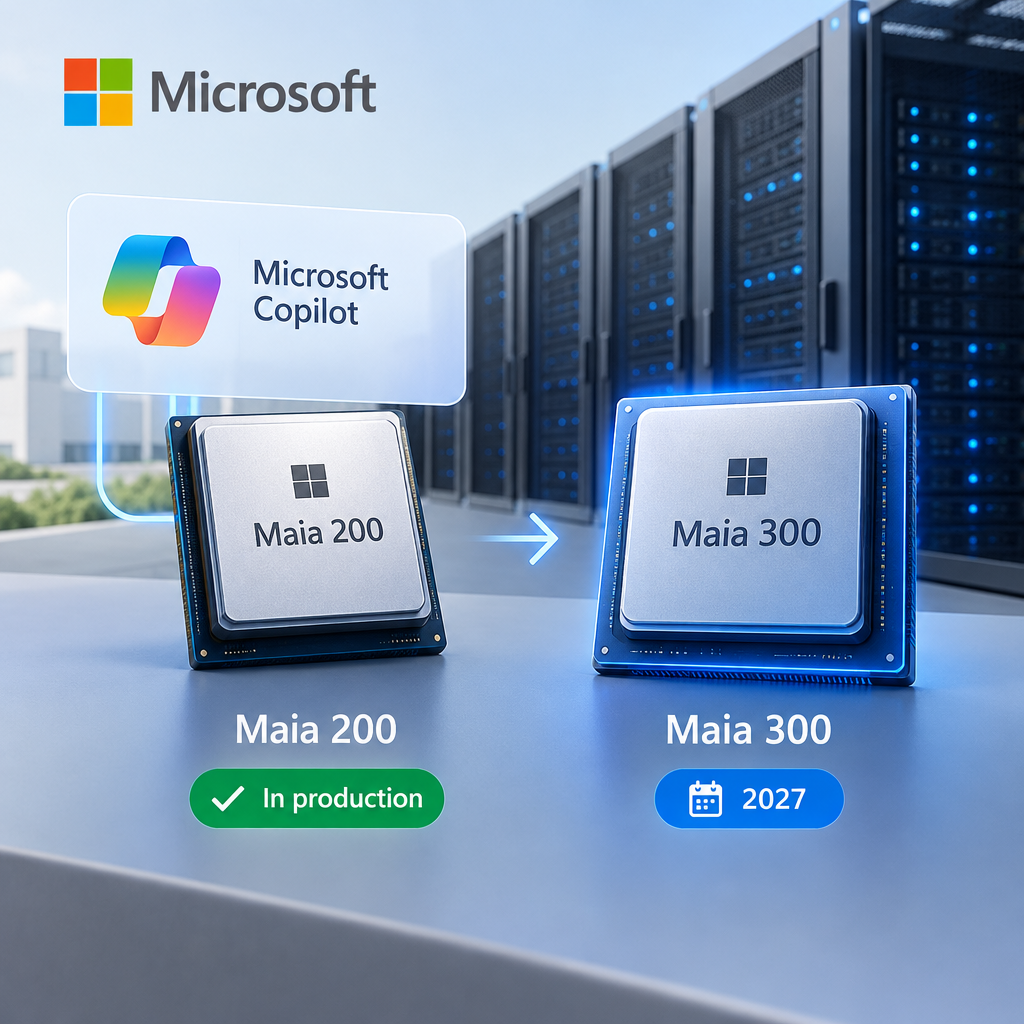
Microsoft says Azure Maia 200 is serving its workloads, including Microsoft Copilot. It plans to begin production deployments of Maia 300 and scale the Maia family to multi-gigawatt deployments starting in 2027.
Key facts
Microsoft reports that Maia 200 is serving its production workloads, including Microsoft Copilot.
Microsoft plans to begin production deployments of Maia 300 in 2027.
Microsoft expects Maia 300 to deliver 40% more tokens per megawatt than leading GPU-based systems. This is its projection, not a measured result from production deployments.
An objective look at what matters
The use of Maia 200 in production shows Microsoft applying its own accelerators to its services. Maia 300 is designed for long contexts, responsive conversations and multi-step tasks. If the efficiency and scaling plans work out, they could affect AI-serving capacity and cost. The announcement does not introduce a separate customer feature already powered by Maia 300.
Business processes
Operating enterprise assistants and text-generation services — Infrastructure scaling could eventually help handle more concurrent requests. The effect on any particular service is not yet known.
Designing multi-step AI workflows — Maia 300’s stated targets—long contexts and latency-sensitive tasks—could inform planning, but do not establish performance for a customer’s workflow.
Automation opportunities
Handling high volumes of requests to internal assistants: If services using the new infrastructure become available and meet performance needs, teams could evaluate them for serving requests at greater scale. The announcement itself does not automate a customer process. Conditions: Microsoft says Maia 200 serves its own workloads; Maia 300 production deployments are planned for 2027.; Availability to particular customers, actual performance and cost need separate checks.
Impact on manual work
Additional compute capacity could support assistants for text-based and multi-step tasks. The publication does not show a reduction in manual work in any specific process.
Limitations and risks
Maia 300 performance figures are Microsoft’s projections for a system that has yet to be deployed in production.
The dates and scale of the Maia expansion are company plans; outcomes have not been established.
The post does not establish Maia 200 or Maia 300 availability for a particular customer or use case.
Google announces Flo Health partnership and data-sharing plans
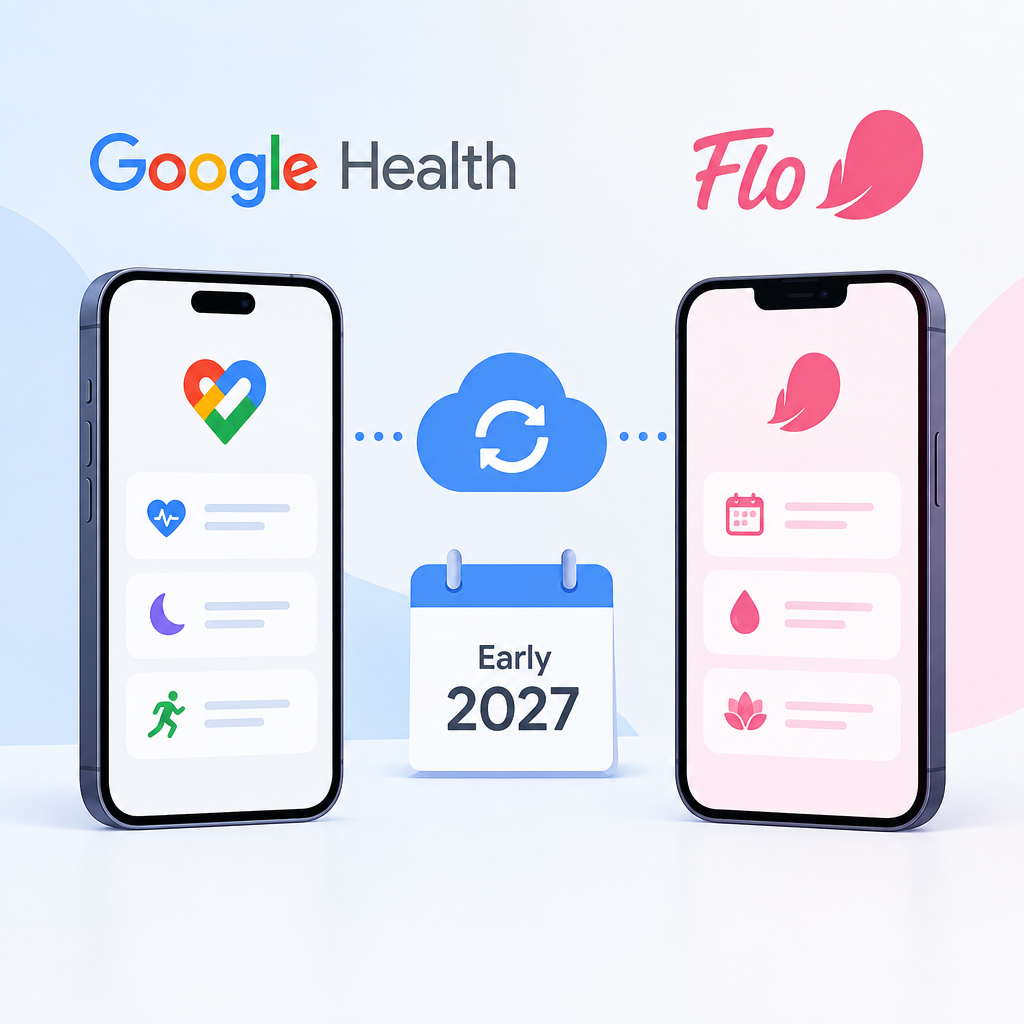
Google announced a multi-year partnership between Google Health and Flo Health. App syncing is planned to begin in early 2027, subject to users’ explicit consent.
Key facts
Google announced a multi-year strategic partnership between Google Health and Flo Health.
Data syncing between the apps is planned to begin in early 2027.
Google says sharing will require separate explicit consent for each data type and purpose, and users will be able to withdraw consent.
An objective look at what matters
The planned integration could connect cycle data from Flo with Google Health metrics such as sleep and recovery. Google also plans to bring Flo data into Google Health Coach for personalized guidance. For this kind of service, the ability to understand what data may be shared, with whom and for what purpose matters as much as the connection itself. This is a consumer use case, not a ready-made workflow for healthcare providers.
Business processes
Combining personal health data from apps — Once syncing launches, data categories approved by the user could appear across the two apps, reducing the need to transfer records manually.
Providing personalized lifestyle guidance — The planned link to Google Health Coach could account for cycle, sleep and recovery data. Access to Coach guidance requires Google Health Premium.
Automation opportunities
Moving data between Flo Health and Google Health: After launch, approved data categories could sync without manual transfers. Users should retain separate control over permissions and be able to withdraw them. Conditions: Syncing is planned to start in early 2027; it is not presented as available now.; Google says explicit consent will be required separately for each data type and purpose.; Some features, including personalized Coach guidance, require a subscription; availability may vary.
Impact on manual work
Syncing could reduce manual transfers between apps. The publication does not demonstrate that effect after launch or assess an impact on organizational work.
Limitations and risks
Google announced the timing and terms of the integration; its operation has not yet been shown.
Health data is sensitive, so access boundaries and consent withdrawal warrant scrutiny.
The described Google Health features are for general wellness, not medical purposes; guidance is no substitute for medical care.
Google announces Health Guardian and detection of more than 100 workout types
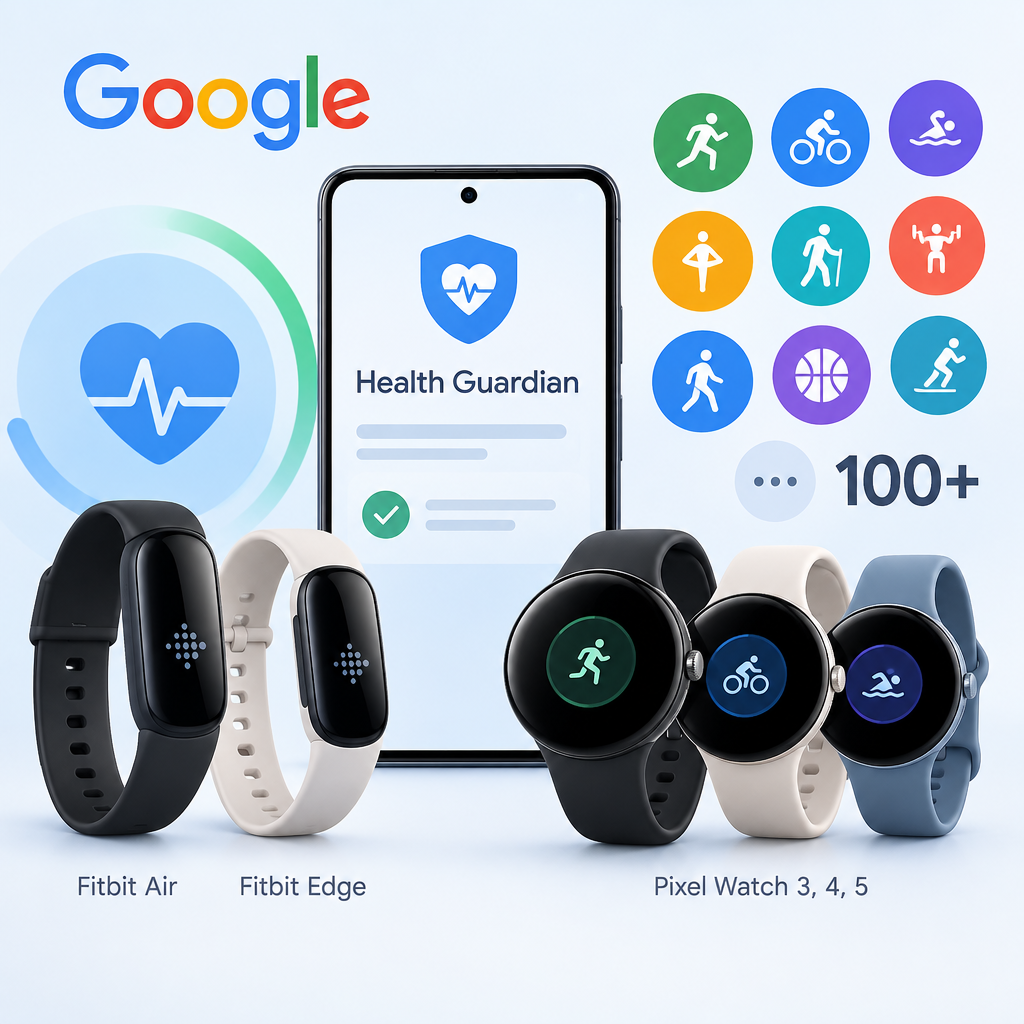
Google announced Health Guardian features for Fitbit Air and Fitbit Edge, plus upgraded automatic workout logging on those devices and Pixel Watch 3, 4 and 5. The rollout is planned for late October 2026.
Key facts
Google plans to roll out Health Guardian to Fitbit Air and Fitbit Edge users with Google Health Premium in late October 2026.
Google plans to expand automatic detection from 10 to more than 100 activity types on Fitbit Air, Fitbit Edge and Pixel Watch 3, 4 and 5.
Google says the updated model is nearly twice as accurate as the previous one and misses less than half as many workouts. Its comparison was an offline evaluation using workouts manually tracked on a device.
An objective look at what matters
Automatic detection could spare users some manual activity logging while letting them check or correct a result. Health Guardian is intended to help track changes in metrics over time: Google says it will provide a monthly report if wear requirements are met. These are personal wellness tools, not evidence of diagnostic accuracy or improved health outcomes.
Business processes
Maintaining a personal workout log — Under Google’s description, eligible activities will be added to the app automatically, with users able to confirm or correct entries.
Reviewing trends in health metrics — Health Guardian is intended to produce a monthly report if the device has been worn enough. Such a report may help frame a discussion with a doctor but does not replace a medical assessment.
Automation opportunities
Logging workouts without manual entry: The system could detect and record qualifying workouts while leaving error checks to the user. Because rollout is pending, reduced manual entry remains an expected effect. Conditions: Google plans to roll out the feature in late October 2026; availability depends on the device.; By default, automatic logging requires an activity lasting at least 15 minutes with a sustained elevated heart rate.; Health Guardian requires Google Health Premium; availability and results for some features may vary.
Impact on manual work
Google describes automatic logging of qualifying workouts and the option to correct entries. The updated feature had not launched at the time of the announcement, so an actual reduction in manual logging has not been demonstrated.
Limitations and risks
Google’s accuracy figures come from an offline comparison with its previous model, not independent validation after rollout.
Health Guardian is not intended for diagnosis or treatment; its metrics must not be used to manage diabetes or change medication.
Rollout, availability and detection quality may vary with device, subscription, region and usage conditions.