GPT‑6 in ChatGPT, SynthID checks and game creation in Playground
Issue date:
This issue looks at interactive ChatGPT responses, checks for SynthID watermarks in media, and an experimental platform for building games from text descriptions.
This issue may include important events published earlier.
OpenAI starts rolling out GPT‑6 with Intelligent UI in ChatGPT
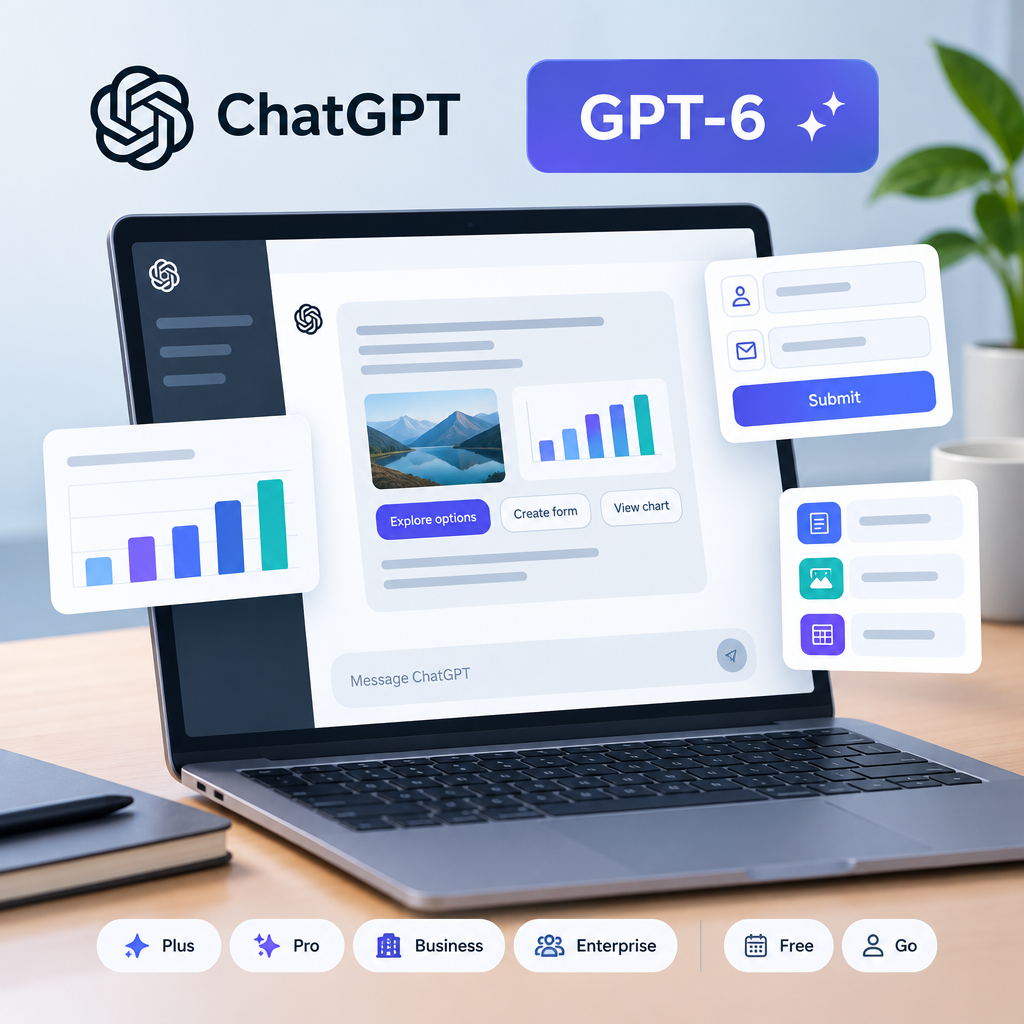
On October 7, OpenAI began a global rollout of GPT‑6 with Intelligent UI in ChatGPT’s Chat tab. Rather than responding only in text, the model can combine text, visuals, and elements people use within the conversation. The rollout starts with Plus, Pro, Business, and Enterprise; it is due to expand to Free and Go from October 8. Enterprise access depends on administrator settings. This release does not change the models powering Work or Codex.
Key facts
A response can contain buttons, forms, charts, and other interactive elements. ChatGPT can still give a text-only answer when that is more useful.
OpenAI says the interfaces use a component library and can appear progressively while the model is generating its response.
OpenAI says GPT‑6 Instant starts answering questions that need web search 44% sooner on average than GPT‑5.6 Instant. That measures the start of an answer, not completion of the task.
ChatGPT uses GPT‑6 Sol for Plus, Pro, Business, and Enterprise, and GPT‑6 Luna for Free and Go.
An objective look at what matters
A chat response can become a temporary workspace: it might present options side by side, collect inputs in a form, or provide a calculator for a particular task. That is more useful than a description alone when someone needs to change inputs and see the result. The interactive response is still model output, though, not a validated application or proof that the task was completed correctly.
Business processes
Initial planning and comparison of options — An employee could adjust the assumptions and explore a comparison in one conversation before recording conclusions in a working document.
Reviewing operational or customer requests — A form or simple calculation in a response could help collect request details. Entering the result into a system of record and taking further action remain separate steps.
Automation opportunities
Draft input collection and calculation in chat: Someone could describe a task and request a form or calculator to explore it. This creates a way to work with inputs inside the conversation; it is not an announced automatic integration with business systems. Conditions: Access is rolling out by tier; the start of a rollout does not mean every user has the feature immediately.; Enterprise access also depends on administrator settings.; Inputs, formulas, and results need checking before they inform a work decision.
Impact on manual work
Generating a simple workspace on request might reduce the preparation of some tables or forms. OpenAI provides no figures for labor savings in business processes, and checking the answer or transferring it to another system may remain manual.
Limitations and risks
The release concerns Chat in ChatGPT; it does not establish a model update for Work or Codex.
OpenAI says the model’s judgment about interface design still needs improvement.
A faster start to an answer does not establish the accuracy of data, calculations, or actions in a generated interface.
Availability depends on rollout progress, subscription tier, and, for Enterprise, workspace settings.
Google opens global English-language access to SynthID Detector
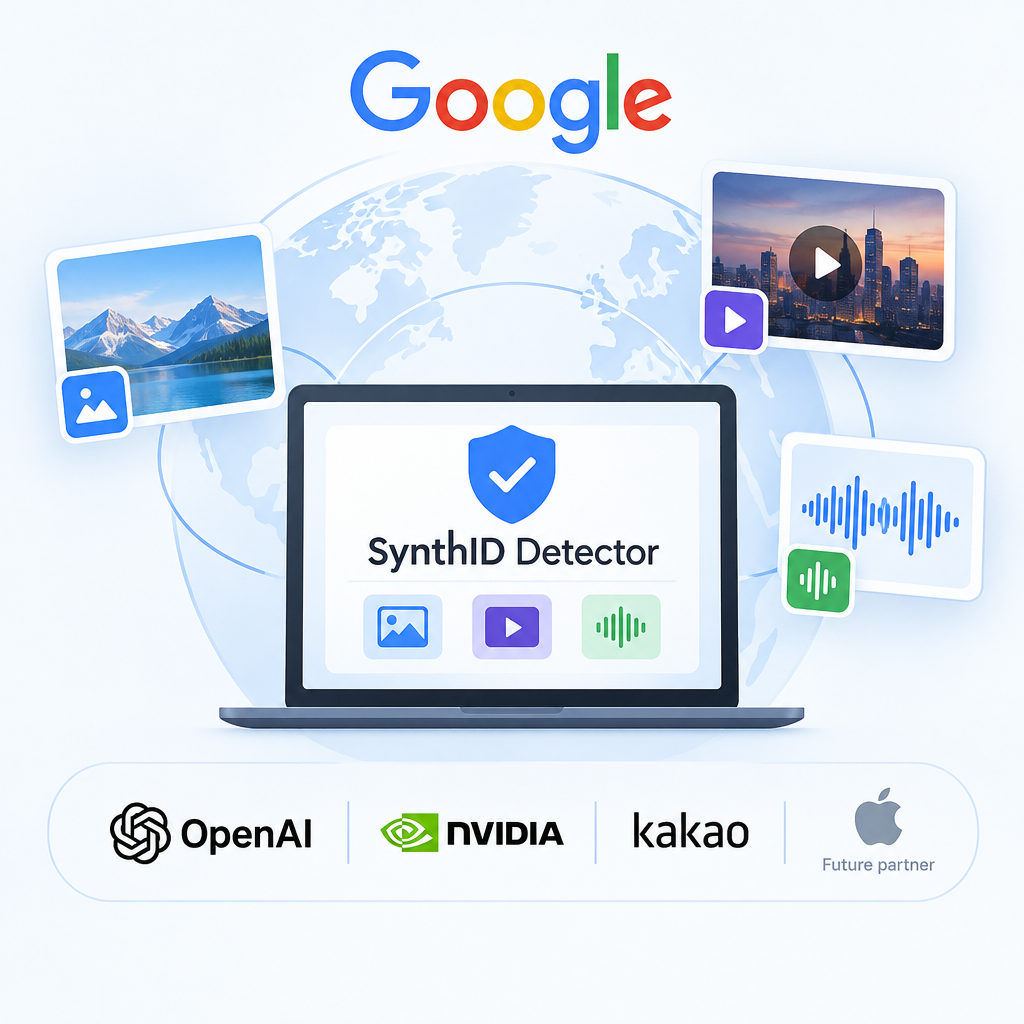
On October 7, Google opened global access to SynthID Detector in English. The tool checks an image, video, or audio file for a SynthID watermark. Google says the check covers media made with its AI tools and those of participating partners, including OpenAI, NVIDIA, and Kakao. Apple is described as a future partner, not part of the stated current coverage.
Key facts
SynthID Detector is available globally in English. Google previously offered an early version to media professionals.
The tool checks images, video, and audio for SynthID watermarks, not for every possible indication that AI was used to make a file.
Google says that since SynthID launched in 2023, it has watermarked more than 180 billion images and videos and 240,000 years of audio.
An objective look at what matters
Editors and moderators gain a distinct check for a supported watermark in an incoming file. Its result could sit alongside information from the sender, editorial review, and other evidence about provenance. It does not answer the broader question of whether the content can be trusted: a watermark concerns how media was made or processed, not whether what it depicts or says is true.
Business processes
Media intake before publication — A reviewer could record the check alongside the file’s source and other information needed for a publication decision.
Moderation of user uploads — A result could be one signal for sending a file to further review, rather than a stand-alone reason to block it.
Automation opportunities
Initial SynthID check for incoming media: A team could add a manual check to its intake procedure for images, video, and audio, and specify who reviews flagged files. Google’s announcement does not describe batch checks or integration with work systems, so automated processing of an upload queue should not be assumed. Conditions: The announced tool is available in English.; Coverage depends on SynthID use by Google and participating partners.; Publication or blocking policies need to account for context and additional review.
Impact on manual work
Broad access to the tool could simplify an initial check for some files. No time savings are reported; editorial judgment, investigation of uncertain results, and publication decisions remain separate work.
Limitations and risks
No detected watermark does not prove that media was made without AI: its creator may have used a tool that does not apply SynthID.
A detected watermark does not replace review of the content, usage rights, or the context claimed for a file.
Apple is mentioned as a future partner; current coverage should not be extended to it.
Google announced global access in English but did not announce other language support here.
Google launches Playground for creating games with text prompts
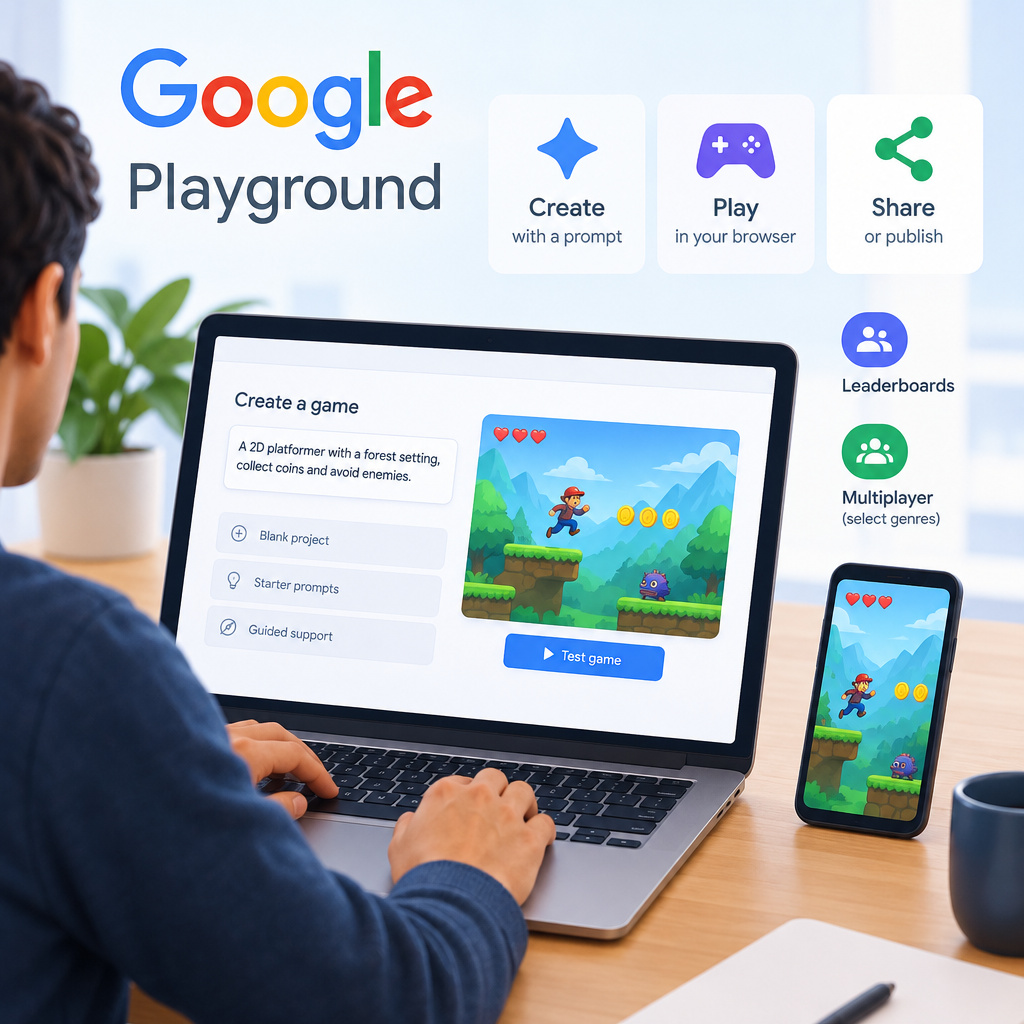
On October 7, Google launched Playground, an experimental browser-based platform for creating, playing, and publishing games. A user can describe an idea in a conversation, test the result, and ask to change rules, physics, characters, or the environment. The launch is for U.S. users aged 18 and over; creation access is rolling out in tiers based on Google AI subscriptions. A game can be kept private, shared by link, or published in a gallery.
Key facts
Google says users can start from a blank project, starter prompts, or guided support, without coding experience.
Games run in a browser on a phone or laptop. Leaderboards and multiplayer play are supported, although multiplayer is limited to select genres.
Google says every published game undergoes screening against its Community Guidelines, and users can report games.
Playground’s Unity Spark integration is planned, not available now. Unity Spark is in testing, with a closed beta still to come.
An objective look at what matters
For a game team or an individual creator, Playground could provide a way to show a mechanic before building a full version. Changing rules through conversation and immediately playing the result may help people discuss an idea using a rough prototype rather than a description alone. That is a possible use, not evidence that the platform speeds professional development or produces release-ready games.
Business processes
Early prototyping of game concepts — A team with access could make a trial version of a mechanic or scenario for discussion.
Gathering reactions to a game idea — A creator can share a link with selected people or publish a game in the gallery. Publicly published games are subject to Google’s stated screening.
Automation opportunities
Drafting a game prototype from a description: A creator could describe an idea, try the game, and request revisions in text before deciding whether further development is warranted. The platform may replace some steps in an early experiment, but the announcement gives no measurements of finished-game quality or team time saved. Conditions: The launch is limited to U.S. users aged 18 and over.; Creation access is rolling out according to Google AI subscription tier.; Unity Spark integration is not part of the current launch.
Impact on manual work
Text-based revisions might replace some manual setup of an early prototype. Google reports no productivity measurements; assessing a mechanic, responding to feedback, and bringing a game to the desired quality still require human work.
Limitations and risks
Playground is presented as an early experiment, not a proven replacement for a game engine or professional development process.
Creation access depends on country, age, and subscription tier; the launch does not give everyone identical capabilities.
Multiplayer is limited to select genres, and screening published games does not remove the need to assess their content.
Unity Spark and its Playground integration are future plans, not currently available Playground features.