Claude at Barclays, Guided Vision for Android, and Google’s orbital prototype
Issue date:
This issue covers Claude in banking operations, voice-led assistance using a camera in Gemini Live, and a Google orbital experiment. The first two are in use, though they serve different needs and have different limits. Project Suncatcher remains research.
This issue may include important events published earlier.
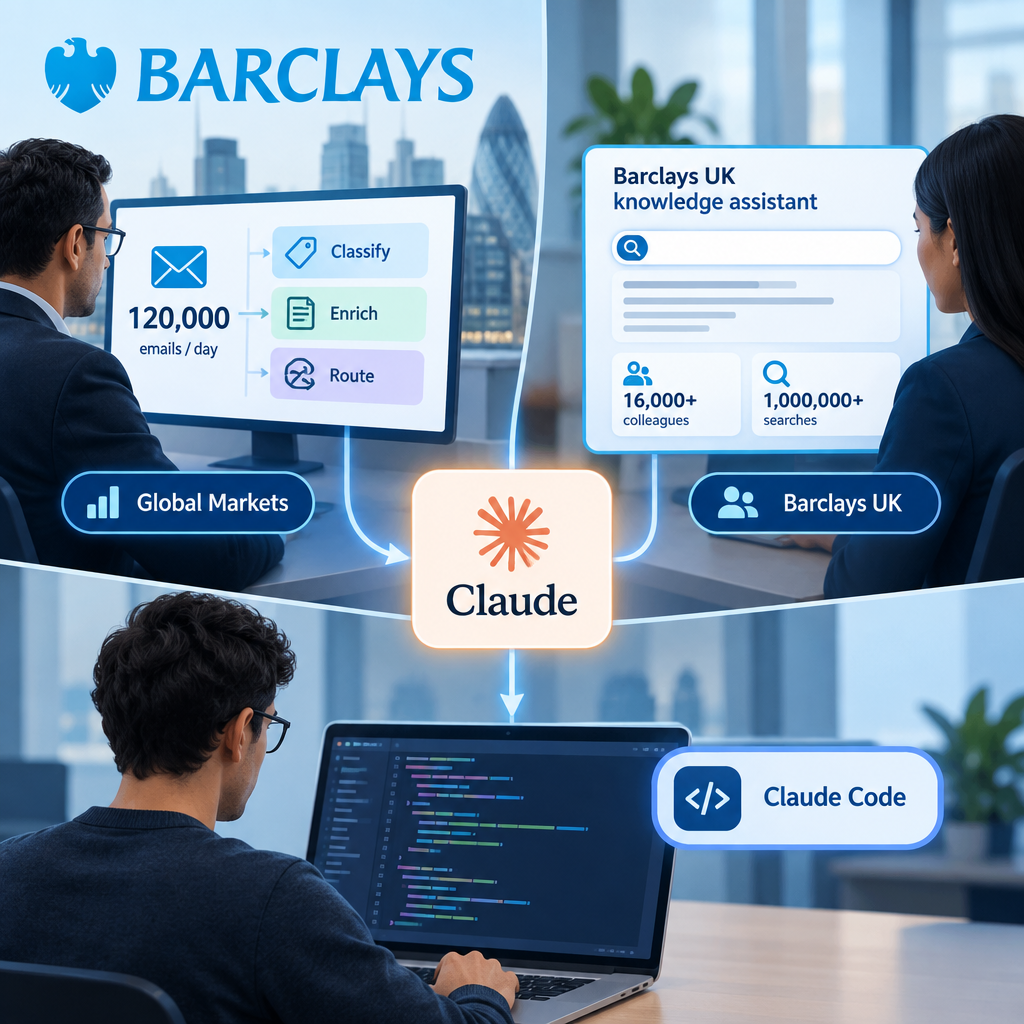
According to Anthropic, Barclays is expanding its use of Claude in software development, employee information retrieval, and client-request handling. In Global Markets, models help process incoming emails by classifying them, adding information about the request, and selecting a processing route. Barclays UK also has a live assistant that retrieves information for colleagues serving customers. Wider adoption of Claude Code among developers is an expected next step, not an achieved rollout.
Key facts
Anthropic says the Global Markets platform processes approximately 120,000 emails a day; Claude models help classify requests, enrich them, and determine their processing route.
Anthropic reports that the Barclays UK knowledge assistant has been live since 2025, has been adopted by more than 16,000 colleagues, and has handled over one million searches.
According to Anthropic, Barclays expects Claude Code adoption to reach 50% of its developer population by the end of 2026 and a majority of software engineers in 2027.
Why it matters
The case separates two ways of assisting a banking workflow. In one, a model prepares an email for an operations colleague; the source does not say it independently resolves the client’s request. In the other, it helps a colleague find information in internal material; a retrieved passage is not automatically a checked answer to a customer. Both workflows are live, whereas the Claude Code coverage targets concern future adoption. Email volume and search counts alone do not establish the benefit: Anthropic gives no comparable figures for accuracy, handling time, or service quality.
Business processes
Request intake in Global Markets — Classification and routing may reduce manual sorting and help get requests to the right staff. Incomplete emails and uncertain classifications still need a way to be reviewed.
Information retrieval for Barclays UK customer service — The assistant may help colleagues find information in internal sources faster. They still need to consider the customer’s circumstances and check consequential answers.
Software development and maintenance — Claude may assist engineers, including with legacy-system modernization. Projected adoption does not establish how effective its code assistance is.
Automation opportunities
Initial processing of incoming emails: A model can categorize a request, identify relevant details, and suggest a route before an operations colleague receives it. Conditions: Monitor classification quality and provide a route for exceptions.; Apply client-data access rules and keep decisions affecting customers or risk under human oversight.
Knowledge retrieval for colleagues: An assistant searching internal material can surface information while a colleague serves a customer. Conditions: Maintain current, validated knowledge sources and appropriate access controls.; Check answers where errors could have customer or regulatory consequences.
Expanding Claude Code adoption: More engineers could use the tool in development if Barclays’ plans are realized. Conditions: The end-2026 target of 50% and the 2027 majority are Barclays’ expectations as reported by Anthropic.; Secure development practices and engineer review remain necessary.
Impact on manual work
Anthropic explicitly reports less manual handling in a live workflow whose platform processes about 120,000 emails a day. The source provides neither an independent assessment nor a quantified time saving.
Limitations and risks
The sole source is Anthropic, a participant in the partnership; its usage figures and reported benefits have not been independently verified here.
Anthropic says the bank applies governance, security controls, and human oversight. Its publication does not specify intervention rates or error measurements.
Planned Claude Code coverage is not achieved adoption or evidence of labor savings.
Google launches Guided Vision in Gemini Live for Android
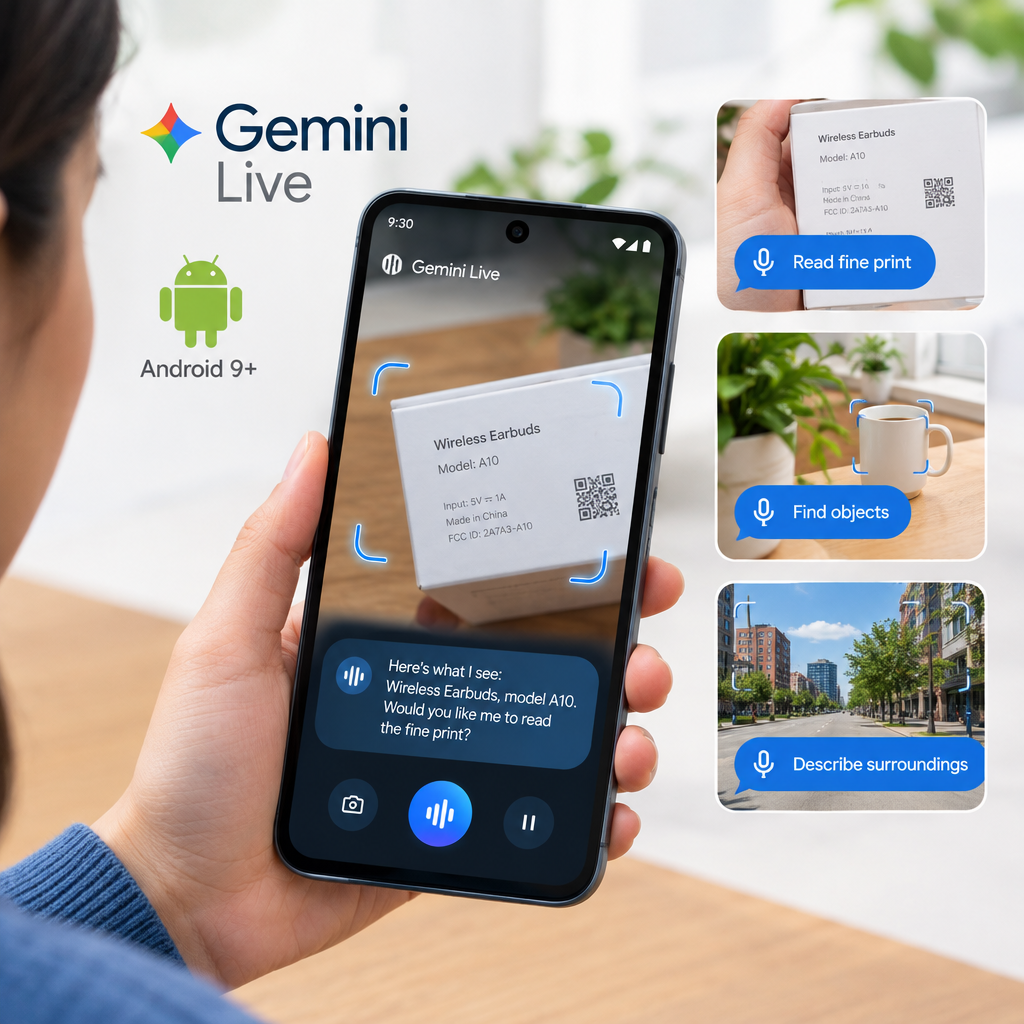
Google has launched Guided Vision for compatible Android devices. With the feature on, a person can share their camera during a Gemini Live conversation, hear descriptions, ask follow-up questions, and receive spoken prompts to adjust the camera for a clearer view. Google’s examples include reading fine print, finding objects, and describing nearby surroundings. Availability depends on more than the device: Gemini Live must also be supported in the user’s region and language.
Key facts
Guided Vision uses the camera in a Gemini Live session to provide spoken descriptions and prompts for repositioning the camera.
Google says the feature is available on devices running Android 9 or later in regions and languages where Gemini Live is supported.
Google says it worked with Aira to prepare the system, drawing on tens of thousands of hours of visually interpreted data, and that more than 1,000 members of Aira’s Trusted Tester network helped test it.
Why it matters
The feature is designed for people who benefit from spoken explanations of an image, particularly blind and low-vision users. Conversation allows follow-up questions, while framing prompts can help them obtain a better camera view. An organization might consider it an additional accessibility tool for simple visual tasks. But Google gives no evidence of Guided Vision being deployed in company workflows or reducing staff hours. It should not be treated as an automatic check for information on which someone’s physical safety depends.
Business processes
Access to everyday visual tasks — Spoken descriptions may help a person read a label, find an object, or check a visual detail without immediately asking another person to describe it.
Accessibility support for employees and customers — An organization could consider the feature as an additional phone-based aid for specific tasks. The source does not describe an enterprise deployment or integration with internal systems.
Automation opportunities
Reading and visual checks on a mobile device: A user can point the camera at something, hear a description, and ask a follow-up question rather than request an initial description from another person. Conditions: A compatible device running Android 9 or later and Gemini Live support in the user’s region and language are needed; Google advises updating the Gemini app and Android software.; Descriptions may be wrong, so consequential details need checking.; The feature is not intended for navigation, safe travel, or obstacle detection.
Impact on manual work
Someone may need another person’s help less often for particular everyday visual tasks. Google provides no data on reduced manual work within organizations.
Limitations and risks
Like other generative AI systems, Guided Vision can make mistakes when describing images or reading text.
Google states that it is not a medical device or mobility aid and does not replace a white cane.
It must not be used for navigation, safe-travel guidance, or obstacle detection; established mobility aids and safe-travel practices remain necessary.
Availability is limited to compatible devices and to regions and languages where Gemini Live is supported.
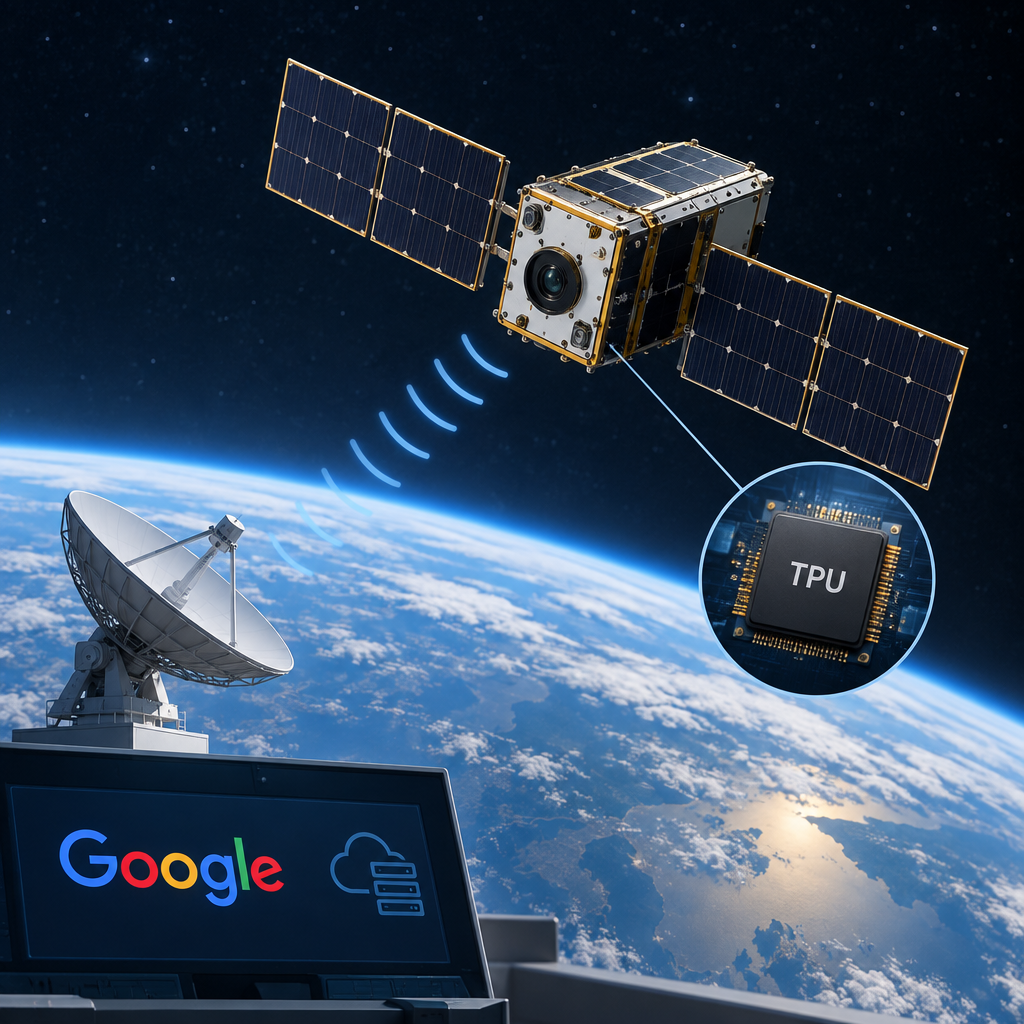
Google reports that a Project Suncatcher prototype satellite, built with Planet, reached orbit on SpaceX’s Transporter-18 mission. The company says it has established contact and the satellite is operating as expected. The next step is to gather data on how Google’s tensor processing units, or TPUs, used for machine-learning workloads, withstand the stresses of spaceflight. The launch announcement does not yet contain results from those tests.
Key facts
Google reports the Project Suncatcher prototype launched on Transporter-18 and says it has confirmed contact with the satellite and expected operation.
In the coming weeks, Google plans to examine how flight stresses, radiation, and thermal extremes affect TPUs in orbit.
Google describes the project as long-term research into whether space could one day host scalable machine-learning infrastructure.
Why it matters
This stage tests physical operating conditions rather than supplying businesses with new computing capacity. Data on TPU resilience could inform later engineering decisions, but would not by itself establish that orbital infrastructure can be scaled. Testing and development still separate an operating satellite prototype from a usable service, and the source reports no results from that work yet. The relevance to today’s business-process automation is therefore indirect.
Business processes
Long-term AI computing-infrastructure planning — The tests may give researchers evidence about operating hardware in space. They do not yet provide a basis for changing current computing deployments or capacity purchases.
Automation opportunities
Machine-learning infrastructure research: The project does not automate a business process at this stage. Its tests may help assess some technical prerequisites for possible orbital infrastructure. Conditions: Results are needed on how TPUs withstand flight stresses, radiation, and thermal extremes.; Google has not announced scalable orbital infrastructure as a ready product or available computing service.
Impact on manual work
The source describes a research satellite experiment and makes no claim of reduced manual work.
Limitations and risks
Contact with the satellite and expected operation are not results from orbital TPU testing.
Google has yet to gather the planned data on flight stresses, radiation, and thermal extremes.
Claims about performance, scale, or practical availability of orbital computing would be premature.