Independent AI evaluation, Flow for fashion, and teen safety
Issue date:
This issue covers independent evaluation of frontier AI models, specialised tools for fashion-show preparation, and safeguards for teens in consumer services. Across all three topics, it is important to distinguish a proposed approach, practical use, and demonstrated effectiveness.
This issue may include important events published earlier.
Anthropic and Accenture announce independent AI evaluation from inside the lab
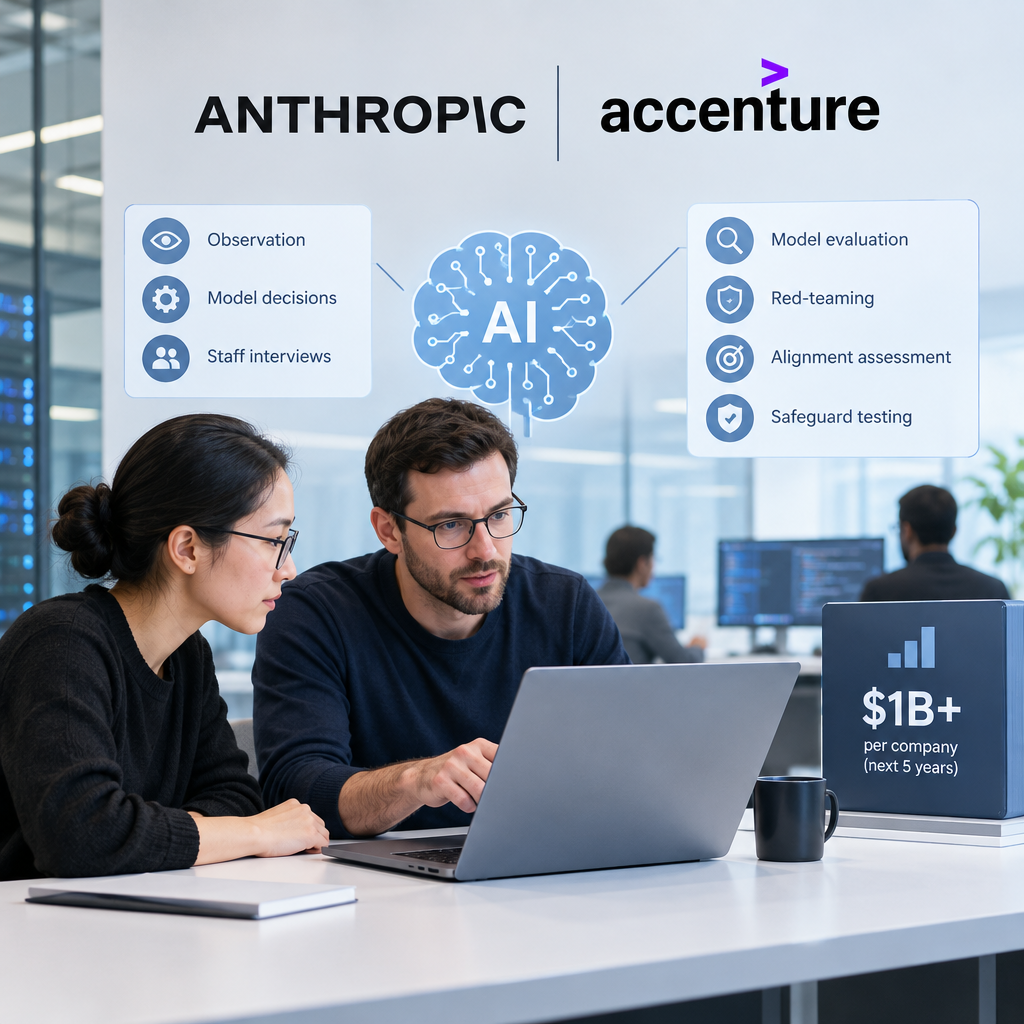
Anthropic announced a non-exclusive partnership with Accenture for independent evaluation of frontier AI models. Faculty, Accenture’s specialist AI business, will lead the work. Plans include model evaluation, red-teaming, alignment assessments, and safeguard testing. According to Anthropic, each company expects to invest at least $1 billion in building capacity in this area over the next five years; these are expectations, not a report of money already invested.
Key facts
Anthropic says embedded evaluators will work inside an AI company with access comparable to an employee’s: observing training, examining decisions on model development and deployment, and speaking directly with staff.
Anthropic says standards for embedded evaluators’ information access and reporting have not yet been established; there is also no settled system for funding independent evaluation.
Anthropic plans to fund Accenture’s work directly and is discussing pilots of elements of embedded evaluation with METR and other nonprofit evaluators using those organisations’ own funding.
Why it matters
The approach could extend supplier scrutiny beyond a finished model’s behaviour to decisions made during its development. For enterprise buyers, it could provide additional evidence about compliance with safety commitments. Direct funding of the evaluator by the developer nevertheless calls for scrutiny of independence; the partnership’s label alone does not establish it.
Business processes
AI risk management and supplier oversight — Future evaluations could supplement reviews of safety claims and incidents if buyers can access substantive findings.
Enterprise AI procurement — Evaluation scope, evaluator access, and reporting transparency could inform supplier selection, without treating the existence of a partnership as certification.
Automation opportunities
Preparing evidence for internal AI oversight: Evaluator reports and incident information could eventually feed into a risk register. This is an analytical possibility, not an announced partnership feature or a ready-to-use tool. Conditions: Findings would need to be accessible to buyers in comparable, machine-readable formats.; Data-validation rules and integration with an internal risk register would be required.; Access, funding, and disclosure arrangements would need separate assessment.
Impact on manual work
Accessible, standardised reports could reduce manual evidence gathering for supplier reviews. The publication provides neither such a format nor measurements of labour savings; expert assessment of findings would still be needed.
Limitations and risks
Operating details are still being developed; the publication contains no evaluation results or evidence of the approach’s effectiveness.
The partnership information comes from Anthropic; the package contains no independent confirmation of results.
Responsibility for model safety remains with Anthropic rather than transferring to evaluators.
The partnership is non-exclusive: both parties can work with other organisations.
Google describes two Flow tools for fashion-show preparation
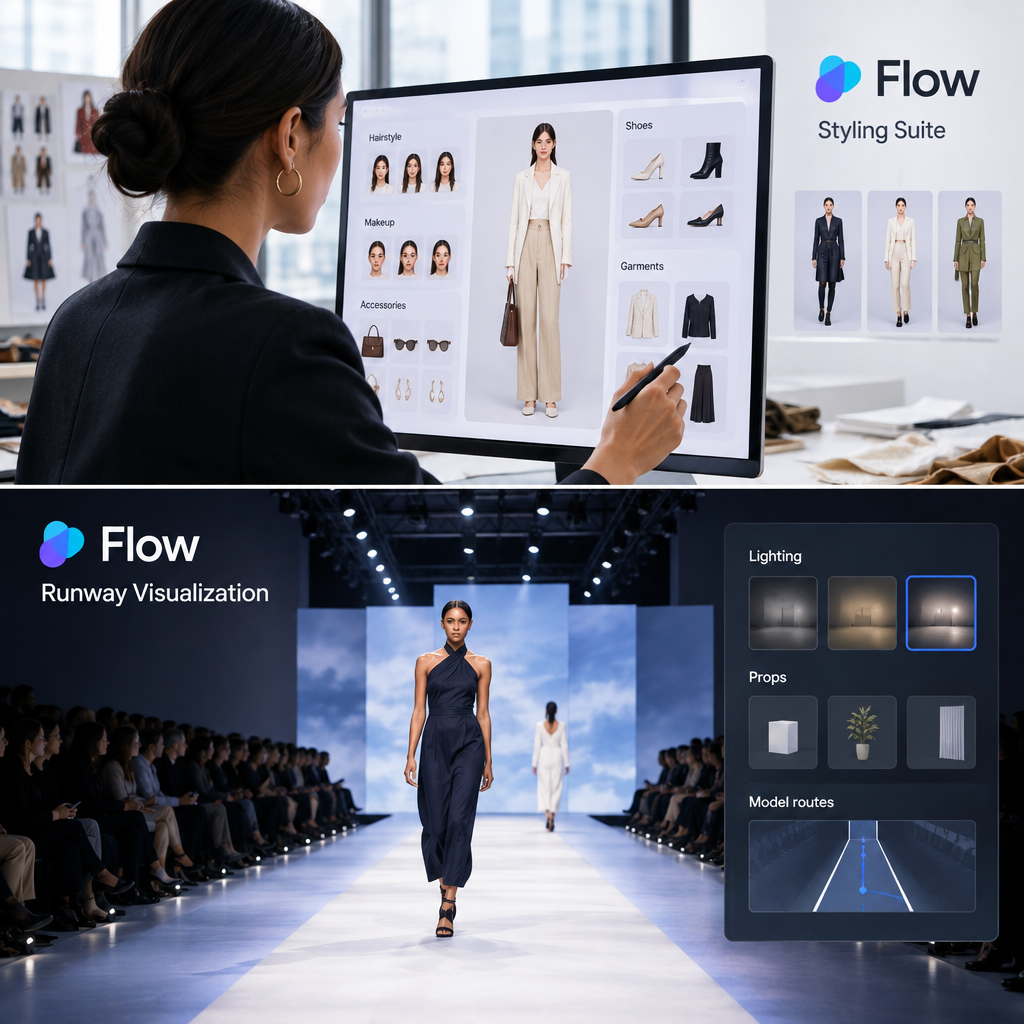
Google says its Envisioning Studio, supported by Google Labs, co-developed two specialised Flow tools with Jane Wade and Sergio Hudson ahead of New York Fashion Week. According to Google, Styling Suite helped Wade assemble digital looks before making additional garments. The company says Runway Visualization allowed Hudson to simulate the venue, change lighting and props using options within his budget, and refine the models’ routes.
Key facts
Google says in-person casting and fittings typically take a design team up to three full days. This is background context, not measured time saved: Styling Suite let the designer select hair, makeup, accessories, shoes, and garments on digital models.
Google claims Runway Visualization replaced back-and-forth with the production team through runway simulation; previously, each lighting and prop revision required a new 3D rendering.
Google says the collaborations’ results were visible on the runways and that users can create bespoke tools in Flow through natural-language descriptions without coding experience.
Why it matters
The case illustrates tailoring a generative tool to a specific creative task, but does not establish its effectiveness. A useful test for teams is whether it reduces late revisions and approval cycles while leaving decisions with the designer. An appealing visualisation alone is not enough to demonstrate production benefits or economic value.
Business processes
Styling and collection preparation — Virtual review of complete looks could help teams identify missing elements and discuss styling before additional garments are made.
Show staging and production — Simulation could move some discussions of venue layout, lighting, props, and model movement into a digital setting before physical changes.
Automation opportunities
Preparing and approving looks: The tool Google describes allowed styling variants to be explored on digital models. Replicating the approach in another team would require configuration for its collection. Conditions: General availability of Styling Suite itself is not confirmed.; Garment inputs and validation against real materials and fit are needed.; Final decisions remain with the designer and production team.
Developing runway staging: In the reported case, lighting, props, and model routes could be discussed through simulation rather than a separate new rendering for each revision. Conditions: General availability of Runway Visualization itself is not confirmed.; Venue, budget, and available-equipment inputs are needed.; Simulation does not replace technical approval and on-site checks.
Impact on manual work
Styling and visualisation iterations could become less labour-intensive. Google describes use of the tools but does not measure hours saved, cost savings, or the number of revisions avoided.
Limitations and risks
The report covers two designers preparing for one Fashion Week; transferability has not been tested.
Google is an interested source; the package contains no independent assessment of benefits.
Pricing and access terms for the two tools are not disclosed. A general invitation to build tools in Flow does not establish their availability.
Digital visualisation may not capture garment physical properties or real venue constraints.
OpenAI publishes an Australian roadmap for teen safety
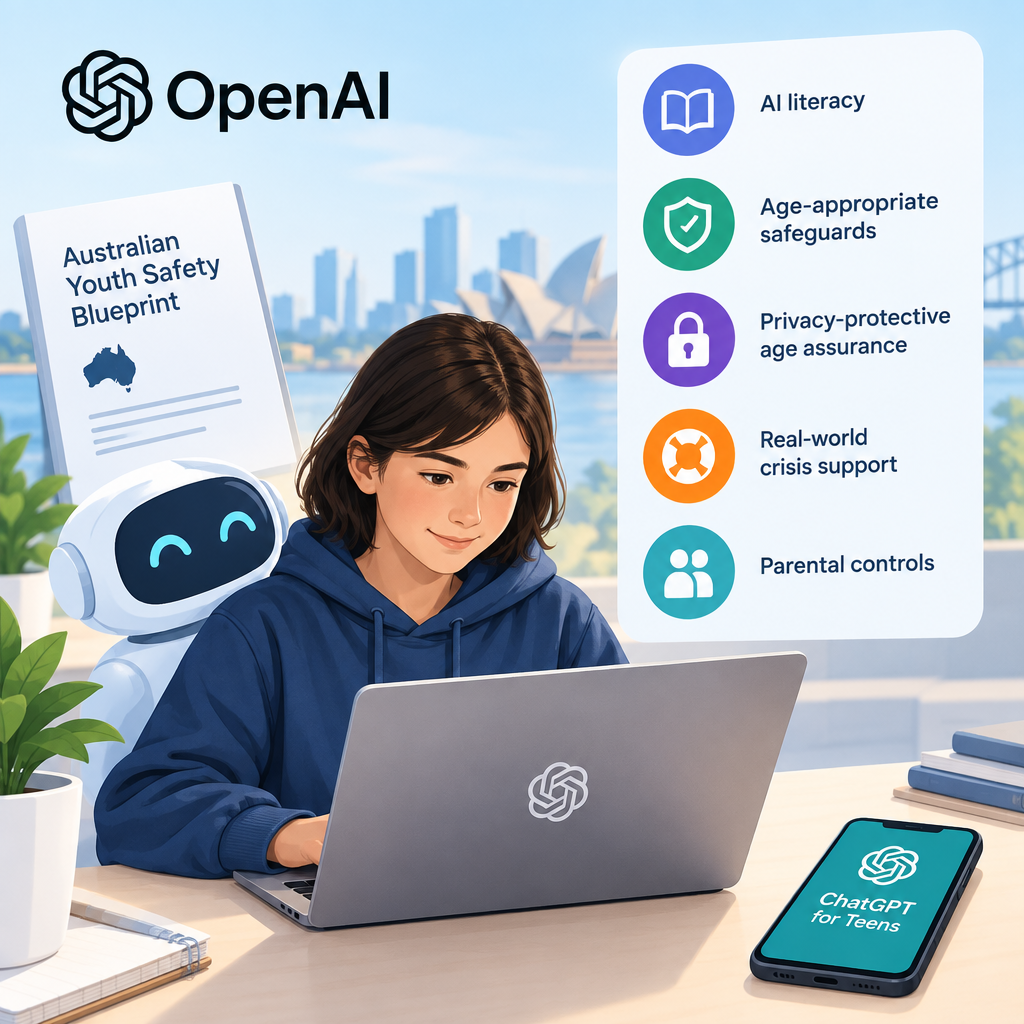
OpenAI published the Australian Youth Safety Blueprint, a roadmap for protecting young AI users. The company describes six pillars, but the supplied text names only five: AI literacy, age-appropriate safeguards, privacy-protective age assurance, connections to real-world crisis support, and accessible parental controls. OpenAI also said it began rolling out ChatGPT for Teens in Australia in August, as the default experience for users identified as aged 13–17.
Key facts
OpenAI describes the Blueprint as a contribution to Australian policy. It says the six pillars help define responsible AI for teens and corporate accountability for identifying and addressing risks.
According to OpenAI, ChatGPT for Teens includes updated safeguards designed around developmental needs and builds on parental controls, under-18 safety policies, and age assurance.
The company argues that primary responsibility for safety should not fall on teens or their families: protections should be built into products from the outset. Work on safeguards is ongoing.
Why it matters
The document links safety principles with product settings: age determination, protective restrictions, privacy, parental tools, and access to support need to be considered together. For service operators, it offers a reference point for discussing risks and accountability, not confirmation that particular measures are already effective or sufficient for legal compliance.
Business processes
Consumer AI service development and release — Teams could address age-specific scenarios, protective settings, and escalation of critical cases to specialists during design rather than after launch.
Compliance and user safety — The principles could inform manual allocation of responsibility, assessment of risks to minors, and documentation of product decisions.
Automation opportunities
Assessing product readiness for use by minors: The source does not describe a control-automation tool. The Blueprint could inform a manual checklist; semi-automated checks would require formalised requirements and access to data on product settings. Conditions: Machine-readable information on settings, support channels, and responsible staff, plus integrations to verify it, would be needed.; Requirements should be reviewed with legal and child-safety specialists for the relevant jurisdiction.; Checking that a setting exists does not establish its effectiveness or replace human review of critical cases.
Impact on manual work
The principles may help organise manual preparation of product-team checklists. However, the publication demonstrates no automated checks and provides no basis for estimating a reduction in labour.
Limitations and risks
The document focuses on Australia; the source does not present it as a mandatory industry standard.
OpenAI provides no evidence of safeguard effectiveness in this publication.
Age assurance requires a balance between accuracy and privacy protection; the method is not detailed here.
An August rollout start does not imply full coverage. The share of users reached and usage outcomes are not disclosed.